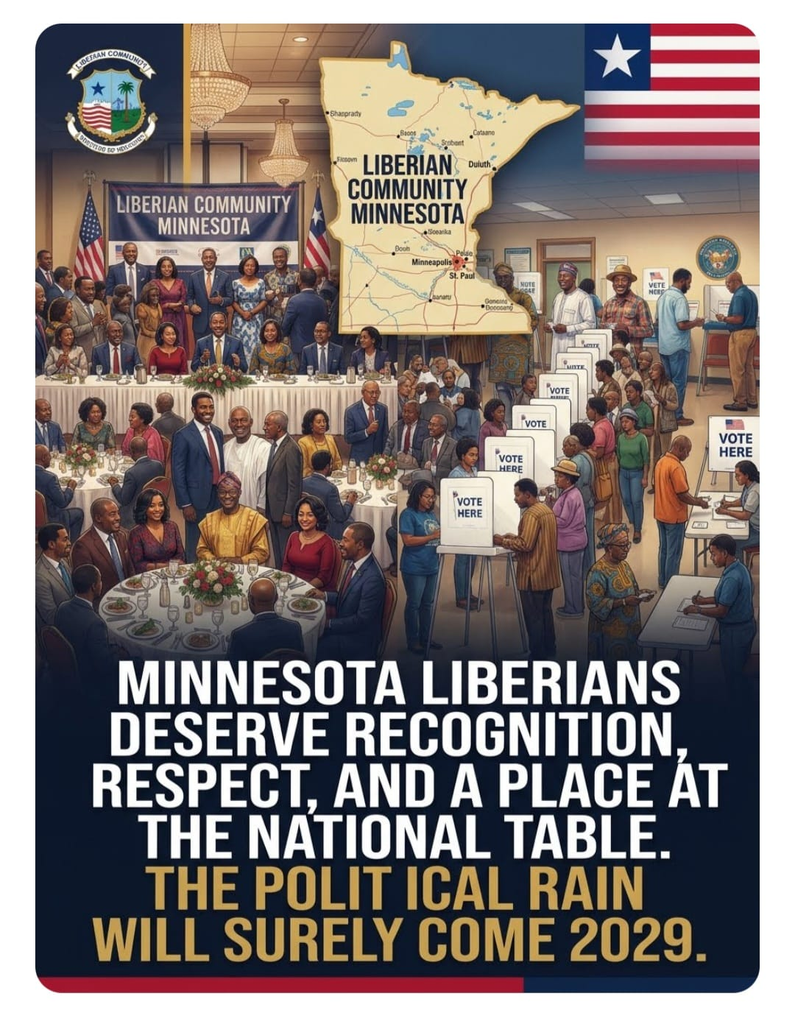
“Trust me, the Political Rain is coming again, and this time in 2029. You will surely need that Forgotten Umbrella again, as you did before.” – Austin S. Fallah.
- The Forgotten Deliverance of Gideon (Judges 8:35): After Gideon rescued Israel from Midianite oppression, the people quickly abandoned his family. The text states, “They did not show kindness to the family of Jerubbaal (that is, Gideon) for all the good things he had done for them.”
- The Rejection of Samuel and Divine Rule (1 Samuel 8:7): When the elders of Israel demanded a king to replace the aging prophet Samuel, the Lord framed their political demand as a rejection of past care. Scripture records God telling Samuel, “It is not you they have rejected, but they have rejected me as their king.”
- The Forgotten Hero of the Besieged City (Ecclesiastes 9:15): King Solomon observed a common political reality where a humble savior is immediately overlooked once the danger passes. The passage notes, “Now there lived in that city a man poor but wise, and he saved the city by his wisdom. But nobody remembered that poor man.”
By: Austin S Fallah – A True Son of the Planet Earth Soil:[email protected]
Political memory is often short, especially after elections are won, and positions of power are secured.
During campaigns, candidates speak passionately about unity, sacrifice, loyalty, and the importance of every Liberian, whether at home or in the diaspora.
They call supporters “brothers,” “sisters,” “partners,” and “pillars of the movement.”
They ask communities to organize, raise funds, spread messages, recruit volunteers, and pray for victory.
Yet too often, after the celebrations end and the new leaders take office, many of those same supporters are left behind.
For Liberians in Minnesota, this pattern is painfully familiar.
Minnesota Liberians have consistently shown up for Liberian political leaders during some of the most difficult and important moments in Liberia’s democratic history.
They have stood in the cold, gathered in community halls, organized meetings, made phone calls, prepared food, baked bread for fundraising events, donated their limited resources, and encouraged relatives and friends back home to participate in the democratic process.
They have done this not because they were promised wealth or government positions, but because they believed their contribution mattered.
They believed that supporting a leader, a political party, or a national movement would help build a better Liberia.
But when the campaigns ended, and victory came, many Minnesota Liberians were forgotten.
Except for former President Ellen Johnson Sirleaf, who reciprocated with Minnesotan Liberians after her victory as president with a visit to Minnesota- maybe not directly to Liberians in Minnesota, but she came and spoke with them.
Not one Liberian president after former Sirleaf, or any major political party leader, has ever made a serious effort to return to Minnesota and thank the community for the role it played in their election process, whether they won or lost.
Some have come not as a thank-you visit but to start another campaign season.
This absence is not a small matter.
It sends a message.
It tells Minnesota Liberians that their money was welcome, their labor was useful, their voices were needed during the campaign, but once power was achieved, they no longer mattered.
That is not leadership. That is political abandonment.
Liberian culture teaches us to value gratitude, loyalty, and remembrance.
We understand that no one reaches the top alone.
We know that behind every successful leader are ordinary people who made extraordinary sacrifices.
Yet too many political leaders behave as though support from Minnesota was automatic, insignificant, or disposable.
They seem to remember only the large, more visible Liberian communities on the East Coast of the United States, where political events receive more attention and media coverage.
The East Coast often receives the praise, visits, recognition, and political credit.
Meanwhile, Minnesota Liberians, who worked just as hard and in many cases sacrificed just as much, are treated as if they were invisible or stepchildren in a home where the father or mother does not care because they consider them not biological children.
This neglect is particularly troubling because Minnesota is not merely a distant location on a political map.
It is home to one of the most active and committed Liberian communities in the diaspora.
Liberians in Minnesota have built churches, community organizations, youth groups, cultural associations, small businesses, advocacy networks, nonprofits, and support systems for newly arrived families.
They have raised children who carry both American and Liberian identities.
They have sent money home during emergencies, supported relatives through schools, paid medical bills, contributed to funerals, and helped communities survive difficult economic times.
When Liberia has faced crisis, Minnesota Liberians have responded.
They responded during war.
They responded during elections.
They responded during the Ebola and Covid-19 epidemics.
They responded when floods, poverty, illness, and family hardship affected their loved ones in Liberia.
Their relationship with Liberia has never been casual.
It is personal, emotional, financial, and deeply rooted in history.
So what did Minnesota Liberians do to deserve such desertion?
The question is not asked out of bitterness alone.
It is asked because accountability matters.
If political leaders expect the diaspora to remain engaged, then they must treat diaspora communities with respect.
They cannot appear only when they need money, applause, votes, influence, or legitimacy.
They cannot call Minnesota Liberians “important stakeholders” during campaign season and then disappear after taking office.
Real leadership requires consistency.
It requires returning to the people who stood with you when your future was uncertain.
As the Liberian or African parable says, “After the rain, the umbrella is no use.”
This saying captures the disappointment felt by many supporters.
During the storm of a political campaign, leaders need every umbrella they can find.
They need volunteers, donors, organizers, elders, young people, women, religious leaders, and community voices.
They need people to defend them in conversations, promote their message online-social media, and convince undecided voters that they are worthy of support.
In those moments, the diaspora is valuable. Minnesota is valuable.
Every donation, no matter how small, is valuable.
But after the political rain stops, after the election has been won and the government has been formed, the once useful umbrella is pushed aside.
The people who protected and supported the campaign are no longer called.
Their concerns are not included in discussions.
Their names are absent from speeches.
Their community receives no visit, no acknowledgment, and no meaningful engagement.
That pattern must change.
Minnesota Liberians are not asking political leaders to worship them or reward every individual with a government appointment.
They are asking for the basic dignity of recognition.
They are asking leaders to visit, listen, and acknowledge the sacrifices that were made.
They are asking for an honest relationship between Liberia’s political establishment and its diaspora supporters.
They are asking that political leaders understand that appreciation is not weakness; it is strength.
Gratitude builds trust. Recognition strengthens unity.
A leader who remembers those who helped them rise earns a loyalty that cannot be bought with campaign promises.
Former President Ellen Johnson Sirleaf demonstrated the importance of this principle by reciprocating with Minnesota Liberians after becoming president.
Her willingness to recognize the community showed that she understood a simple truth: supporters should not be forgotten once the ballots are counted.
Whether one agrees with every decision made during her administration is not the point, of which I am one of those who disagree with her on principles.
The point is that she recognized the value of Minnesota Liberians and did not act as though their support had vanished after election day.
That example should not be exceptional.
It should be the standard.
Liberia’s political leaders must begin to see the diaspora not simply as an emergency fundraising source, but as a permanent national partner.
Diaspora communities possess knowledge, skills, education, business experience, professional connections, and a deep commitment to Liberia’s progress.
In Minnesota, Liberians include health care workers, teachers, entrepreneurs, students, clergy members, social workers, community organizers, drivers, laborers, and professionals in many fields.
They are raising families while remaining connected to Liberia’s future.
Their voices deserve to be heard in conversations about national development, reconciliation, education, health care, investment, immigration, youth empowerment, and democratic reform.
Recognition should be more than a photograph at a political event.
It should include meaningful engagement.
Leaders should hold public town halls with Minnesota Liberians, not just private fundraising meetings.
They should provide updates on national priorities and be prepared to answer difficult questions.
They should create channels for diaspora communities to contribute ideas and expertise.
Not channels created by political loyalists, just like a susu club.
They should acknowledge community organizations that have supported Liberia over the years.
Every article I add my phalanges to is a conscious public-policy suggestion to the Liberian government.
Most importantly, they should demonstrate that they value Minnesota Liberians before election season, not only when they need another donation.
The phrase “Protecting the Pillars” is especially relevant here.
Minnesota Liberians are among the pillars of Liberia’s diaspora strength.
A pillar is not just decorative.
A pillar carries weight.
It holds up a structure.
If a nation ignores its pillars, weakens them, or treats them as unimportant, the entire structure becomes unstable.
Liberia cannot afford to divide its people into “important” and “unimportant” communities based on geography or political visibility.
The East Coast should not receive all the credits simply because it is closer to Washington, D.C., New York, Philadelphia, or other centers of political activity.
Every Liberian community that contributes to the national cause deserves acknowledgment.
Minnesota’s distance from the East Coast does not reduce its sacrifices.
Snow does not make its donations smaller.
Long work hours do not make its organizing less meaningful.
The fact that Minnesota Liberians may be quieter or less publicly celebrated does not mean they are less committed.
The Minnesota Liberian community has some of the most educated, experienced, trained and well thoughtful in every area of intellectualism and dedication to service.
Indeed, their resilience deserves special respect.
While enduring harsh winters and managing the demands of life in America, Minnesota Liberians continue to care for families in Liberia.
They attend fundraisers after work.
They contribute from modest paychecks.
They use weekends to organize community events.
They send remittances home even when their own bills are high.
They support candidates because they hope that Liberia can become a country where future generations will not have to flee hardship, instability, or neglect.
Political leaders should not take that commitment for granted.
The Liberian saying, “One Time Cannot Spoil It,” offers an important warning and a deeper lesson.
One act of neglect may not completely destroy a relationship, but repeated neglect can weaken trust over time.
Minnesota Liberians have been patient.
They have continued to show love for Liberia even when they felt ignored.
They have continued to support family, community, and country.
But patience should not be mistaken for forgetfulness.
People remember how they were treated.
They remember who called only when money was needed.
They remember who promised to visit but never came.
They remember who praised the diaspora publicly while excluding it privately.
They remember who accepted their sacrifices but gave all the credit elsewhere.
They also remember the leaders who showed humility, gratitude, and respect.
That memory will matter in the future.
As Liberia approaches future political contests, including the possibility of major elections in 2029, political leaders should understand that Minnesota Liberians are watching.
They are keeping score, not out of hatred, but out of experience.
They are waiting to see whether leaders will repeat old habits or choose a better path.
They are waiting to see whether the community will once again be remembered only during campaigns and forgotten after victory.
The message to Liberia’s political leaders is clear: do not wait until the next election to rediscover Minnesota.
Do not wait until you need campaign contributions to call community leaders.
Do not wait until you need a crowd, a fundraiser, or social media support to recognize the people who have been there all along.
Come back. Say thank you. Listen.
Build relationships. Respect the people who helped build your political journey.
Minnesota Liberians are not asking for special treatment.
They are asking not to be treated as disposable.
They are asking Liberia’s leaders to practice the same loyalty that they demand from their supporters.
If Liberia is truly to move forward as one nation, then every community, whether in Monrovia, Gbarnga, Buchanan, Kakata, New York, Foya, Robertsport, Tuzon, Haper, Greenville, Voinjama, Kolahun, Zorzor, Gbapolu, River Cess, River Gee, Kpadamie, Philadelphia, Atlanta, or Minnesota, must be respected as part of the same national family.
The rain will come again.
Political storms will return.
Candidates will once more need umbrellas.
When that day arrives, leaders should remember who stood in the snow, baked the bread, raised the funds, made the calls, defended the cause, and believed in Liberia’s future.
Minnesota Liberians have not forgotten. And neither should Liberia’s leaders.
Support Independent Journalism
Your support helps FrontPage Africa continue delivering independent, credible, and impactful journalism. Every contribution strengthens our ability to investigate, inform, and hold power accountable while keeping quality journalism accessible to our readers.
Support our journalism or subscribe to receive the latest FrontPage Africa stories and updates.