Climate change threatens everyday life. Rising seas, extreme heat and changing rainfall put homes, farms, water and jobs at risk. Burning coal, oil and gas, and cutting down forests, release gases or pollution that trap heat around the Earth like a blanket of heat.
By Dr. Emmanuel K. Urey Yarkpawolo
Pollution crosses borders. Countries such as Liberia have contributed little to global warming but face serious harm with limited resources to respond. Countries must work together to reduce these gases and help those most affected. This is why the United Nations climate conference, known as COP, matters.
As COP31 continues in Antalya, Türkiye, what does it mean for ordinary Liberians?
What is COP?
COP means “Conference of the Parties.” The “Parties” are countries that joined the United Nations Framework Convention on Climate Change, an agreement adopted in 1992.
The first COP took place in Berlin, Germany, in 1995. Countries meet to review progress and agree on action. Major achievements include the Kyoto Protocol in 1997 and the Paris Agreement in 2015. Under the Paris Agreement, countries agreed to limit global warming and prepare for its effects. COP31 is the thirty-first conference, running from November 9–20, 2026.
Why Liberia must participate
Imagine communities sharing a river. Pollution upstream can harm people downstream. Protecting the river requires everyone’s cooperation. Climate change works similarly: no country can solve it alone.
For Liberia, the sea is washing away coastal land, floods damage homes and roads, and changing rainfall affects farming. Attending COP allows Liberia to explain these problems, influence decisions and seek funding and practical help. This year’s discussions include more climate funding, stronger protection for communities and cleaner energy.
The Blue Zone and Green Zone at the COP
The Blue Zone is managed by the United Nations. Government representatives hold official negotiations here. Entry requires an approved conference pass. Journalists and other approved participants attend permitted activities. The area also hosts exhibitions, national pavilions and side events.
The Green Zone is managed by the host country and welcomes public engagement under its access rules. Businesses, community groups, young people and others share ideas, show practical solutions and learn about climate action.
Side events and personal contacts
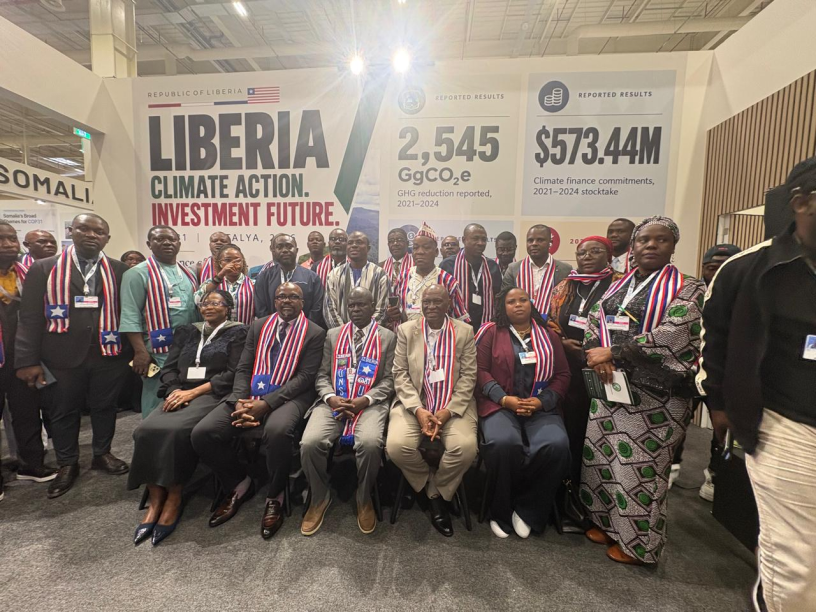
Side events are discussions held alongside the formal talks. They allow people to share problems, experiences and possible solutions. A national pavilion is a country’s meeting and exhibition space. Liberia’s pavilion helps us explain our needs and meet potential partners.
Personal conversations also matter. A meeting with a funding organization can help us understand how to apply for support. Another country may share useful lessons on farming or coastal protection. Young people and researchers can make contacts that lead to training and joint work. These conversations need follow-up to produce results.
Liberia’s delegation
I am heading Liberia’s delegation, which brings together government officials, technical experts, civil society, students, young people, journalists, superintendents, traditional leaders and religious leaders.
This broad participation matters because climate change affects everyone. Experts follow negotiations, while other delegates share community concerns, report developments and build partnerships.
Progress Liberia is making
Liberia has hosted discussions on farming, youth opportunities, preparing for climate threats and fair management of natural resources. We have also discussed protecting people forced to leave their homes by climate impacts, including through a proposed West African Climate Mobility and Resilience Program.
I was one of four leaders from the Least Developed Countries group chosen to meet UN Secretary-General António Guterres, alongside the group’s chair.
Least Developed Countries, or LDCs, are countries the UN recognizes as having low incomes, major development challenges and high exposure to economic and environmental or climate shocks. They need international support.
During the meeting, Liberia argued that protecting our rich forests and biodiversity which include the variety of plants, animals and other living things; must bring benefits to our country and communities. Our forests help the world by absorbing carbon dioxide, a gas that warms the planet. People protecting these forests deserve support and opportunities to earn a living.
What Liberia hopes to achieve
Liberia seeks funding that is easier to access, useful technology and partnerships to protect coastlines, support farmers, expand clean energy and safeguard forests. We also seek help for communities suffering climate-related losses.
These efforts should support the Government’s ARREST Agenda for Inclusive Development and NDC 3.0. NDC means “Nationally Determined Contribution”, a country’s climate action plan. Liberia’s third plan links climate action with national development, helping us improve lives while protecting nature.
Meetings are only the beginning. Success must be measured by projects delivered, communities protected, livelihoods improved and money used openly and responsibly. Liberia’s participation gives our people a voice and a chance to turn international cooperation into benefits at home.
Support Independent Journalism
Your support helps FrontPage Africa continue delivering independent, credible, and impactful journalism. Every contribution strengthens our ability to investigate, inform, and hold power accountable while keeping quality journalism accessible to our readers.
Support our journalism or subscribe to receive the latest FrontPage Africa stories and updates.