Monrovia — The People’s Liberation Party has criticized the Boakai administration’s proposed 2027 national budget, arguing that its spending priorities fail to address growing poverty concerns highlighted in the World Bank’s 2026 Economic Update on Liberia.
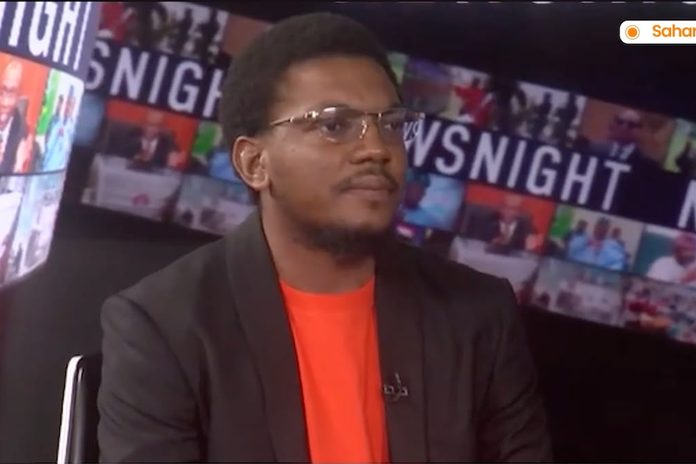
Tonzeah N. Zarwolo, the party’s Acting National Secretary General and National Vice Chairman for Political Affairs, said the government was not paying sufficient attention to the World Bank’s warning that economic growth was not translating into better living conditions for many Liberians.
According to the World Bank, although Liberia’s economy is growing, more people are falling into poverty because much of that growth is concentrated in sectors that employ relatively few Liberians.
Zarwolo said the Bank’s findings should guide national policy decisions rather than be dismissed as a tool for political attacks.
He argued that the proposed budget does not give agriculture the priority needed to address poverty, while a significant share of government spending remains committed to recurrent expenditure, including the cost of running government institutions.
He also raised concerns about increased allocations for the Executive Mansion and national security, warning that the spending priorities could leave more Liberians struggling financially if the government fails to invest in sectors that directly support livelihoods.
However, Zarwolo acknowledged the increased allocation to education, commending the Boakai administration for directing more resources to the sector.
He called on the Legislature to go further by increasing funding for rural schools, investing in technical and vocational education institutions, and recruiting more teachers to address the shortage of qualified personnel in public schools.
Zarwolo, an education policy expert, said the teacher-to-student ratio remains a major challenge that is undermining the quality of public education.
Finance Ministry Defends Government’s Economic Record
But the Ministry of Finance and Development Planning has pushed back against the World Bank’s poverty assessment and defended the administration’s economic policies.
Deputy Finance Minister for Administration Benedict Harleyson questioned the reliability of the Bank’s poverty estimates, arguing that they are too uncertain to be presented as confirmed findings.
Harleyson said the World Bank’s assessment relies on a model built using data from the 2016 Household Income and Expenditure Survey rather than a more recent household survey.
He also questioned changes in the Bank’s poverty estimates across its publications. According to him, the Bank described poverty as declining in October 2025 before reporting an estimated poverty rate of 35.8 percent in April 2026 and 36.1 percent in October 2026, without the release of a new household survey.
Harleyson further argued that the assessment does not adequately account for public investments made under the Boakai administration, including expanded electricity connections, road construction and increased budget allocations for health and education.
PLP Calls for More Investment in Agriculture
Despite the government’s defense, Zarwolo maintained that the proposed budget should reflect the World Bank’s concerns about poverty and the need to make economic growth more beneficial to ordinary Liberians.
He called for a review of the Ministry of Agriculture’s programs and better-designed interventions to improve farmers’ productivity and increase agricultural output.
While acknowledging the government’s efforts to construct more farm-to-market roads, he criticized what he described as a lack of direct government support for smallholder farmers in rural communities.
Zarwolo urged the Boakai administration not to dismiss the World Bank’s warnings, drawing a comparison with earlier concerns about congestion at the Freeport of Monrovia.
He argued that the failure to adequately respond to those warnings contributed to the current port challenges and cautioned against allowing similar inaction on poverty to create a bigger national problem.
Support Independent Journalism
Your support helps FrontPage Africa continue delivering independent, credible, and impactful journalism. Every contribution strengthens our ability to investigate, inform, and hold power accountable while keeping quality journalism accessible to our readers.
Support our journalism or subscribe to receive the latest FrontPage Africa stories and updates.