As Criminal Court ‘C’ Denies Motion for New Trial Before Sentencing Convicted Officials in US$500,000 Saudi Rice Case
By: Willie N. Tokpah
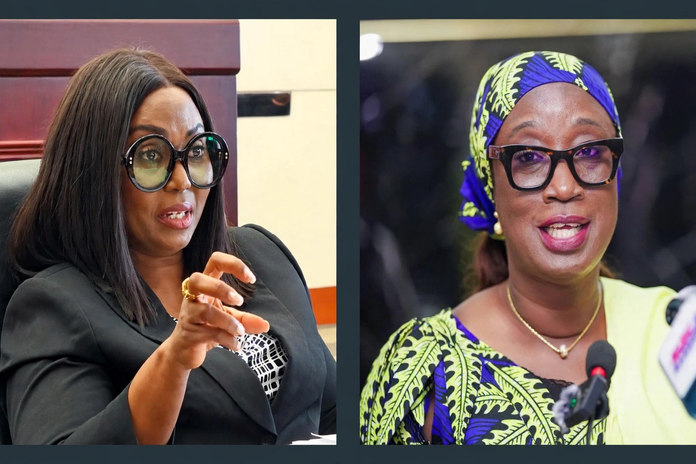
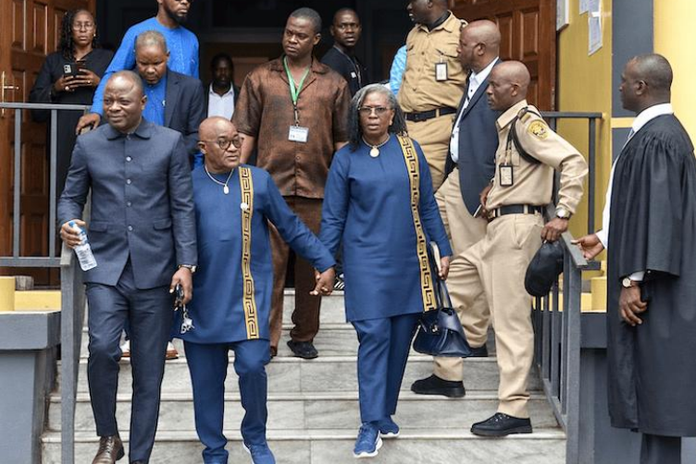
Monrovia-Foreign Affairs Minister Dee-Maxwell Saah Kemayah and other defendants convicted in Liberia’s controversial US$500,000 Saudi Rice case have announced an appeal to the Supreme Court of Liberia following Criminal Court ‘C’s denial of their motion for a new trial and subsequent imposition of prison sentences.
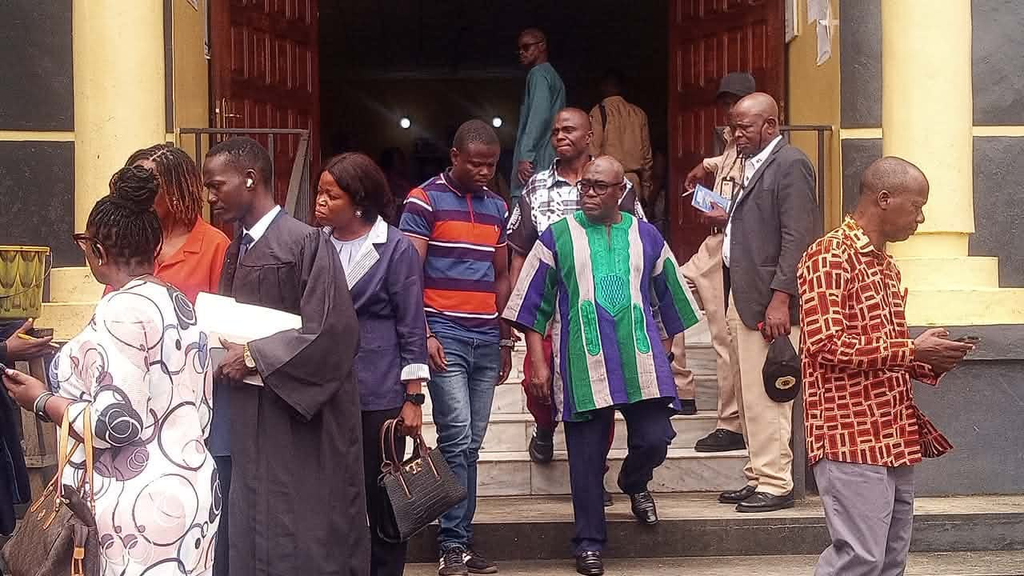
The announcement of the appeal came Friday, November 13, 2026, shortly after Criminal Court ‘C’, presided over by Judge Ousman Feika, denied the defense’s request for a new trial and proceeded to sentence the convicted defendants at the Temple of Justice in Monrovia.
Kemayah and some of his co-defendants were sentenced to 10 years in prison, while other convicted defendants received five-year prison terms, according to information from the court proceedings.
The decision marks another significant development in one of the most closely watched corruption-related prosecutions arising from the administration of former President George Manneh Weah.
With the motion for a new trial rejected and sentences imposed, the defense has now turned to the Supreme Court, seeking appellate review of the convictions and the proceedings that resulted in the guilty verdicts.
Defense Takes Fight to Supreme Court
The defense team’s decision to appeal follows its unsuccessful attempt to persuade Criminal Court ‘C’ to set aside the October 9 jury verdicts and order a fresh trial.
The motion for a new trial, which was heard on November 6, challenged the outcome of the proceedings involving 13 defendants accused of various offenses connected to the alleged diversion of humanitarian rice donated to Liberia by the Kingdom of Saudi Arabia.
The defense had maintained that the jury’s findings were inconsistent with the weight of evidence presented during the trial, which lasted more than 40 days.
However, Criminal Court ‘C’ declined to grant the requested relief, clearing the way for the court to proceed with sentencing.
The defense has now announced its intention to pursue an appeal before the Supreme Court, Liberia’s highest judicial authority.
The appeal is expected to place the trial proceedings, the jury’s findings, the denial of the new-trial motion, and the resulting sentences under further judicial scrutiny.
For Kemayah and his co-defendants, the Supreme Court represents the next available judicial avenue to challenge the outcome of the prosecution.
From Jury Verdict to Prison Sentences
The latest development follows the October 9, jury verdict, which produced mixed outcomes among the 13 defendants.
Eight defendants were found guilty, three were acquitted, while the jury failed to reach unanimous verdicts on two others.
Among those convicted were Kemayah, former Internal Affairs Minister Varney A. Sirleaf, and other former government officials.
The convictions arose from allegations involving the handling and distribution of 29,412 bags of 25-kilogram rice donated by the King Salman Humanitarian Aid and Relief Center in April 2023.
The donation was intended to assist disaster victims and vulnerable communities in Liberia.
Prosecutors alleged that 25,054 bags of the donated rice, valued at approximately US$425,918, were diverted from their intended humanitarian purpose.
The defendants faced charges including theft of property, economic sabotage, misuse of public office, criminal conspiracy, and misapplication of entrusted property.

The prosecution argued that the humanitarian donation was improperly handled, while the defense consistently challenged the allegations and the evidentiary basis of the case.
The October 9 verdicts subsequently resulted in the sentencing proceedings now being challenged before the Supreme Court.
Supreme Court Review Could Become Another Major Legal Battle
The announcement of an appeal introduces another important phase in the Saudi Rice prosecution.
Under Liberia’s criminal justice framework, defendants convicted of criminal offenses have the right to seek appellate review of their convictions and sentences in accordance with applicable law and procedural requirements.
The Supreme Court will be expected to examine the issues properly raised in the appeal and determine whether the proceedings complied with the applicable legal standards.
Among the questions that could arise are whether the trial court properly applied the law, whether the evidence supported the jury’s findings, whether any prejudicial procedural errors occurred, and whether the denial of the motion for a new trial was legally justified.
The appellate proceedings will also provide an opportunity for the defense to formally present its objections to the convictions and sentences.
Depending on the arguments and the court’s findings, the Supreme Court may affirm the lower court’s decision, reverse all or part of the judgment, or grant another legally appropriate remedy.
However, the filing or announcement of an appeal does not automatically invalidate the convictions or sentences.
The defendants must pursue the appeal through the prescribed judicial process.
For the Asset Recovery and Property Retrieval Taskforce, AREPT, and the Ministry of Justice, the convictions and sentencing represent a significant stage in the prosecution’s pursuit of accountability.
For Kemayah and his co-defendants, however, the rejection of their motion for a new trial has made an appeal to the Supreme Court their next major legal undertaking.
The three defendants acquitted by the jury remained distinct from those convicted and sentenced, while the two defendants against whom the jury could not reach unanimous verdicts remain subject to separate judicial proceedings.
As the matter moves toward the Supreme Court, the central legal question will no longer be limited to the prosecution’s allegations but will also encompass whether the convictions and sentences can withstand appellate scrutiny.
The Supreme Court’s eventual determination could have implications for the defendants and the broader administration of criminal justice in Liberia.
The Saudi Rice case, therefore, enters a new chapter, from the jury’s guilty verdicts, through the denial of a new trial and prison sentencing, to an impending appeal before the Supreme Court of Liberia.
Support Independent Journalism
Your support helps FrontPage Africa continue delivering independent, credible, and impactful journalism. Every contribution strengthens our ability to investigate, inform, and hold power accountable while keeping quality journalism accessible to our readers.
Support our journalism or subscribe to receive the latest FrontPage Africa stories and updates.