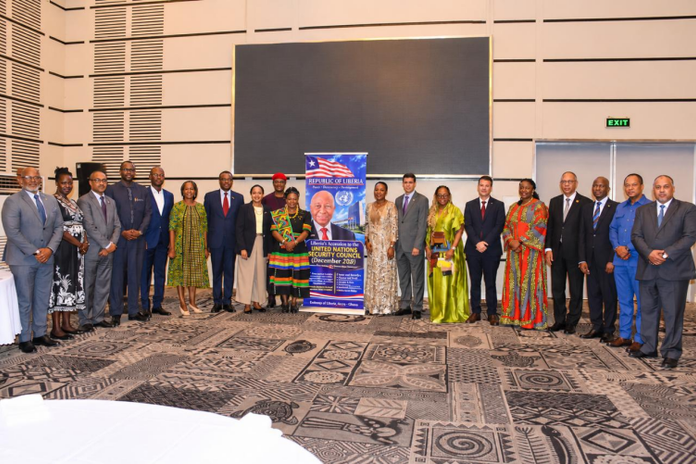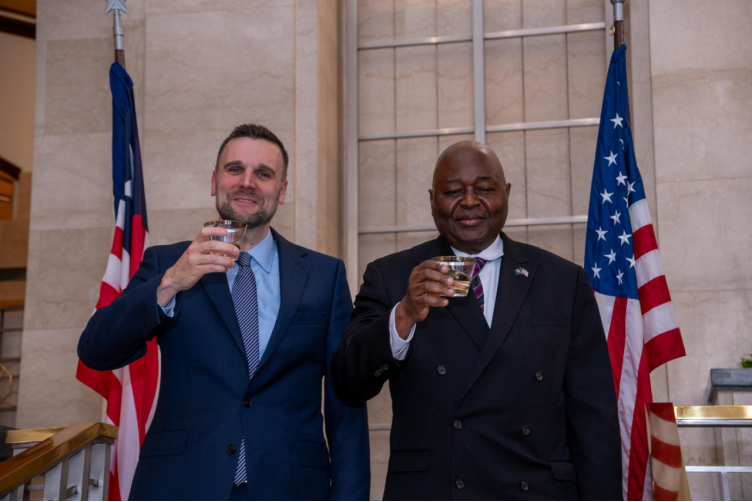
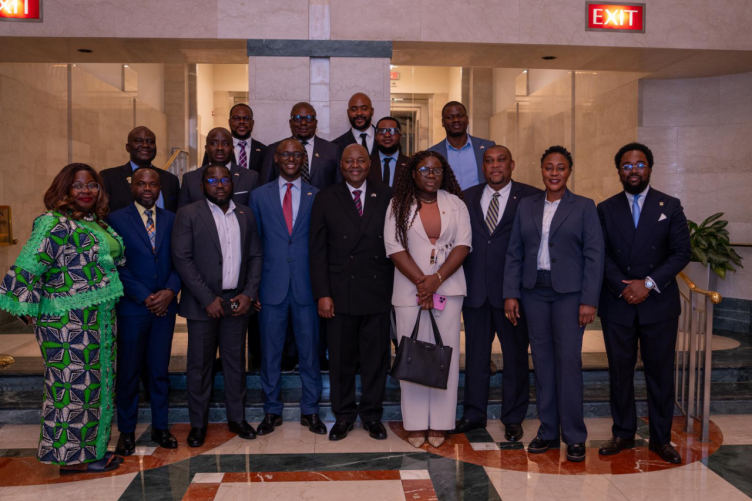
Monrovia – Liberian diplomats in Washington had good news to share last week. On November 10, the U.S. Millennium Challenge Corporation (MCC) hosted a reception for a Liberian technical team in town to help lay the analytical groundwork for a second MCC compact. A compact is a five-year grant that is not a loan and does not have to be repaid. Liberia’s ambassador to the United States, Dr. Al-Hassan Conteh, told guests that cheap and reliable electricity remains the country’s biggest obstacle to growth. He also listed roads, governance, private-sector jobs, skills and environmental safeguards as priorities.
By Rodney D. Sieh
The Embassy’s account of the evening was upbeat. Behind it is a harder story. Liberia has been trying to win a second compact for nearly a decade, and the U.S. agency it is courting is smaller, more political, and less certain about its future than at any point since it was founded in 2004.
What the MCC is, and why it matters
The MCC is different from conventional U.S. aid. Countries do not apply; they have to qualify. Each year the agency grades poor countries on 22 independent indicators covering governance, economic freedom, and investment in people. To qualify, a country must pass at least half of them and clear two compulsory “hard hurdles”: personal freedom and either control of corruption or government accountability. Countries that qualify can then spend years designing projects with MCC staff before any money arrives.
The first compact showed what a successful partnership can achieve. It was worth about US$257 million, signed in Washington in November 2015 and carried out between 2016 and 2021. Most of the money went to rebuilding the Mount Coffee Hydropower Plant, which was wrecked in the civil war and is now Liberia’s largest source of electricity. The compact also funded road maintenance and reform of the power sector. MCC officials still describe it as a success.
Ten years of trying
What followed was a long wait. After the first compact closed in 2021, governance problems and weak scores on key indicators kept Liberia from moving to a second one.
The breakthrough came in December 2024, when the MCC board picked Liberia as the only new country eligible to develop a compact that year. Weeks later, the Trump administration began its review of foreign aid. The MCC came close to being shut down, and many of its programmes, including several in Africa, were cancelled. Liberia’s compact survived, but in August 2025 the board put off a decision on its continued eligibility. In December 2025 the board reaffirmed it. Finance Minister Augustine Ngafuan called it “a truly good Christmas” for Liberians.
The process has moved slowly since then. MCC teams have visited Monrovia and met the electricity regulator. Liberia formed a Compact Development Team, now led by National Coordinator Alieu Fuad Nyei, whose members were in Washington this month. Its first big task is a “constraints analysis,” a study of what is holding back growth. Electricity and roads have again come out on top. At the start of the year, local reports said work on the compact documents could run until the end of 2027.
The Embassy’s release names no dollar figure and no signing date. Ngafuan has said publicly that the compact could be worth around US$500 million, more or less, but nothing has been agreed.
A new item: mining
One detail in the release stands out. An Assistant Minister of Mines and Energy is in the delegation to give “technical support on the mining project.” Mining had no part in Liberia’s first compact.
The addition fits the times. In 2025, the MCC added two new tests, “America First” and “American Returns,” to how it picks countries and programmes. Neither is in the law that created the agency. Minerals are a priority in Washington, and Liberia is building a framework for a state-owned National Minerals Company. Monrovia appears to be pitching the compact in terms the current administration wants to hear. Whether that helps or complicates a programme meant to reduce poverty is a question the delegation should be ready to answer.
The scorecard: passing, with weak spots
The MCC released its FY2027 scorecards this month. Liberia again cleared both hard hurdles and the half-scorecard rule, which keeps it in contention. But it failed indicators on child health, girls’ primary education completion, women in the economy and employment opportunity, and it slipped on measures it had passed a year earlier. Critics in Monrovia point to an awkward contrast: Liberia passed “control of corruption” on the MCC scorecard, while the State Department’s own Investment Climate Statement calls corruption the main brake on the economy.
An agency in trouble
The larger risk is in Washington, not Monrovia. The Congressional Research Service, which advises U.S. lawmakers, describes an agency under heavy strain:
• Funding. The administration asked for only US$224 million for the MCC in FY2026. Congress approved more but also rescinded hundreds of millions, and further cuts have been proposed for FY2027.
• Africa sidelined. All of the MCC’s new selections in 2025 were outside Africa, from Fiji to Ecuador.
• The board. The MCC board has only one private member, which is just enough for a quorum. That member is due to leave in December 2026 unless Congress acts, and no replacements have been named. Without a quorum, the board cannot make decisions, including on Liberia.
• Time. On average it now takes about five years from selection to the start of a compact.
The November 3 U.S. midterms add another variable. Democrats made strong gains, and Democratic senators have been among the MCC’s loudest defenders against the cuts. A new Congress could restore funding and protect the agency. The same lawmakers have also been the sharpest critics of Liberia’s deportation deal with Washington and the most likely to examine governance claims closely.
The bottom line
Liberia is in a better position than at any time in the past decade: eligible, still passing the scorecard and backed by an MCC team that wants the partnership to work. But eligibility is not money, a fact the U.S. Embassy in Monrovia stressed when Liberia was first picked. The deciding factors over the next year are only partly in Monrovia’s hands. Liberia has to keep passing the scorecard and turn analysis into projects that can be financed. Washington has to keep its MCC board working and its budget intact.
The board’s next meeting is scheduled for December. For the delegation now in Washington, the reception was a pleasant evening. What matters more is whether the MCC is still able to act on its plans for Liberia a year from now.
Support Independent Journalism
Your support helps FrontPage Africa continue delivering independent, credible, and impactful journalism. Every contribution strengthens our ability to investigate, inform, and hold power accountable while keeping quality journalism accessible to our readers.
Support our journalism or subscribe to receive the latest FrontPage Africa stories and updates.