ACCRA, Ghana — Liberia is mobilizing diplomatic support from African and other international partners ahead of its assumption of the rotating Presidency of the United Nations Security Council (UNSC) in December 2026, with ambassadors from 17 countries pledging to support the country’s leadership.
By Gerald C. Koinyeneh
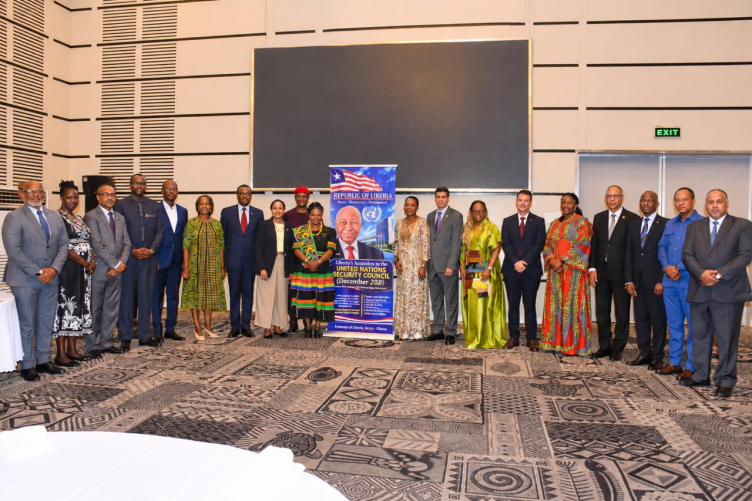
The commitment was made during an inaugural Diplomatic Breakfast Meeting hosted by the Embassy of Liberia in Accra, Ghana, on November 9, at the Labadi Beach Hotel.
The meeting brought together members of the Diplomatic and Consular Corps to discuss Liberia’s upcoming leadership of the 15-member Security Council and its implications for international peace, security and multilateral cooperation.
Participating ambassadors representing Sierra Leone, Nigeria, Rwanda, Kenya, Mozambique, Algeria, Sudan, South Sudan, Senegal, South Africa, Barbados, Zambia, Libya, the Sahrawi Republic, Namibia and Angola pledged their support for Liberia’s upcoming Presidency.
They urged President Joseph Nyuma Boakai to use the opportunity to advance not only Liberia’s national interests but also the broader aspirations of Africa, particularly in global discussions on conflict resolution, peacebuilding, sustainable development and reform of international institutions.
Liberia Seeks Stronger African Voice
Speaking at the gathering, Liberia’s Ambassador to Ghana, Musu Jatu Ruhle, thanked the diplomatic representatives for accepting the Embassy’s invitation and reaffirmed the government’s commitment to preparing for the December responsibility.
She said the Boakai administration, under the guidance of Foreign Affairs Minister Sara Beysolow Nyanti, was making preparations to ensure Liberia effectively discharges its responsibilities during its Council Presidency.
Ruhle also acknowledged the contributions of African countries and international partners whose support helped Liberia secure its position on the Security Council.
She described the opportunity as both an honour and a responsibility, noting that Liberia’s own history of conflict and recovery offers important lessons for its engagement in international peacebuilding.
Liberia’s experience, she said, demonstrates that peace goes beyond the absence of war and requires dialogue, justice, reconciliation and opportunities for people to live with dignity.
According to Ruhle, these principles will inform Liberia’s approach during its leadership of the Council.
Women, Youth and Climate Security Among Priorities
The Ambassador outlined several priorities identified by Foreign Affairs Minister Nyanti for Liberia’s engagement at the Security Council.
They include increasing the participation of women and young people in conflict prevention and peacebuilding; addressing the connections between climate change, natural resources and conflict; strengthening security cooperation in West Africa and the Sahel; and supporting reform of the Security Council and stronger United Nations peacekeeping operations.
Ruhle emphasized that Africa has significant contributions to make to international peace and security but continues to face challenges that often transcend national borders.
She called for stronger cooperation among African governments, regional organizations and international partners, arguing that no country can independently address the continent’s complex security challenges.
She further stressed that Liberia’s presence on the Security Council must translate into meaningful African participation in global decision-making.
“Representation alone is not enough,” she said, emphasizing the need for African concerns to receive serious consideration and for the continent’s participation to produce practical outcomes.
Calls for African Cooperation
Ruhle acknowledged that African countries may not always agree on every international issue but said dialogue and mutual understanding could help them identify common ground on matters of shared interest.
She called for sustained engagement among African governments to strengthen their collective influence within the multilateral system.
As Liberia prepares to assume the Council’s Presidency, she said the country looks forward to working closely with African partners and other United Nations members.
She added that Liberia would approach the responsibility with a willingness to listen, a commitment to dialogue and an interest in building consensus.
The diplomatic gathering highlighted the importance of regional solidarity and coordinated engagement as Liberia prepares for its December leadership of the Security Council.
The upcoming Presidency provides Liberia an opportunity to contribute to international discussions on peace and security while advancing its stated priorities on African representation, climate-related security challenges, youth and women’s participation, and reform of the United Nations system.
Support Independent Journalism
Your support helps FrontPage Africa continue delivering independent, credible, and impactful journalism. Every contribution strengthens our ability to investigate, inform, and hold power accountable while keeping quality journalism accessible to our readers.
Support our journalism or subscribe to receive the latest FrontPage Africa stories and updates.