Summary
- Women in River Cess, who were some of the intended recipients of a 2023 US$1.7 million fund that investigators say was stolen, have expressed anger at the theft of badly needed money by officials from the Weah administration.
- They have also faulted the government’s transparency saying they knew nothing about the fund before the arrests made news.
- Liberia’s Asset Recovery and Property Retrieval Task Force indicted seven people in April over the alleged diversion of money. There is no word on when the case will go to trial.
By Joyclyn Wea and Nemenlah Cyrus Harmon with New Narratives
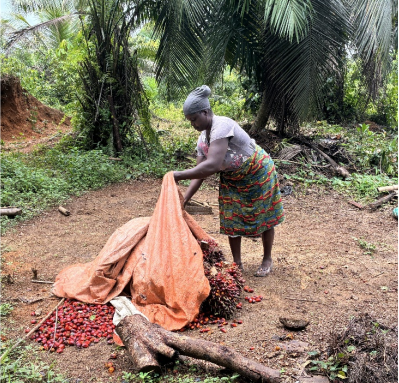
TARKUN TOWN, River Cess County – Before daylight, MissionMai Sam heads for her coconut and palm farm. The mother of eight and her husband who cuts palm for a living, have spent years growing and selling what she can, hoping to make the farm bigger and earn enough to keep all of their eight children in school.
So, when Sam, 48, learned that a Weah government program had set aside money to help vulnerable rural women like her, and that it was stolen by government officials, she was angry.
“They are wicked,” Sam says. “They send their children to big big school, then we here are suffering.”
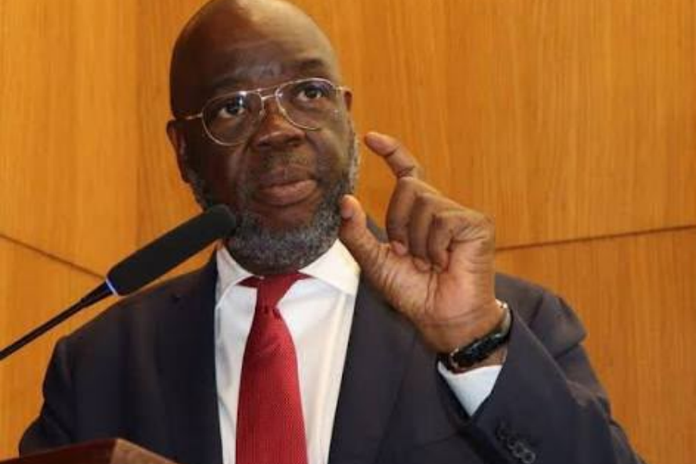
In April, Liberia’s Asset Recovery and Property Retrieval Task Force, indicted seven people over the alleged diversion of money from the 2023 Vulnerable Small Business Support Program, which was meant in part to fund the Rural Women Empowerment Fund. Those charged include former Mawine G. Diggs, Weah government commerce minister and officials connected to the ministry, the National Rural Women Structure of Liberia and the Liberia Marketing Association.
Court filings from June said US$493,000 and more than LRD 190 million (US1.2 million) was budgeted and disbursed but did not reach the beneficiaries and was instead used for personal gain. Those indicted face charges including theft of property, economic sabotage and criminal conspiracy.
The case has become the latest test of President Joseph Boakai’s anti-corruption drive. He created a Task Force in March 2024 to trace and recover stolen public assets. Since then, the Task Force has announced four rounds of indictments covering more than 60 cases and tens of millions of dollars in alleged theft. But nearly two years after it was established, it has won just one case.
In October, a jury at Criminal Court “C” found eight of 13 defendants guilty in the separate Saudi Rice corruption trial.
Those found guilty included former Foreign Affairs Minister Dee-Maxwell Saah Kemayah and former Internal Affairs Minister Varney A. Sirleaf. Three defendants were acquitted and the jury reached inconclusive verdicts for two others. The case concerned 29,412 bags of Saudi-donated rice valued at about US$500,000; prosecutors alleged 25,054 bags had been diverted or misapplied. The Task Force says it would defend the verdicts against possible appeals.
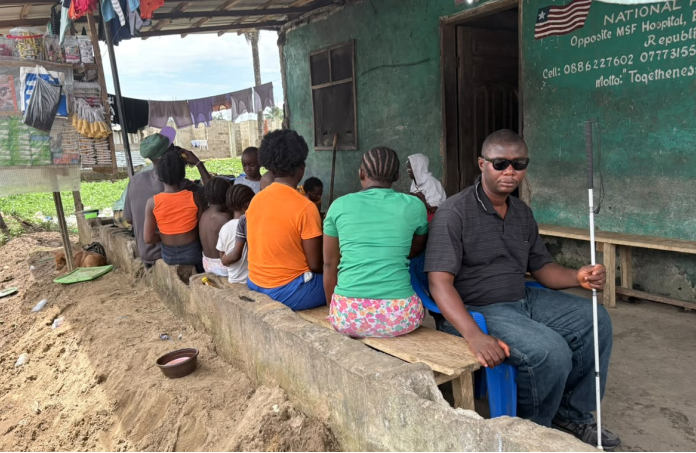
Women interviewed here in River Cess say money the funds say could have helped them expand farms, keep children in school, and become less dependent on others.
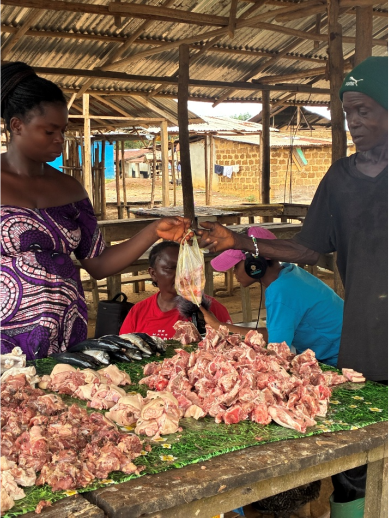
In Yarkpa’s Town, Jestina Johnson has sold dry and frozen goods for 20 years, buying from Buchanan and Monrovia and reselling them to support six children. She says she heard only vague talk that money had been sent for market women. She never received any.
Johnson says she was told she needed an identification card, but she did not understand what kind. She already had a business card and nobody clearly explained what additional document was required. By the time she thought to ask again, the opportunity had passed.
She now wants justice, not just arrests. “Let’s carry them to court,” she says.
Even the county authorities tasked with distributing the funds say they knew nothing about the project. Oretha W. Carlos coordinates the Gender Ministry’s work in River Cess and serves as an official of the Rural Women Empowerment Project, the local structure through which the fund was supposed to operate.
She says she learned about the fund from this reporter, not from the government she served.
“I am the secretary; I am not aware,” Carlos says. She said she would feel bad if money intended to help rural women was sent and then kept in other people’s hands.
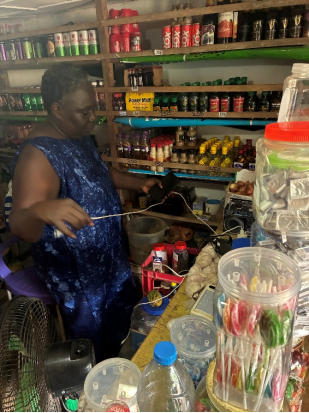
Saikon Johnson Hiennis works inside her small shop in River Cess County, where she has traded for more than a decade.
Even small amounts can go a long way for these women. Carlos says L$30,000 (US$176) she received through the rural women’s structure after a conference in Gbarnga, Bong County helped her expand a small shop selling rice, clothes and cooked food. With six children in school, she says properly managed support can help women pay school fees and build something their children can inherit.
Saikon Johnson Hiennis, who has traded in River Cess for more than a decade, says she heard about the fund on radio and from people passing through from other parts of the country. Her concern now is whether those arrested will lead anywhere.
“There’s a saying in this country now that when something happens after two to three days, it dies down,” Hiennis says. She wants to see justice done publicly so people can see that accountability is real.
Taskforce officials urged the community to be patient saying the indictment is only the start of a process that must move through the courts according to Liberian law before assets can be forfeited.
“Indictment is actually the beginning of the process towards conviction,” says Joseph Daniels, the Task Force’s public relations officer. “Without indictment we are heading nowhere.”
In June, Criminal Court ‘C’ denied Diggs permission to travel to the United States for medical treatment after an independent medical assessment found insufficient evidence that she needed care abroad. She remains barred from leaving Liberia. Daniels says no trial date has been set by the court.
Daniels blames the delays on an overloaded Criminal Court ‘C’, which handles corruption cases and the nine-month Supreme Court stay that temporarily froze the Task Force’s authority after a company under investigation challenged its legal standing.
Daniels points to another case as evidence that recovery efforts are still moving – the Task Force has traced about £8 million (US$10.70 million) to a British bank account and is pursuing proceedings in the United Kingdom, with support from partners in Ghana and the United States’ Federal Bureau of Investigations.
The backlog has strengthened calls for a dedicated anti-corruption court. Supporters argue that a specialized court could reduce the burden on Criminal Court ‘C’ and move corruption cases faster. President Boakai submitted a National Anti-Corruption Court bill to the Legislature in May 2026.
The proposal has also moved slowly. The Senate Judiciary Committee paused its review in May over process concerns and began consultations in June on competing versions of the bill which is also tied to a bill that would establish a war and economic crimes court. Advocates are urging the Legislature to pass both bills before Liberia takes the rotating presidency of the United Nations Security Council next month.
Civil society groups have welcomed the indictments but warned that prosecutions alone will not solve Liberia’s wider corruption problem. Center for Transparency and Accountability in Liberia, a transparency watchdog, has argued that the country also needs stronger procurement rules and public financial management.
In Tarkun, Sam is less interested in the mechanics of indictments, court motions, or legislative bills. She wants the government to finish the case and make sure rural women do not simply disappear from the story once the arrests fade from the news.
“Government should not forget about it,” she said. “Let them give our money so we can make our farms.”
This story was a collaboration with New Narratives as part of the “Investigating Liberia” project. Support for this reporting came from individual donors.
Support Independent Journalism
Your support helps FrontPage Africa continue delivering independent, credible, and impactful journalism. Every contribution strengthens our ability to investigate, inform, and hold power accountable while keeping quality journalism accessible to our readers.
Support our journalism or subscribe to receive the latest FrontPage Africa stories and updates.