The Liberia Petroleum Regulatory Authority (LPRA) has launched a five-year Strategic Plan covering 2026 to 2030, with a commitment to publish its first-ever State of the Petroleum Sector Report in 2027. The plan seeks to strengthen petroleum regulation, attract investment, develop local technical expertise and improve transparency and accountability in Liberia’s oil and gas industry.
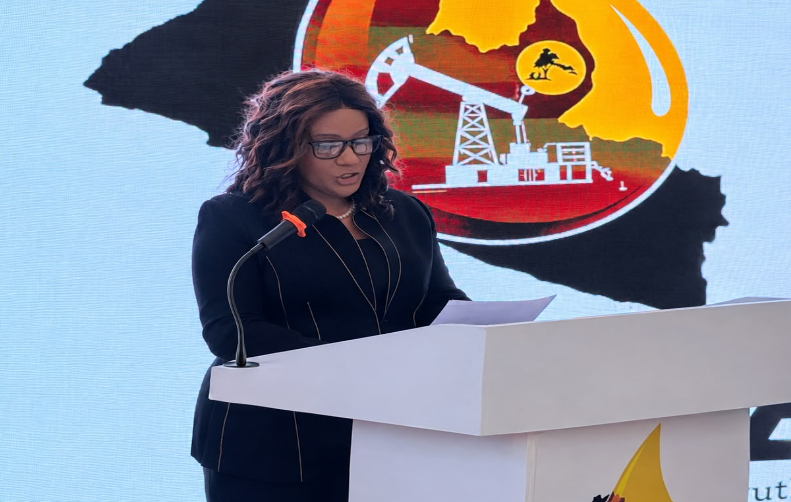
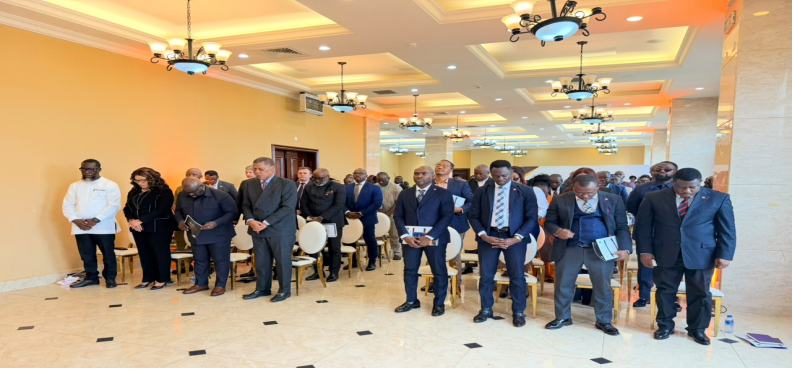
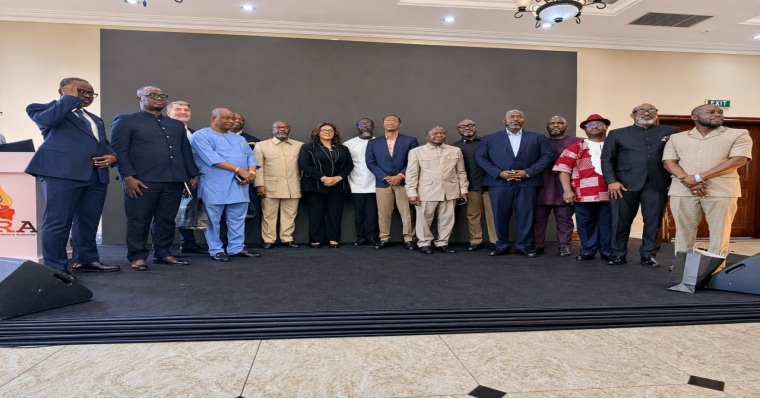
The Strategic Plan, covering 2026 to 2030, was unveiled to stakeholders Thursday at the Ellen Johnson Sirleaf Ministerial Complex in Monrovia by LPRA Director General Hon. Marilyn T. Logan, who said the roadmap would position Liberia to compete more effectively for global petroleum exploration investment while ensuring that the country’s natural resources are managed in the national interest.
Speaking at the launch, Minister of State for Presidential Affairs Samuel Stevquoah commended the LPRA for developing the plan, emphasizing President Joseph Boakai’s expectation that Liberians must benefit fairly from the country’s petroleum resources.
He said the President wants to ensure that Liberians have a fair share when international oil companies begin operations in the country.
“Liberians really want to know whether they will have a fair share when oil companies begin operation in Liberia,” Stevquoah said, reflecting the President’s position.
He noted that the strategic plan comes at a time when Liberia has opportunities to attract serious investors into petroleum exploration and advance development aspirations that citizens have long awaited.Stevquoah also called for stronger coordination among institutions responsible for regulating and managing the petroleum sector, saying the President expects all stakeholders to work together, respect each other’s mandates and draw on one another’s expertise.
At the launch, Logan disclosed that the Authority has contributed US$13.8 million to the national budget over the past three years, following what she described as an inherited situation of tax arrears and almost no revenue contribution to government.
She said the LPRA now ranks among Liberia’s eleven highest revenue contributors and is the best-performing state-owned enterprise in terms of revenue contribution.
The Director General also highlighted progress in attracting petroleum investment, revealing that Liberia went more than a decade without signing a new Production Sharing Contract before the current leadership took office in March 2024.
“Within 18 months, we changed that story: we secured and signed eight production sharing contracts, and the Legislature has since ratified all eight,” Logan said.
She added that a reconnaissance programme is underway in the Harper Basin, while the Authority’s 2026 Direct Negotiation Licensing Round, launched last month, is expected to surpass the results achieved in 2025.
Providing an industry perspective, Bertrand Touze, TotalEnergies Vice President and Country Delegate responsible for launching the company’s exploration programme in Liberia, said the country was once again attracting attention on the international petroleum exploration scene.
He disclosed that TotalEnergies has opened a new office in Liberia and engaged skilled Liberian companies to support its exploration activities.
Touze said the company expects approximately half a dozen vessels to arrive in Liberian waters in early 2027 to support exploration activities in its offshore blocks.
He added that TotalEnergies would maintain transparency in its operations and implement health, safety and environmental measures as it pursues the possibility of discovering oil or gas in Liberia.
Logan noted that Liberia is competing for a limited share of global exploration investment as international petroleum companies become more selective about where they commit capital. Citing International Energy Agency estimates, she said global upstream investment stood at just under US$570 billion in 2025, approximately four percent below the previous year.Against this background, she stressed that Liberia’s ability to attract investment will depend not only on its geological potential but also on credible regulation, ethical conduct, competitive contract terms and timely decision-making.
Under the new strategic plan, the LPRA has outlined six priority areas to guide its work through 2030. These include strengthening the management of petroleum rights and contracts, developing Liberian technical expertise, improving petroleum data management, protecting the environment and public safety, strengthening institutional governance and promoting transparency and local participation.
A major component of the plan is the development of local technical capacity. Logan announced that the Authority’s entire Technical Department will travel to France in January 2027 for practical training in petroleum data analysis. A second phase of training will be conducted in Monrovia, focusing on petroleum operations, safety and other technical areas. The programme will also be open to other actors in the petroleum sector.
She said the objective is to build a pool of Liberian specialists capable of independently assessing the country’s petroleum resources and effectively reviewing the technical activities of international operators, reducing reliance on external technical support.
On environmental protection and operational safety, the plan provides for joint regulatory protocols between the LPRA and the Environmental Protection Agency (EPA), alongside specialized training for inspectors in Health, Safety and Environment audits.
The Authority also intends to establish risk mitigation and emergency response frameworks and ensure that operators’ safety plans are reviewed before petroleum activities begin. Logan said these measures are particularly important as Liberia prepares for increased offshore exploration and possible drilling activities.
The strategic plan also places emphasis on transparency and public access to information. The LPRA intends to strengthen the management of petroleum data, establish clear access rules and regularly publish information to help Liberians understand the sector and identify realistic participation opportunities.
As part of its accountability commitments, Logan announced that the Authority will begin publishing an annual State of the Petroleum Sector Report in 2027. The strategic plan will also undergo open reviews in 2028 and 2030 to assess progress and make necessary adjustments.
She cautioned against judging the Authority solely by whether commercial oil discoveries are made, noting that geological outcomes are beyond its control.
“We are optimistic about the future, but do not judge us by whether oil is found; geology is beyond our control,” she said. “Judge us by the quality of the companies we attract and by our readiness to regulate them in the interest of Liberia.”
Meanwhile, the LPRA is expected to break ground for its new headquarters in January 2027. The facility will include a modern petroleum data processing and viewing center to strengthen the Authority’s technical and institutional capabilities.
The strategic plan will be implemented in three phases. The first, covering 2026 and 2027, will focus on establishing the Authority’s operational foundation. The second phase, from 2028 to 2029, will deepen regulatory delivery, while 2030 will focus on consolidating achievements and preparing the next strategic plan.
For his part, Representative Sam P. Jallah, Chairman of the House of Representatives Committee on Hydrocarbon, described the strategic plan as a policy framework that establishes clear targets and measurable standards for the petroleum regulator.
He said the document sends an important signal to citizens and investors that Liberia is working toward a regulatory environment built on fairness, integrity and forward-looking policies.
“When our regulatory institutions operate with clarity and integrity, investors’ confidence rises, illicit financing declines and the ultimate beneficiaries are the Liberian people,” Jallah said.
He reaffirmed the Legislature’s support for the five-year plan, pledging constructive oversight and legislative and policy support to facilitate its implementation.
Jallah said the Legislature would also hold the LPRA accountable for meeting the benchmarks and commitments outlined in the strategic plan.
Calling on government institutions, development partners, petroleum operators, civil society and the public to hold the Authority accountable, Logan said: “Measure us by what we deliver, not by what we promise.”
She said Liberia’s return to the global petroleum exploration map must be sustained through credible regulation, ethical engagement and responsible management of the country’s petroleum resources.