MONROVIA – Liberia’s tax collector is on the verge of closing the books on its best year ever, but a closer look at who is paying shows how much of that success rests on a few companies.
By Rodney D Sieh
As of Thursday afternoon, the LRA’s live revenue dashboard showed a “balance to be collected” of US$13,177,571.81 against the government’s consolidated FY2026 target of US$1,301,728,411.15. The fiscal year runs to December 31.
A banner across the dashboard declared: “Congratulations, Domestic Tax! FY2026 target achieved!”
Taxes above target
According to the dashboard:
• Domestic tax collections stood at US$902.26 million against a target of US$895.79 million, about US$6.5 million over.
• Customs collected US$307.69 million against a budget of US$280.93 million, about US$26.8 million over.
• Combined domestic revenue reached US$1.21 billion against a target of US$1.18 billion, a surplus of about US$33.2 million.
That puts Liberia past the US$1 billion mark the LRA set for itself last year. In 2025, the LRA collected about US$818 million, exceeding the approved target of US$804.6 million by US$13.4 million, which it called the highest outturn in the country’s history. If the dashboard figures hold, FY2026 domestic revenue is up nearly 48 percent on that record.
Because domestic revenue is already over target, the remaining US$13 million gap sits in the US$120 million budgeted from external resources such as donor grants. The dashboard’s totals imply that about US$73.6 million of that has come in so far, leaving a shortfall of about US$46 million. The tax surplus covers most of it, but not all.
Two companies, a third of the revenue
LRA data on its top revenue contributors show how concentrated the base is.
ArcelorMittal Liberia leads with US$289.4 million, more than double the next payer. That figure likely includes a one-off payment. Under the iron ore company’s third Mineral Development Agreement, a US$200 million signature bonus was payable to the Government of Liberia within 30 days of the effective date, and the Senate passed the agreement on January 30, 2026. Without that bonus, ArcelorMittal’s ordinary contribution would be about US$89 million.
Bea Mountain Mining Corporation is second at US$134.1 million. That is a steep rise for the gold miner. LEITI’s FY2023 reconciliation report listed government revenues attributed to Bea Mountain at approximately $33.47 million for that fiscal year. Record gold prices are driving the jump.
Together, the two mining companies paid about US$423.5 million, roughly 35 percent of all domestic revenue collected this year.
The top ten together paid about US$608.3 million, just over half of all domestic revenue.
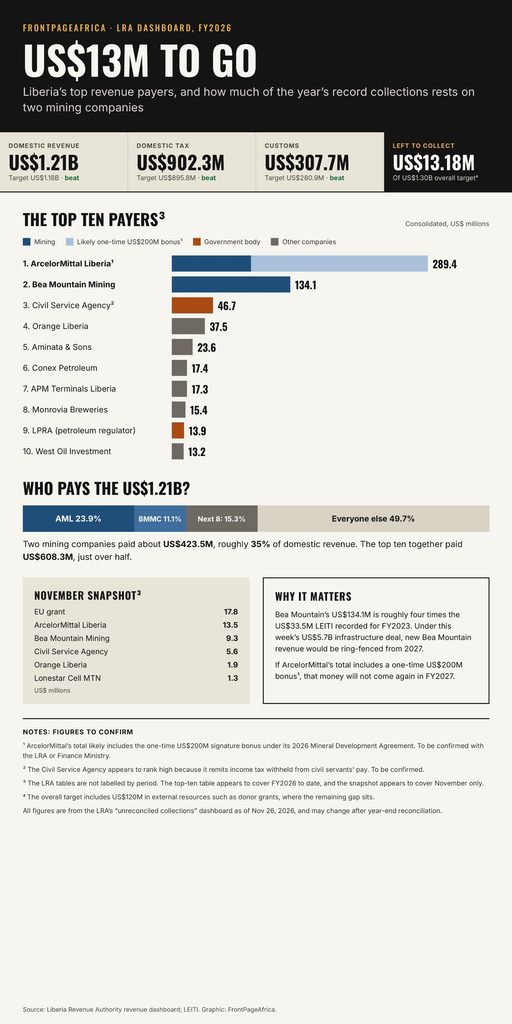
Two of the top ten are government bodies. The Civil Service Agency, in third place, appears largely because it remits income tax withheld from civil servants’ salaries. In effect, that is the government paying itself through its own payroll. The Liberia Petroleum Regulatory Authority is ninth.
Three of the top ten are fuel importers: Aminata & Sons, Conex Petroleum and West Oil. Orange Liberia is the only telecom company in the top ten. Its rival, Lonestar Cell MTN, is not on the list.
November snapshot
A separate LRA table shows the top contributors for what appears to be November alone. A European Union grant of US$17.8 million led the list. ArcelorMittal followed with US$13.5 million and Bea Mountain with US$9.3 million. Lonestar Cell MTN appears there at US$1.26 million, behind Orange at US$1.89 million.
Why it matters
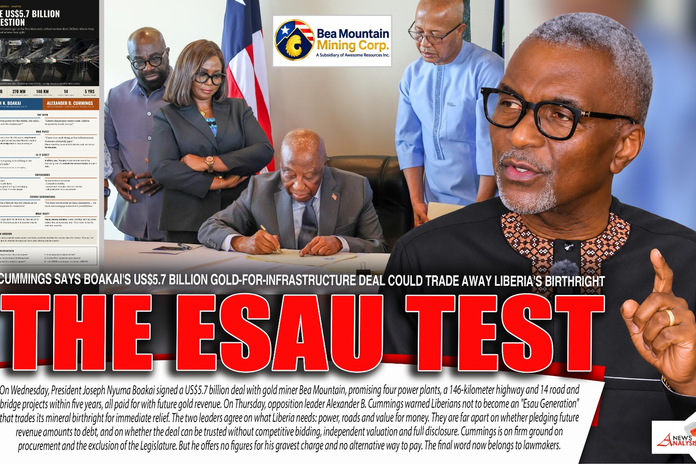
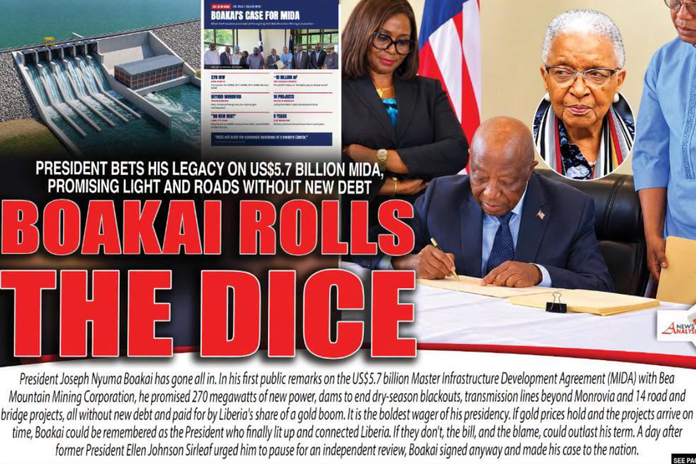
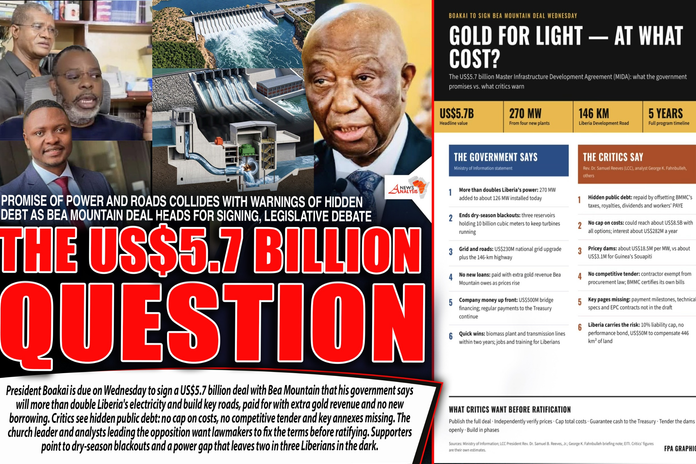
The figures have a direct bearing on this week’s biggest economic story. On Wednesday, President Joseph Nyuma Boakai signed a US$5.7 billion infrastructure deal under which new revenue from Bea Mountain, driven by higher gold prices, would be “ring-fenced” from 2027 to pay for power plants and roads.
The LRA data show what is at stake. Bea Mountain is now the government’s second-largest source of domestic revenue. How much of its future payments go into the infrastructure deal, rather than into the national budget, will matter more than ever.
The data also point to a broader risk. When one iron ore company and one gold miner provide over a third of domestic revenue, a fall in iron ore or gold prices, or a disruption at either mine, would hit the budget hard. And ArcelorMittal’s US$200 million bonus will not recur next year. To match FY2026, the LRA would have to make up that money from other sources in FY2027.
A caution on the numbers
The dashboard describes itself as showing “unreconciled collections.” The figures may change once the LRA reconciles its accounts at year-end, and the agency has not yet published final FY2026 figures.