Torli H. Krua’s book challenges the traditional narrative of slavery, colonization and Liberia as the author prepares for Friday’s Liberian launch
By Gerald C. Koinyeneh
Monrovia — After 36 years of research, refugee advocacy and historical inquiry, Liberian author and human rights advocate Rev. Torli H. Krua is bringing his latest book, Exile by Design: The Hidden Story of Mumbet, American Colonization, Liberia, and Juneteenth Across the Atlantic, to Liberia.
The book will be officially launched in Liberia on Friday, August 14, 2026, at 10:30 a.m. at the Royal Kings & Queens International Academy in Disco Hill, Robertsfield Highway, Margibi County, ten days ahead of its official United States launch at Boston City Hall Plaza on August 24.
The U.S. launch is scheduled to coincide with Elizabeth “Mumbet” Freeman Day and Liberia Flag Day, linking the story of an enslaved Black woman who challenged slavery in colonial America with Liberia’s own complicated history of freedom, colonization and the relationship between Africa and the United States.
For Krua, however, the book is more than a historical account.
It is an attempt to challenge what he describes as a 245-year-old narrative of American freedom that has never been fully extended to Black Americans, while also questioning Liberia’s traditional account of its own founding.
A Book Born From 36 Years of Research
Krua says Exile by Design is the culmination of nearly four decades of research shaped by his own experiences as a refugee and immigration advocate.
At the center of the book is the story of Elizabeth “Mumbet” Freeman, an enslaved Black woman who successfully challenged her enslavement in Massachusetts and became an important figure in the history of American liberty and equality.
Krua argues that Freeman’s story deserves greater attention because it demonstrates that an enslaved Black woman, despite having no formal education, was able to invoke principles of liberty and equality to challenge an institution that denied her freedom.
The author connects Freeman’s story to the broader history of American colonization, Liberia and the transatlantic consequences of slavery.
He argues that the promise of “equality, liberty and justice for all” remains incomplete for Black Americans and that the history of Liberia cannot be separated from America’s unresolved contradictions over slavery, citizenship and race.
The book therefore seeks to connect events that are often treated separately: slavery in America, the struggle for Black freedom, the creation of Liberia, Juneteenth and the continuing debate over America’s founding ideals.
Why Krua Says He Wrote the Book
Krua says the central motivation behind the book is to bring what he describes as a “truth buried for 245 years” into public discussion.
As America prepares to mark 250 years since its founding, he believes the country must confront the contradictions between its democratic ideals and the historical treatment of Black people.
His argument extends to Liberia.
Krua challenges what he describes as a “false narrative” surrounding the founding of Liberia, particularly the portrayal of colonization and the historical relationship between formerly enslaved people, American colonizationists and African communities.
Rather than presenting Liberia’s history simply as a story of the “Love of Liberty,” Krua says the country must confront the complicated and sometimes painful realities surrounding its creation.
He believes that confronting these histories is necessary for reconciliation between Liberia and the United States.
His message is not limited to historical criticism.
Krua says the lessons of Mumbet Freeman’s life should inspire Liberians to recognize that ordinary citizens can become agents of national transformation.
From “There to Here and Back”
A major theme running through the book is what Krua calls “From There to Here and Back.”
The concept emerged from his 36 years of work with refugees and immigrants.
Through Universal Human Rights International (UHRI), which he founded, Krua says he has worked with citizens from more than 40 countries, helping refugees and immigrants obtain opportunities abroad while encouraging them to use their education, skills, capital and networks to contribute to their countries of origin.
He says his experience has convinced him that migration should not necessarily represent a permanent separation from Africa.
Instead, it can become a pathway through which people acquire knowledge and resources and eventually return to help develop their communities.
That philosophy is reflected in the people invited to Friday’s launch.
Among them is John Allenton Kaska, whose refugee family Krua helped sponsor from Nigeria to the United States. Kaska now works in the New York City school system while pursuing a PhD. Kaska will serve as the keynote speaker during the launch on Friday.
Another invited guest is Hon. Jefferson G. Krua, who studied in the United States, including at Cornell University and Virginia Tech, before returning to Liberia about a decade ago to pursue entrepreneurship, agriculture and community development.
Also expected among the invited guests is Luke S.N. Krua, a PhD candidate in China who assisted with the book project and is currently in Monrovia.
Krua says these individuals represent the type of return on investment he hopes education and migration can produce for Liberia.
Senior Government and Diplomatic Officials Invited
The author has also extended invitations to senior Liberian government officials and representatives of the international community.
Foreign Minister and Dean of Cabinet Sara Beysolow Nyanti has been invited to attend Friday’s launch. In his invitation, Krua asked that she designate a representative of the Ministry of Foreign Affairs if she is unable to attend personally.
Education Minister Dr. Jarso Maley Jallah has also been invited, with Krua emphasizing that holding the launch at a school is particularly significant given the book’s emphasis on education, courage and civic empowerment.
The author has also invited Joseph Zadrozny, Chargé d’Affaires at the U.S. Embassy in Monrovia, or a representative of the Embassy.
Krua says the presence of Liberian and U.S. officials would underscore the historical and contemporary relationship the book seeks to examine.
Other invited guests include representatives of Samaritan’s Purse Liberia, the Grassroots Pastors Association, and other community and educational leaders.
A Personal Connection to Education
Krua’s emphasis on education is also rooted in his family history.
In his invitation to Education Minister Jallah, he recounts the story of his late father, Rev. Mahn C. Krua, who had no formal education but mobilized villagers to build a school after missionaries declined his request to establish one.
Krua says his father lived to 101 and left behind a philosophy that communities should not always wait for outsiders to solve their problems. That philosophy, he says, is central to Exile by Design.
His message to Liberian students is that education should not simply prepare young people to leave the country. It should equip them to return and contribute to Liberia’s development.
Remembering Benjamin Swan
The launch will also carry the legacy of the late Massachusetts Representative Benjamin Swan, whom Krua describes as a mentor and advocate for reconciliation and reciprocity between Liberia and the United States.
Swan advocated, among other things, for greater reciprocity between the two countries, including U.S. citizenship for people born in Liberia.
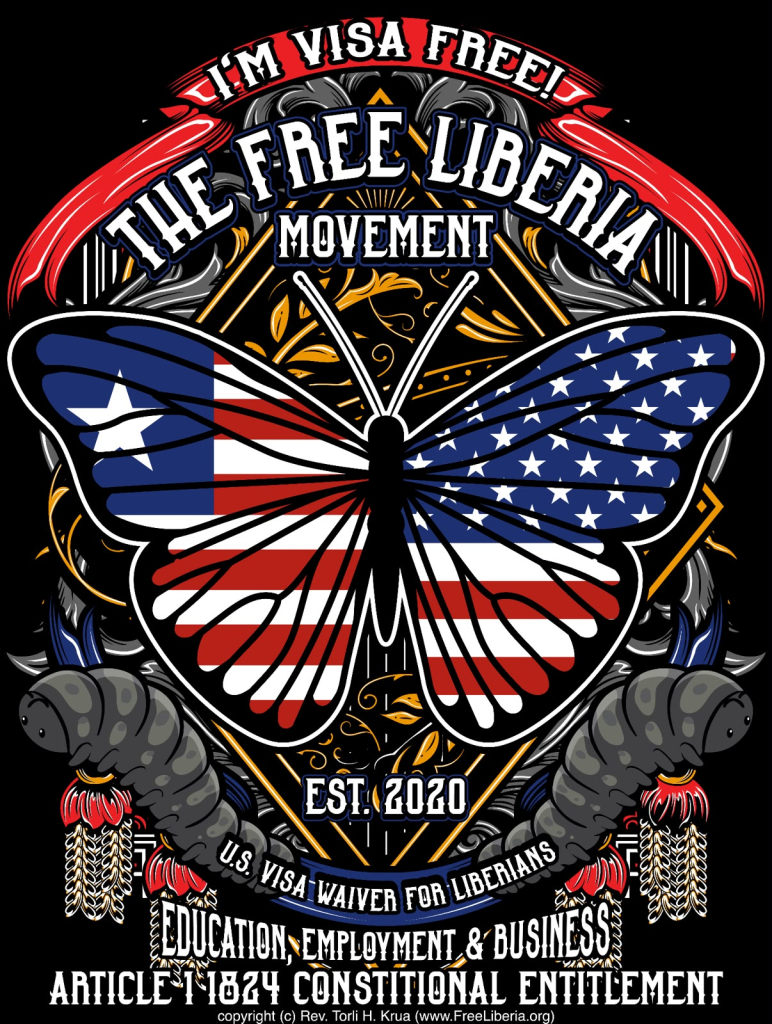
Krua says he intends to continue that conversation and is advocating for Liberia to become the first African country included in the U.S. Visa Waiver Program.
The book launch, therefore, is being framed not simply as a literary event but as part of a wider conversation about migration, citizenship, historical reconciliation and the future of Liberia-U.S. relations.
A History That Krua Wants Revisited
At its core, Exile by Design asks readers to reconsider familiar historical narratives.
Why was Liberia created? Who shaped the story of its founding? What was the relationship between American colonization and Liberia? What can the story of Elizabeth Freeman teach modern societies about citizenship and equality?
And can Liberia and the United States confront the uncomfortable parts of their shared history without allowing that history to permanently define their future?
Krua believes the answers require a willingness to confront uncomfortable truths.
He argues that America must “confess, repent, unite and reconcile” or risk deepening the divisions created by centuries of unresolved racial and historical contradictions.
For Liberia, he believes the same process requires a more honest examination of its own history.
The book’s Liberian launch on Friday will provide an opportunity for those questions to be debated on the soil of the country whose history sits at the center of Krua’s research.
And for the author, the journey that began 36 years ago is ultimately about more than the past. It is about what Liberia and America choose to do with it.
Support Independent Journalism
Your support helps FrontPage Africa continue delivering independent, credible, and impactful journalism. Every contribution strengthens our ability to investigate, inform, and hold power accountable while keeping quality journalism accessible to our readers.
Support our journalism or subscribe to receive the latest FrontPage Africa stories and updates.