Long before the beginning of active hostilities for the seizure of the Crimean Peninsula and parts of the Donetsk and Lu-hansk regions in 2014, the Russian Federation had been systematically conducting a policy of preparation for such a seizure for a long time.
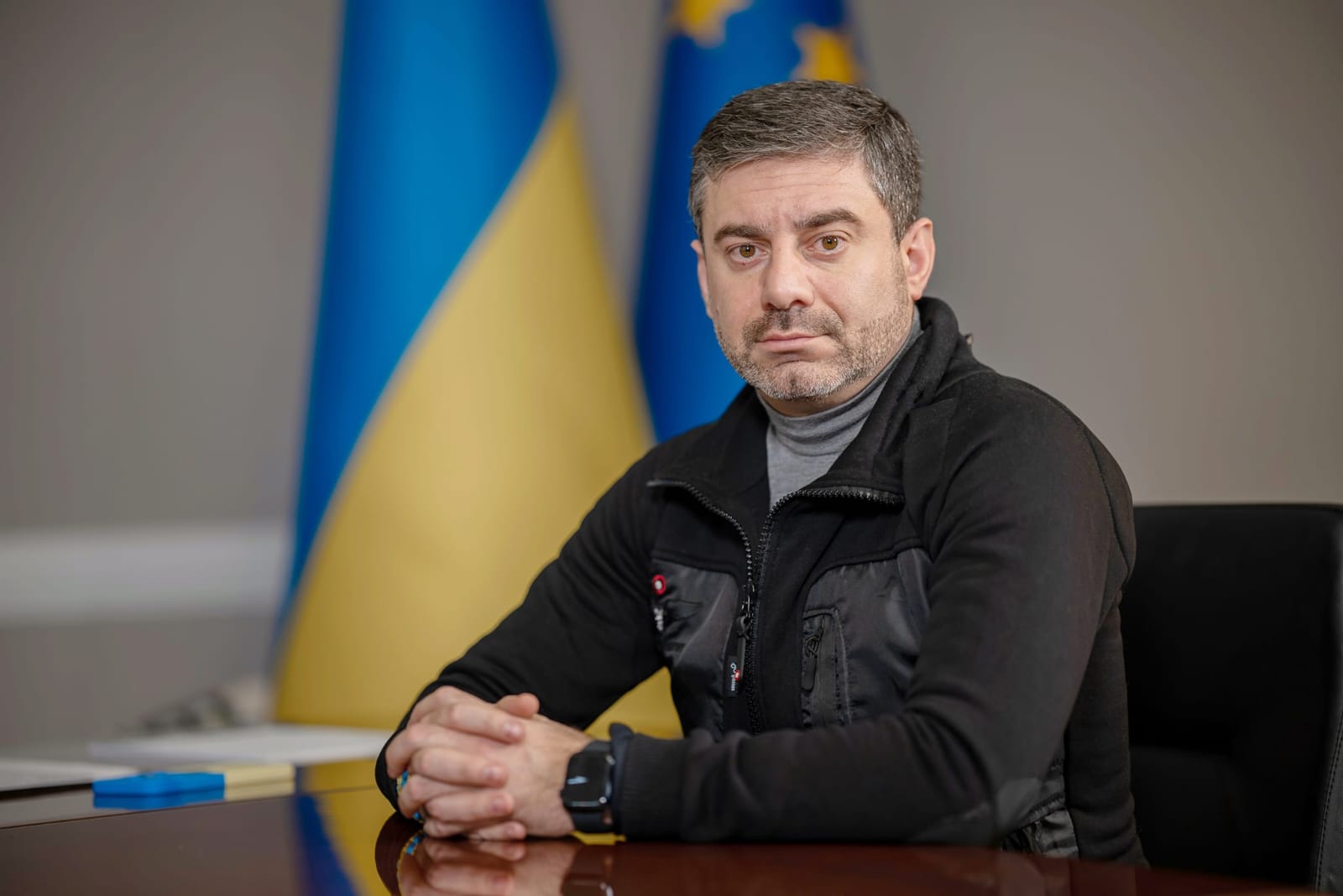
By Dmytro Lubinets, Ukrainian Parliament Commissioner for Human rights, contributing writer
For the most part, it was aimed at creating among the citizens of Ukraine a sense of belonging to the Russian Federation (common history, culture, language, etc.). Unfortunately, there are no detailed studies of the influence of the Russian Federation on various spheres of state policy of Ukraine before the beginning of the armed aggression in 2014.
We have a very limited range of studies on the practice of cognitive occupation» as the seizure by the Russian Federation of information, cultural, educational spaces as a prerequisite, a preparatory stage of an eventual occupation by using the armed forces. This effect requires detailed analysis and description.
After the independence of Ukraine, there was no de facto separation and formation of Ukraine’s own information field. In the period prior to the beginning of the armed aggression against Ukraine, the Russian Federation invested significant resources in the promotion and support of Russian information products on the territory of Ukraine and in the creation of a single information space. This was facilitated by the broadcasting of Russian television channels in Ukraine, the presence of
Russian satellite channels in Ukraine, Russian radio, etc. Due to the propaganda of war and violence, Russian propaganda TV channels were banned in Ukraine in 2014, such as NTV, Russia-24, Channel One, Russia-1, Zvezda, Life News, Russia Today, and several others.
Many media outlets that spread Russian narratives were directly or indirectly funded by the Russian Federation. In addition to the national channels, the Russian Federation contributed to the creation of regional (local) media that broadcast Russian narratives, especially in the border regions (Luhansk, Donetsk regions). Regional media could also be affiliated with Russian companies (for example, Alex, a broadcasting company) or be part of political projects (for example, the Party of Regions).
An important element of the creation of a common information space and the influence of the Russian Federation on Ukrainian society was the creation of a single Internet space through the popularization of Russian so-cial media (Vkontakte, Odnoklassniki, Telegram), as well as Russian influencers and bloggers After the occupation of Crimea, the Russian Federation continued to exert influence on the Ukrainian population in the territories controlled by the Ukrainian government, in particular in the Kherson region.
This informational influence was exerted by seizing the broadcasting frequencies of FM radio stations. The influence of Russian culture on Ukrainian citizens was very active and did not stop at the time of Ukraine’s independence.
At the center of the humanitarian policy of the Russian Federation was the idea of «one people», i.e. the unity of the Ukrainian and Russian peoples, but from the point of view of the inferiority of the Ukrainian people. In addition, the Russian Federation actively ensured its presence on the territory of Ukraine, especially in the Crimea.
The Russian Federation actively financed the activities of Russian cultural centers and «houses» on the territory of Crimea, and also held various cultural events and festivals on the territory of Ukraine, in particular on the territory of the Crimean Peninsula, long before the beginning of the occupation.
A separate channel for spreading the influence of the Russian Federation on the territory of Ukraine, especially on the currently occupied territories, was the UOC-MP. The priests of the UOC-MP did not condemn the occupation of Crimea but consecrated the military equipment of the Russian Federation. In the Donetsk region, one of the centres for the dissemination of Russian narratives is the Holy Dormition Svyatohirsk Lavra (a UOC-MP monastery in Svyatohirsk, Donetsk region). According to various reports, the monastery actively supported the Russian Federation’s invasion of the Donetsk region in 2014: in addition to organizing mass prayers in support of representatives of the DPR armed groups, the monastery’s hieromonks directly participated in hostilities on the side of pro-Russian paramilitary groups.. Education is a crucial factor in the formation of a political nation, ensuring the continuity of knowledge and the transmission of historical and cultural narratives. Education in the territories of the Crimean Peninsula, Donetsk and Luhansk regions occupied in 2014 was characterized by the systemic influence of the Russian Federation, the predominant use of the Russian language in education at all levels (from preschool to higher education institutions).
Several branches of Russian educational institutions operated on the territory of Ukraine, in particular on the Crimean Peninsula, before the occupation of the territory in 2014. The Russian Federation used various methods to influence Ukrainian youth: participation in training in the Russian Federation, spreading influence on young people through Russian social media, organizing military sports games, creating computer games, especially on historical topics, provoking various forms of confrontation between Ukraine and Russia, etc.
The Russian Federation had a significant influence on political and public life in Ukraine. Pro-Russian narratives, the position on the undisputed path of Ukraine’s development, together with the Russian Federation and the strengthening of integration processes between the countries, were spread by the controlled political parties.
As for civil society associations, it is important to note a noticeable tendency to create and/or support various hunting organizations, Cossack organizations (Kuban Cossacks, Cathedral Cossacks, etc.), civil society organizations of veterans of law enforcement agencies, special services, and the military, which actively interacted with similar structures in the countries of the former USSR and whose members later became the personnel base for command posts during the occupation.
Support Independent Journalism
Your support helps FrontPage Africa continue delivering independent, credible, and impactful journalism. Every contribution strengthens our ability to investigate, inform, and hold power accountable while keeping quality journalism accessible to our readers.
Support our journalism or subscribe to receive the latest FrontPage Africa stories and updates.