“Are they true reformists as in the true meaning of reformism, or are they a bunch of noisemakers who are seeking attention?” – Austin S. Fallah.
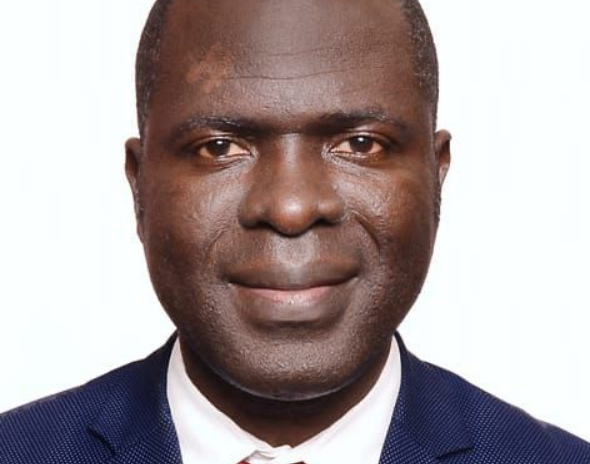
By: Austin S Fallah – A True Son of the Planet Earth Soil: [email protected]
PART-2
President Joseph Nyuma Boakai: “Public service is a trust, not an entitlement.”
President Joseph Nyuma Boakai: Executive Mansion statement, August 15, 2025. INTEGRITY: “They were not appointed to be served but to serve.”
President Joseph Nyuma Boakai: NATIONAL RENEWAL: “When we work together, there is nothing we cannot overcome as a people.” Source: State of the Nation address, January 29, 2024.
Former President Ellen Johnson Sirleaf: INSTITUTIONAL REFORM: In her 2013 statement on reforming Liberia’s oil sector, former President Sirleaf identified accountability and transparency as central objectives of reform. She also emphasized competitive bidding and ensuring that the sector’s benefits reach Liberians and future generations.
Source: Former President Sirleaf’s official statement on the restructuring of the National Oil Company of Liberia, September 17, 2013.
Former President Sirleaf: ANTI-CORRUPTION:
In her 2011 anti-corruption address, former President Sirleaf described institution-building, stronger oversight, and transparency systems as important components of Liberia’s anti-corruption strategy.
Former President George Manneh Weah: INTEGRITY IN LEADERSHIP; “The foundation of the New Liberia must be reinforced by the steel of integrity.”
Former President George Manneh Weah: Inaugural address, January 22, 2018. Connection to the theme: “Integrity must be the foundation of reform regardless of which political party holds power. Without it, even attractive reform programs risk becoming political performances rather than lasting public achievements.”
Former South African President Nelson Mandela: “Those who conduct themselves with morality, integrity and consistency need not fear the forces of inhumanity and cruelty.” Source: Mandela’s British Red Cross Humanity Lecture, London, July 10, 2003. Application: A reformer must demonstrate ethical consistency, even when doing so is politically inconvenient.
Political Activist Martin Luther King Jr. — United States:
“Injustice anywhere is a threat to justice everywhere.”
Source: King’s 1963 Letter from Birmingham Jail and related speeches; documented in the King Institute’s historical records.
“Reform is a moral responsibility, not a political costume; it must be worn in the service of the people, not displayed for applause.”-Austin S. Fallah.
On political hypocrisy: “A politician who speaks the language of change but protects the privileges of injustice has changed the vocabulary of power, not the character of government.”-Austin S. Fallah
On accountability: “The true test of reform is not how loudly leaders condemn yesterday’s corruption, but how honestly they confront today’s corruption, including their own.” – Austin S. Fallah.
On democratic responsibility:
“Reformers are not defined by the enemies they defeat, but by the institutions they strengthen, the rights they protect, and the opportunities they create.” – Austin S. Fallah
On Liberia’s future:
“Liberia does not need reformers who merely change the faces around the table; it needs reformers who change the rules for the common good, strengthen the institutions, and improve the lives of the people outside the room.”- Austin S Fallah.
On political consistency: “If accountability is a virtue when your opponent governs, it must remain a virtue when your own party holds power.” – Austin S Fallah
In every age, democracy is tested not only by the strength of its laws and institutions, but also by the character of the people who claim to serve it.
Political language is powerful. Words such as justice, freedom, equality, and reform can inspire citizens to sacrifice, organize, vote, and imagine a better future.
Yet ambitious individuals and groups can misuse these same words to seek power without responsibility.
Among the most abused labels in public life is the title reformer.
Too often, politicians, parties, and organizations call themselves reformers simply because the name sounds honorable, modern, and popular.
They use it as a campaign slogan, a shield against criticism, or a tool to gain public trust.
But a true reformer is not someone who loudly claims the title.
A reformer is someone whose actions, moral integrity, intellectual seriousness, and commitment to the common good earn that title from the people.
To recover democracy’s real meaning, society must ask an important question: Who has the right to be called a reformer?
Is reform a title that an individual or group can award to itself, or is it an honor that must be bestowed by citizens after years of principled public service?
The answer is clear. No person or organization should be accepted as reformist merely because it declares itself so.
The title must be earned through evidence: ethical behavior, practical policies, respect for human dignity, and a demonstrated willingness to improve the lives of ordinary people.
Reform is not a costume that can be worn during an election season.
It is a moral responsibility carried every day, especially when no cameras are present and no applause is guaranteed.
At its core, democracy is more than voting.
Elections are essential, but democracy also requires accountability, transparency, equal citizenship, public participation, and the rule of law.
It depends on citizens who can question authority without fear and leaders who understand that power is a public trust rather than private property.
When democracy loses these qualities, it may still hold elections, but it becomes a hollow performance.
In such systems, leaders speak in the language of reform while practicing corruption, favoritism, intimidation, and selfish accumulation of wealth.
They may use democratic institutions to gain office, but they do not honor democratic values once they hold power.
A genuine reformer recognizes that the purpose of political power is to serve society, particularly those whom society has neglected.
Political reformers may work as individuals, movements, civic organizations, public officials, journalists, scholars, labor leaders, or community advocates.
Their form may differ, but their central purpose is the same: to improve the institutions and conditions that shape people’s lives.
They seek to reduce injustice, strengthen public institutions, expand opportunity, protect rights, and make government more responsive to the people.
They do not see citizens as tools to manipulate, votes to purchase, or crowds to excite with empty promises.
They see citizens as human beings with dignity, intelligence, and legitimate needs.
A true reformer, therefore, begins with a belief in the common good.
The common good does not mean that everyone will agree on every policy.
Democratic societies naturally contain different interests, religions, social classes, ethnic groups, and political opinions.
Reform does not demand uniformity. Instead, it demands that leaders look beyond personal gain and ask what will enable the greatest number of people to live with security, opportunity, and dignity.
A reformer understands that a nation cannot be healthy when a small group enjoys privilege while large numbers of citizens remain trapped in poverty, unemployment, poor education, inadequate health care, and political exclusion.
This is why reform cannot be separated from moral character.
A leader who speaks about change but steals public funds is not a reformer.
A party that promises equality but rewards only its friends and relatives is not reformist.
An organization that condemns corruption in its opponents while excusing corruption among its own members has no moral right to claim the name of reform.
Such people are not agents of public renewal; they are opportunists using popular language to protect private interests.
They may wear the language of democracy, but their behavior reveals a different reality.
The danger is especially serious in societies with long histories of inequality, weak institutions, or authoritarian rule.
In those settings, people understandably hope for leaders who will bring rapid improvement.
They may be desperate for jobs, safety, roads, schools, affordable housing, clean water, and a fair justice system.
Politicians who understand this desperation may exploit it.
They appear before the public promising transformation, but after gaining power, they become what they claimed to oppose.
They replace one corrupt network with another. They use public contracts to enrich allies.
They silence criticism by calling opponents enemies of progress.
They confuse loyalty to themselves with loyalty to the nation.
Such leaders are like predators that feed on people’s hopes.
They may not resemble the traditional tyrant who rules openly by force, because they often use subtler methods.
They may smile, speak eloquently, attend public ceremonies, and repeat the words “reform,” “change,” and “the people.”
But behind those words may stand greed, dishonesty, and contempt for ordinary citizens.
Their politics become a form of extraction: they take money from public institutions, take opportunities from the young, take land from communities, and take dignity from those who cannot defend themselves. They are not reformers.
They consume public wealth and destroy public trust.
For this reason, moral integrity is not an optional quality in a reformer; it is the foundation.
Integrity means that a person’s public statements match private behavior. It means refusing bribery even when no one is watching.
It means being honest about mistakes and accepting criticism.
It means disclosing conflicts of interest and avoiding using political office for personal enrichment.
It means treating political opponents as fellow citizens, not enemies to be crushed.
Most importantly, integrity means placing principle above convenience.
Anyone can defend justice when it is easy. The true test comes when justice requires sacrifice.
Intellectual excellence is equally necessary.
Good intentions alone do not create effective reform.
A person may sincerely care about the poor, the unemployed, or the marginalized, yet still promote policies that fail because they are poorly designed or based on shallow understanding.
Reformers must be serious students of society. They must understand history, economics, law, public administration, education, and the lived experiences of ordinary citizens.
They must listen to evidence, consult experts, and be willing to change course when facts prove them wrong.
This does not mean that reformers must be perfect scholars or possess elite credentials.
Wisdom can come from communities, workers, farmers, teachers, parents, and young people who have experienced the failures of public systems directly.
However, genuine reform requires humility and a commitment to learning.
A reformer does not pretend to know everything. Instead, they ask difficult questions: Why are schools failing?
Why do public funds disappear?
Why do young people lack jobs?
Why do women, minorities, rural communities, or disabled citizens face barriers to full participation?
Why do some laws protect the powerful but punish the vulnerable?
These questions are not merely academic. They are the beginning of responsible political action.
Moreover, a reformer must understand that lasting change requires institutions, not only personalities.
Many societies make the mistake of waiting for a heroic individual to rescue them.
Charismatic leaders can inspire people, but democracy cannot depend on one person’s virtue.
When a nation places all its hope in a single leader, it becomes vulnerable to disappointment, manipulation, and authoritarianism.
A true reformer works to build institutions that remain strong even after he or she leaves office.
These include independent courts, free media, transparent electoral systems, professional civil services, accountable police forces, strong local governments, and schools that teach civic responsibility.
Groups can also be reformist, but only if their internal behavior reflects the values they promote publicly.
A political party cannot claim to support democracy while refusing to hold fair internal elections.
A civic organization cannot demand transparency from government while hiding its own finances.
A movement can not speak about equality while silencing women, young people, or minority members within its ranks.
Reform begins at home.
If an organization is unjust, secretive, or authoritarian internally, it will likely reproduce those habits if it gains national power.
The public therefore plays a crucial role in deciding who deserves the name reformer.
Citizens should not accept labels without evidence. They should ask leaders and groups difficult questions.
What have they accomplished? How do they obtain and spend money?
Have they defended the rule of law even when it harmed their own political interests?
Do they respect criticism? Do they have clear policies, or only slogans?
Do they empower communities, or do they demand blind loyalty?
Do their families and close associates benefit unusually from public office?
Are they committed to serving all citizens, or only those who support them?
The people are not as blind as corrupt politicians often assume.
Citizens observe. They remember promises. They compare speeches with results.
They notice when roads remain broken, hospitals lack medicine, schools deteriorate, and unemployment rises while officials become wealthier.
They see the difference between a leader who visits poor communities for photographs and a leader who creates policies that improve those communities’ lives.
The public watches with the precision of an eagle high above the earth, able to recognize movement from a great distance.
The public also listens with the patience and sensitivity of an elephant, alert to sounds and vibrations that others may ignore.
Political actors may believe they can deceive people forever, but distrust accumulates, memory survives, and truth eventually finds an audience.
Citizens must also recognize their own responsibility in protecting the meaning of reform.
Democracy can not survive if people only criticize leaders but refuse to participate.
Voting matters, but it is not enough.
Citizens must follow public issues, support independent journalism, participate in local meetings, demand transparency, and reject ethnic, religious, or regional manipulation.
They must refuse to sell their votes for short-term gifts and reject the idea that political loyalty requires silence.
When citizens demand more from their leaders, leaders are forced to rise, or are replaced.
The title reformer should therefore never be claimed casually.
It is not a decoration for a political poster, a reward for speaking loudly, or a prize reserved for those who win elections.
It is a demanding standard of conduct.
A genuine reformer is measured by service rather than self-promotion, by courage rather than convenience, by honesty rather than rhetoric, and by results rather than promises.
Such a person or group seeks to lift people from social, economic, and political deprivation, not to use their suffering as a ladder to personal power.
If individuals and organizations do not possess these qualities, they should stop claiming a title they have not earned.
They should not call themselves reformers while practicing corruption.
They should not speak of democracy while denying others a voice.
They should not promise liberation while creating new forms of dependency and exclusion.
The name of reform must be protected because it carries the hopes of people who deserve better than deception.
To restore the true meaning and spirit of democracy, society must reserve the word reformer for those who demonstrate human compassion, intellectual discipline, moral rectitude, and unwavering commitment to the common good.
Real reformers do not merely announce change; they live it. They do not merely seek power; they seek justice.
And they do not ask the people to trust them because of a title.
They earn that trust through the unmistakable evidence of their character and their service.
Support Independent Journalism
Your support helps FrontPage Africa continue delivering independent, credible, and impactful journalism. Every contribution strengthens our ability to investigate, inform, and hold power accountable while keeping quality journalism accessible to our readers.
Support our journalism or subscribe to receive the latest FrontPage Africa stories and updates.