Liberia is grappling with a widespread water, sanitation and hygiene (WASH) emergency that is not only undermining public health but also costing the country hundreds of millions of dollars annually.
By Zazay Kolubah
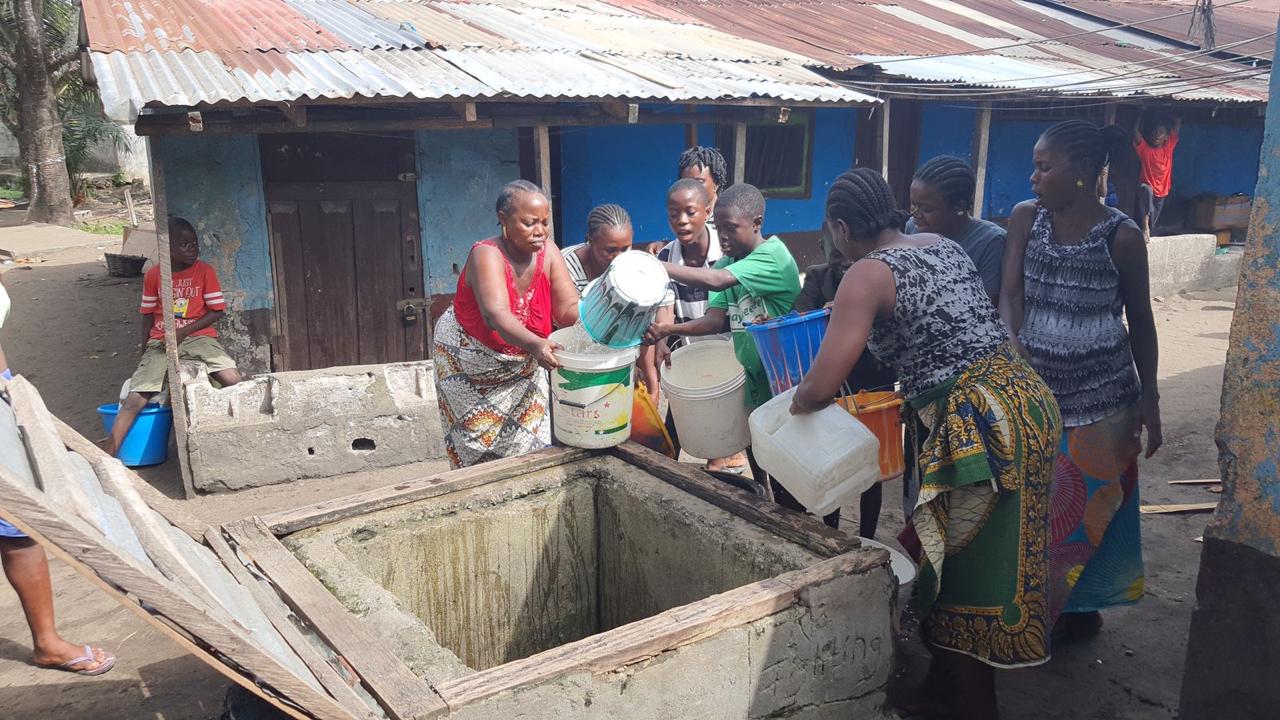
The scale of the problem is stark. According to the 2025 WaterAid Global Statistics on WASH, released this September, one in five Liberians, around 1.2 million people, lack access to clean water near their homes. Three out of four people do not have a decent toilet, and over 90 per cent lack soap and water to wash their hands at home.
“From me, these are not just statistics; they represent lives lost and futures cut short,” said Jebbeh Sesay, Officer In-Charge, Bomojah Clinic, Grand Cape Mount County, Liberia. I recall a day when a young mother arrived in labour, only to find the clinic had run out of clean water. Staff had to fetch water from a distanced community handpump, just to wash their hands and clean delivery tools.
“We did what we could,” she said, “but the risk of infection was high. That baby survived, but not every child is so lucky.”se in ten healthcare facilities have either dirty water, clean
Globally, almost one in ten healthcare facilities have either dirty water, clean water that is not on site or no water.
The statistics coincide with the WHO and UNICEF’s Joint Monitoring Programmes, or JMPs, recently released progress report (2000-2024), which evidences the current status of WASH globally, noting that 696 million people, almost one in ten, don’t have clean water close to home. This is one of the realities in Liberia that the consequences are deadly even for the younger generation. Nearly 500 children under five die each year from diarrhoea linked to unsafe water and poor sanitation, a preventable tragedy that continues to unfold in silence in the country.
Economic impact
But, beyond the human toll, the economic impact is profound. The first known WASH Cost-Benefit Analysis specifically on Liberia, launched in July 2025 by WaterAid Liberia, estimates that $231 million was lost in 2023 alone due to inaction for WASH. This estimate is equivalent to 5.3 percent of Liberia’s GDP, and 44 per cent per-capita. These losses stem from time spent collecting water, searching for toilets, and the productivity lost due to illness and premature death.
The report, led by the globally recognized WASH economist Guy Hutton, offers a compelling case for investment. It projects that up to $171 million in losses could be prevented annually between 2024 and 2030 through targeted improvements in WASH infrastructure and services. Importantly, 67 per cent of the benefits would go to women and underserved communities, who bear the brunt of time lost and health risks in households without adequate services. WASH-related diseases in Liberia account for 5.8 per cent of national health spending, draining resources that could otherwise strengthen healthcare systems and save lives. In schools, only 26.8 per cent have access to basic sanitation services, leaving thousands of children exposed to preventable illnesses and undermining their right to a safe learning environment.
The lack of clean water, sanitation and hygiene is not only a barrier to health, but rather it is a drag on national development, education, and gender equality.
Investment needs
The sector is severely underfunded. Between 2020 and 2024, only USD 1 million of the national budget was directly allocated to WASH annually, just 0.03 per cent of GDP and USD 0.19 per capita. Tariff recovery remains limited, particularly in rural areas. The country’s National WASH Strategy is outdated, and institutional capacity is limited.
Official Development Assistance (ODA) has been the dominant source of funding, representing more than 96 per cent of WASH financing.
However, ODA for WASH services has declined sharply in recent years, falling from 8.7 per cent of total aid in 2019 to just 2 per cent in 2023. This could be even worse between 2024 and 2025 due to the USAID stop-work order, thereby exacerbating the vulnerability of the WASH sector’s gains in the past years.
“National leaders and partners must not afford to wait. Every dollar invested in WASH is a step toward saving lives, empowering women, and unlocking economic growth,” said Timothy Kpeh, Head of the Civil Society Coalition on WASH.
Some solutions
To reverse the WASH crisis, the Government of Liberia must urgently reflect on how it mobilises and allocates resources. One immediate opportunity lies in operationalising the 2022 Revenue Sharing Law by empowering local governments to retain and allocate a portion of locally generated revenue specifically for basic WASH infrastructure and maintenance. This would ensure that communities have the autonomy and means to address their most pressing needs.
Public funds should also be used strategically and transparently to attract trust and bring about donor and private sector co-financing, and maximise value-for-money. This shift can be justified not only by the moral imperative but also by the significant cost savings in health spending and productivity gains. Lastly, we must not ignore support for WASH in schools, including Menstrual Health and Hygiene Management, and gender-responsive WASH in education
Donors have a critical role to play. They must align funding with the National WASH priorities in the five-year national development plan – ARREST. In the 8.3 billion plan, the government targets 65 per cent of the population with access to safely managed water, and 90 per cent of the population will have at least basic water services, while 75 per cent of schools are targeted with functioning WASH facilities.
Grants should be structured to leverage additional investment, and robust data collection must be prioritized to guide decision-making, track progress, and ensure accountability.
As global leaders gather for the United Nations General Assembly in New York, campaigners are calling for renewed commitment to achieving universal access to WASH services by 2030 — a goal that remains far out of reach for many in Liberia.
Support Independent Journalism
Your support helps FrontPage Africa continue delivering independent, credible, and impactful journalism. Every contribution strengthens our ability to investigate, inform, and hold power accountable while keeping quality journalism accessible to our readers.
Support our journalism or subscribe to receive the latest FrontPage Africa stories and updates.