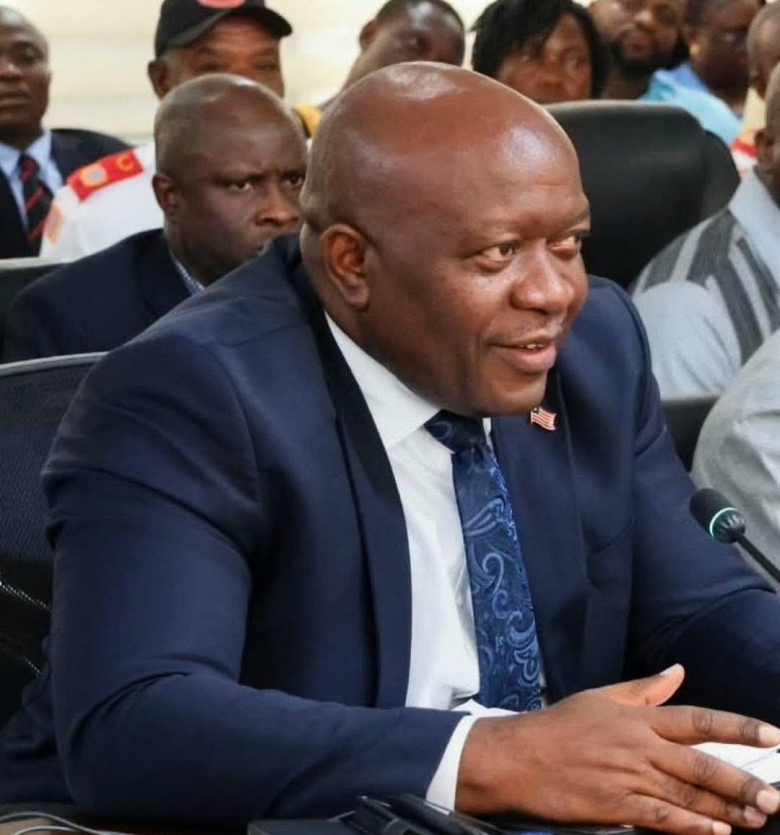
MONROVIA – The Minister of the Ministry of Finance and Development Planning (MFDP), Augustine Kpehe Ngafuan, has called for stronger accountability in Liberia’s education sector, stressing that public resources must follow the people and activities directly responsible for educating Liberian children.
Speaking Tuesday, October 6 at the Executive Budget Hearing with the Ministry of Education, the University of Liberia, Tubman University and other county-based universities, Minister Ngafuan said the government must do more than simply allocate money to the education sector—it must be able to track what is actually happening on the ground, particularly inside classrooms.
“We need to track what’s happening in the classrooms because if we pay those who aren’t in the classrooms, they are taking away money from those in the classrooms,” Minister Ngafuan indicated.
His remarks placed a human face on the government’s broader push to make the budget process more focused on results, accountability, and value for money.
For Minister Ngafuan, the question is not simply how much money the government puts into education, but whether those resources are reaching the people and institutions where they can make a difference.
He averred that the ongoing Executive Budget Hearings are intended to help the Ministry of Finance understand what ministries and agencies have accomplished with resources provided under the current budget, while identifying their most important priorities going forward.
“What I’m going to do is to clear out many entities to understand quickly what they’ve done with resources appropriated in the current budget and to understand the core priorities going forward,” he underscored.
Putting Classrooms at the Center
The MFDP Minister’s message comes as the government reviews competing demands from ministries, agencies, universities and other public institutions ahead of the preparation of the next national budget.
He acknowledged that government resources remain limited, despite progress in domestic revenue mobilization and said Liberia cannot afford to fund every request at the level being requested. That reality, he maintained, makes prioritization and accountability essential.
The Minister urged education authorities and institutions to help the government make the difficult choices by identifying where limited resources can have the greatest impact.
His classroom-focused argument was straightforward: resources intended for education should ultimately strengthen teaching and learning, rather than be absorbed by people or activities that are not contributing to the work for which the money was appropriated. “It’s Not a Matter of How Much, It’s a Matter of How Well,” he asserted.
Minister Ngafuan also challenged the notion that better outcomes in education are simply a matter of allocating more money. “It’s not a matter of how much, it’s a matter of how well,” he stressed.
He explained that two institutions can receive similar amounts of funding but produce different outcomes depending on how the money is allocated, how teams perform, and how effectively resources are executed.
That, he said, is why the budget process must look beyond figures and examine performance and execution.
The Minister likened the challenge to a parent with five children but enough resources to send only three to school. Rather than leaving the decision entirely to the parent providing the resources, he said the ministries and agencies that understand their own needs best must help determine which priorities should come first.
“You know those children better than we do,” he told the entities participating in the budget hearings.
Budget Built Around Results
The education-sector hearing is part of a broader series of Executive Budget Hearings being conducted by the Ministry of Finance as the government works toward the October 31 deadline for submission of the national budget.
Minister Ngafuan intimated that the government is determined not only to meet the deadline but also to submit a budget that reflects the country’s real priorities.
For the education sector, his message was clear: the success of an education budget must ultimately be visible where learning takes place in the classrooms.
Support Independent Journalism
Your support helps FrontPage Africa continue delivering independent, credible, and impactful journalism. Every contribution strengthens our ability to investigate, inform, and hold power accountable while keeping quality journalism accessible to our readers.
Support our journalism or subscribe to receive the latest FrontPage Africa stories and updates.