MONROVIA — Lawyers representing two Armed Forces of Liberia (AFL) sergeants dismissed after a viral video showed one of them allegedly assaulting a young woman are demanding their immediate reinstatement, accusing the military leadership of violating their constitutional rights and bypassing established disciplinary procedures.
By Gerald C. Koinyeneh
In a letter dated October 27, 2026, and addressed to Acting Minister of National Defense Cllr. N. Oswald Tweh, the law firm Kailondo & Associates argued that the October 21 discharge of Sergeants Abu S.B. Sheriff and Robert Menyon was unlawful because the soldiers were allegedly dismissed without a formal investigation, hearing, or opportunity to respond to the allegations.
The lawyers are asking the Defense Ministry to reverse the decision, reinstate the two former soldiers, and restore their salaries, privileges, and pension contributions. They have also requested a formal, confidential, and impartial investigation into the incident should the authorities wish to pursue disciplinary action.
The demand places the military’s response to the viral video under scrutiny, raising questions about how the AFL balances discipline and accountability with the constitutional and statutory protections afforded to its personnel.
Lawyers Cite Constitutional, Legal Violations
According to the letter, the two sergeants served the Liberian military for more than 18 years and maintained clean service records before their discharge.
The firm argued that their dismissal violated Article 20(a) of Liberia’s 1986 Constitution, which protects individuals against deprivation of their rights and privileges without due process of law.
It also invoked Article 21(h), which guarantees the presumption of innocence until guilt is established beyond a reasonable doubt, arguing that the military’s public action against the soldiers effectively punished them before a formal determination of their alleged misconduct.
The lawyers maintained that the circulation of a video on Facebook could not, by itself, replace an investigation or a disciplinary hearing.
They further cited Sections 7.7 and 7.13 of the National Defense Act of 2008, arguing that although the law provides grounds for discharging military personnel, disciplinary action must comply with applicable AFL regulations and the Uniform Code of Military Justice.
Section 8.4, which provides AFL personnel with legal protections and safeguards comparable to those enjoyed by other Liberian citizens, was also cited in the complaint.
The firm argued that the military could not invoke the need to preserve discipline or the good of the service as justification for bypassing established procedures.
“The military justice system must not be sacrificed on the altar of public opinion,” the lawyers stated in their letter, warning against what they characterized as “social media justice.”
They contended that allowing dismissals based on viral videos without appropriate procedural safeguards could expose other military personnel to arbitrary punishment.
Viral Video Triggers Military Action
The two sergeants were dismissed after a video circulated on social media showing an altercation involving a soldier and a young woman identified as Blessing.
According to Blessing’s account, the incident began when soldiers pursued a group of boys who were playing football in their community. Her younger brother was among the boys and reportedly ran into their home as the soldiers chased them.
Blessing said she intervened and pleaded with the soldiers to leave her brother alone. She alleged that Sergeant Sheriff began beating her while she was holding her baby.
She said Sergeant Menyon attempted to intervene and stop his colleague but was unsuccessful.
The woman also indicated that the soldiers later apologized and that she forgave them. She reportedly wanted them to face some form of punishment but did not want them to lose their military careers.
Her account has added another dimension to the controversy surrounding the dismissals, particularly as the military’s disciplinary response has consequences beyond the two former service members.
AFL Chief of Staff Major General Davidson F. Forleh condemned the soldiers’ alleged conduct, describing them as “bad apples” within the military and likening them to an “Ebola virus.”
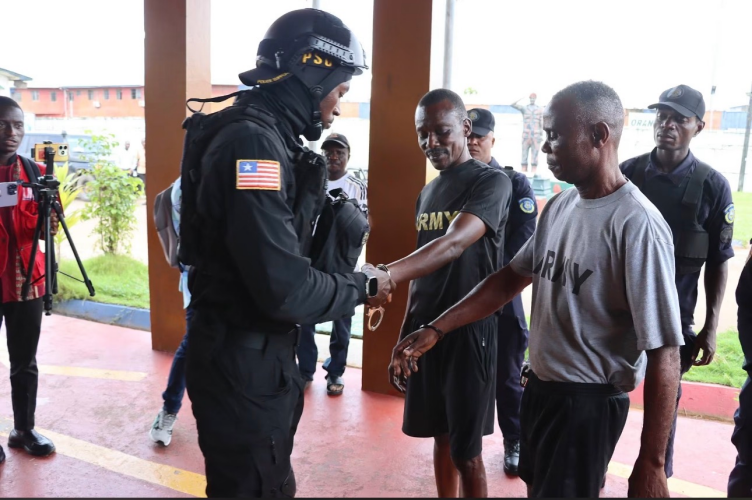
Following the dismissals, the two men were publicly presented, and Forleh reportedly instructed the Liberia National Police to handcuff them.
He also directed that their families leave the AFL barracks and that the former soldiers be taken to an area near the Samuel Kanyon Doe Sports Complex to find their way home.
The measures have raised further questions about the treatment of the dismissed personnel and their families, although the lawyers’ October 27 letter primarily challenges the legality of the discharge itself.
Defense Ministry Asked to Intervene
Kailondo & Associates has called on Acting Defense Minister Tweh to intervene and reverse the decision, arguing that the military should investigate the incident through established procedures rather than impose what it considers summary punishment.
The firm requested a response within 10 working days of receipt of the letter.
Copies were sent to President Joseph Nyuma Boakai, who is commander-in-chief of the AFL; Major General Forleh; and Senator Momo T. Cyrus, chairman of the Senate Committee on National Defense, Security and Veteran Affairs.
The letter was signed by Counsellor-at-Law Sylvester G. Lormie II.
The legal challenge does not dispute the need for the military to address allegations of misconduct by its personnel. Instead, it argues that accountability must be pursued within the framework of the law and that the soldiers should have been afforded an opportunity to answer the allegations before the dismissal decision was made.
The Defense Ministry and AFL leadership are yet to respond.
The outcome could test the military’s disciplinary procedures and the extent to which administrative decisions affecting service members must comply with constitutional due-process protections.
Support Independent Journalism
Your support helps FrontPage Africa continue delivering independent, credible, and impactful journalism. Every contribution strengthens our ability to investigate, inform, and hold power accountable while keeping quality journalism accessible to our readers.
Support our journalism or subscribe to receive the latest FrontPage Africa stories and updates.