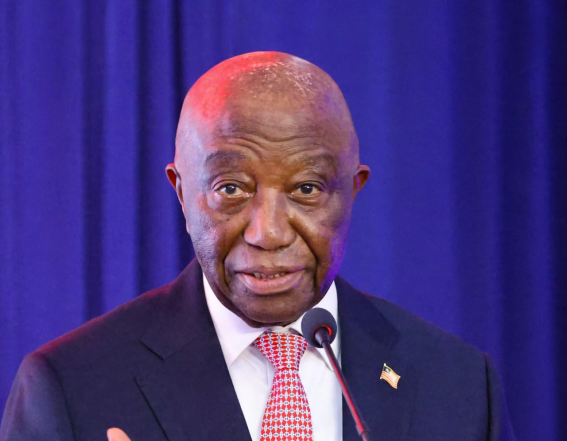
Unification Town, Margibi County – While launching Liberia’s first mining and energy conference within a decade and a half, President Joseph Nyuma hinted at the imminent establishment of two major institutions: the National Mining Company of Liberia and the Liberia Sovereign Wealth Fund.
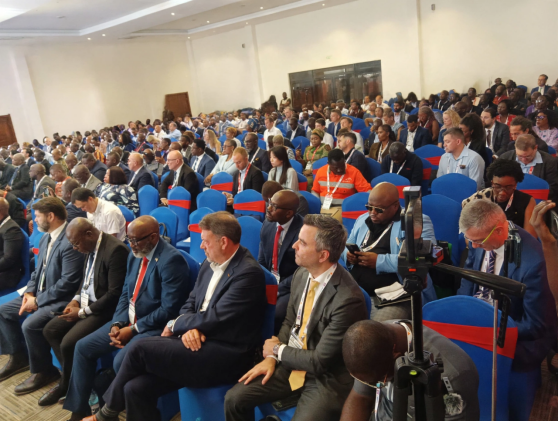
Speaking at the landmark international conference that brought together a thousand-plus delegates from Liberia and the globe, the Liberian leader pointed out that for long, resource-rich countries, including Liberia, have exported raw materials while importing finished products, technology, and expertise, stressing that Liberia intends to take a different path.
“Our minerals should support domestic processing, industrial development, infrastructure, technology, and decent jobs. Electricity should power industry, agriculture, small businesses, and public services, improve competitiveness, and help reduce poverty,” asserted President Boakai.
Move Towards State Participation
The Liberian Chief Executive announced the government is advancing three important initiatives as it aims to change the narrative in the mining and energy sectors.
In a bid to achieve this, he disclosed that the first step is the establishment of a National Mining Company of Liberia that moves the country toward more active state participation through equity and strategic ownership, rather than relying only on royalty collection.
Secondly, he revealed that within two years, Liberia seeks to establish its first gold processing facility, advancing the African Minerals Strategy Group’s call for value addition before minerals leave the continent.
According to him, Liberia intends to contribute to this continental agenda by retaining more value at home and creating skilled jobs.
“The Government’s stated policy is for gold extracted in Liberia to undergo primary and secondary refining to internationally recognized purity standards at licensed domestic facilities before export,” he furthered.
Third, President Boakai informed the gathering that government has authorized the creation of the Liberia Sovereign Wealth Fund, which is intended to operate as an independent investment vehicle in line with the international Santiago Principles.
“By directing a fixed percentage of mineral revenues into diversified domestic and global investments, the Fund would help convert finite mineral wealth into long-term financial security for future generations as well as reduce exposure to commodity-market cycles.”
“If mining is one engine of Liberia’s economic transformation, energy must power that engine. Unreliable, expensive, and limited electricity constrains businesses, raises production costs, discourages investment, and limits services for hospitals, schools, agricultural processors, manufacturers, small enterprises, and households.”
More Energy Generation
On the energy side, he explained that the government is pursuing renewable generation, stronger transmission and distribution, regional electricity integration, better utility performance, and greater private-sector participation.
“The 20-megawatt solar photovoltaic facility associated with the Mount Coffee energy development program is an important step toward diversifying generation and reducing dependence on more expensive and less sustainable power sources.”
It could be recalled that the government sometimes ago announced additional financing to expand solar generation capacity from 20 to 30 megawatts, install a 12-megawatt battery energy storage system, and make further improvements to the Mount Coffee facility.
The Liberian leader indicated that the government will encourage utility-scale solar, distributed renewable energy, mini-grids, and other technically and commercially viable clean-energy investments.
An Ambitious Energy Plan In Sight
The President asserted that the national ambition is to increase renewables to 75 percent of the electricity generation mix while expanding access and improving reliability, adding that government will pursue this through sound planning, credible procurement, environmental and social safeguards, and partnerships capable of delivering results.
“Liberia’s hydropower resources offer important long-term opportunities. The Government will continue technical, environmental, financial, and procurement preparations for additional capacity, including the proposed Saint Paul River hydropower development.”
“These projects require careful consideration of financing, construction costs, environmental impacts, any necessary resettlement, water-resource management, and long-term operations.”
Accordingly, the Liberian chief executive intoned that the key objective is to strengthen energy security, support industrial growth, and contribute to regional electricity supply where feasible.
“Generation alone cannot solve our electricity challenges. Power must be transmitted efficiently and distributed reliably to businesses, communities, and households. Our I Government will continue working to improve transmission capacity, strengthen distribution networks, reduce technical and commercial losses, and expand connections to underserved communities.”
Mining, A Major Pillar To Economic Growth
The President reminded Liberians and international partners that mining remains a major pillar of Liberia’s economy, contributing to exports, foreign exchange, public revenue, employment, infrastructure, and community economic activity.
Since January 2024, he recalled that mining and energy have been central to our national growth strategy. Mining expanded by 17 percent.
“Liberia achieved overall GDP growth of 5.1 percent, with real GDP growth of 5.5 percent projected. Mining contributed 18.4 percent of real GDP in 2025 and is projected at 19.4 percent in 2026.”
Statistically, President Boakai reported that the sector contributed approximately US$124 million directly to national revenue in 2024 and US$432 million to domestic revenue to date.
“This supports the US$1.1 billion domestic revenue milestone projected for this year, compared with US$699 million in 2024, and helps fund infrastructure, education, and healthcare.”
“Liberia is entering a new investment cycle. Iron ore remains an important foundation, while gold, diamonds, and emerging mineral opportunities offer prospects for diversification. Our priority is to attract investment while strengthening governance, geological information, domestic participation, and national economic returns.”
A Need For Reliable Geological Data
He also informed the conference that the government is advancing geological mapping, analysis of new findings, improved mineral information management, and access to technical data through a coordinated national exploration program over the next five years.
“A US$30 million airborne geophysics data collection is planned under the MCC compact to support systematic exploration and improve knowledge of critical and strategic minerals. Transparent procedures will improve qualified investors’ access to geological information while protecting legitimate commercial interests and the public interest. Our objective is to reduce uncertainty and build a stronger pipeline of viable mining projects.”
“Our Government is strengthening mineral-rights administration, licensing, oversight, and accountability. We will review the Minerals and Mining Law and related regulations to reflect investment practices, environmental standards, technology, and Liberia’s development objectives.”
Seeking Fair Trade
In a clarion call to would-be investors, President Boakai sounded a caveat for fair and responsible investment that lays to bed equity revenue for them and returns for the country.
“We seek clear rules, fair administration, and predictable procedures. Operators must obey the law, pay required fees and taxes, meet environmental obligations, and respect workers and host communities. Mineral resources are finite, and we must ensure they generate lasting returns for Liberians.”
An Aggressive Approach
Also speaking at the occasion, Mines and Energy Minister R. Matenokay Tingban says Liberia is moving aggressively to build a domestic gold refinery and formalize its artisanal mining sector as part of a broader push to retain more value from its mineral wealth.
Min. Tingban reckoned that about 80% of Liberia remains geologically unexplored since early mineral mapping in the 1970s, leaving the country without reliable data to negotiate.”No data, no view,” the Minister stressed. “We must know what we have before negotiating how it is developed.
Gold Refinery and State Miner Confirmed
Prior to President Boakai’s official opening remarks, Tingban, who first took the podium, confirmed the government’s pursuit of a domestic gold refinery, saying the Ministry has opened a transparent process to attract technically capable and financially credible partners who meet recognized standards for responsible sourcing, assaying, refining and certification.
“A domestic refinery could retain more value in Liberia, strengthen oversight of the gold trade, improve traceability and revenue collection, create skilled jobs, and provide small miners, brokers and dealers with credible local markets.”
He indicated that the facility will require reliable electricity, sound environmental management, anti-money laundering controls, and a traceable supply chain that includes artisanal and small-scale miners.
The company, he noted, will serve as a vehicle for responsible state participation and will pursue viable exploration, mining, processing and value addition with qualified Liberian and international investors.
“The company must have high professional management, transparent financial reporting, strong corporate governance and clear accountability,” Tingban noted, adding that its commercial activities must remain separate from the Ministry’s regulatory function to avoid conflict of interest.
Artisanal Miners Organization Drive
Min. Tingban also announced the launch of Liberia’s Artisanal and Small-Scale Mining Organization initiative, aimed at bringing thousands of miners currently operating outside the formal system into the legal economy.
“Many miners remain outside a system that will improve safety, protect rights, and connect production to formal markets. Our approach must be practical and inclusive.”
The initiative, he said, will make licensing and registration more accessible, help miners form cooperatives, provide training in occupational safety and environmental protection, and improve access to equipment, financing and mineral traceability systems.
US Eyes Liberia, But Calls For Reforms
On behalf of the Government of the United States of America (USA), U.S. Chargé d’Affaires, Kristin Gilmore says American businesses are now actively considering Liberia for long-term mining and energy investments, but their decision to stay will depend on Liberia’s ability to deliver transparent and predictable reforms.
The American diplomat Gilmore, stated that her introductory meetings since arriving in Liberia a few weeks ago showed a clear desire by the Liberian government to move up the value chain, create jobs, and attract international investors.
The US envoy Gilmore believes that those goals align directly with Washington’s push to diversify global supply chains and secure reliable access to metals, critical minerals, and derivative products.
She disclosed that the Millennium Challenge Corporation (MCC) last year reaffirmed Liberia’s eligibility for a second compact, which is now under development and will focus on mining and electricity sector reforms, two areas she described as critical to unlocking private investment and long-term economic growth.
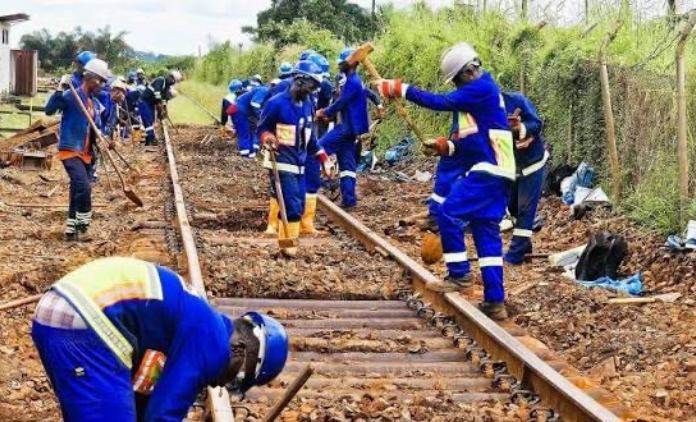
The US envoy also announced that the U.S. Trade and Development Agency (USTDA) is finalizing a grant to assess Liberia’s rail infrastructure capacity in support of President Joseph Boakai’s vision for a multi-user rail system.
“Multi-user rail is key to unlocking opportunities in Liberia’s minerals and agricultural sectors,” Gilmore declared, stressing that Washington welcomes government’s commitment and looks forward to timely passage of legislation establishing a transparent, independently regulated rail system.
Support Independent Journalism
Your support helps FrontPage Africa continue delivering independent, credible, and impactful journalism. Every contribution strengthens our ability to investigate, inform, and hold power accountable while keeping quality journalism accessible to our readers.
Support our journalism or subscribe to receive the latest FrontPage Africa stories and updates.