Summary:
- Sickle cell disease is an inherited blood disease that kills up to half of the 1600 Liberian babies born with it each year before age 5. Until now most of them have died without ever knowing they had it.
- Low-cost care can help children with sickle cell live long lives, but Liberia has lacked the testing, medicine and specialists to provide it. Some patients leave the country for treatment. The government is now working on a plan to expand treatment.
- Most babies are never tested. Three hospitals in three of Liberia’s 15 counties now test newborns for sickle cell. The government plans to test in every county by 2030. And there are plans for a national count of how many people have the disease.
By Gloria Wleh, senior reporter with New Narratives
72ND COMMUNITY, Montserrado County — Suitcases are being packed here for yet another flight. For 19-year-old Tilnette Woods and her mother, Johnetta Harris-Kamara, plane journeys have become part of their lives.
Tilnette has sickle cell disease, an inherited condition that changes the shape of red blood cells, making them difficult to flow through the body. It causes extreme pain and frequent infections. Untreated, it kills half of the Liberian children born with it by the age of five.
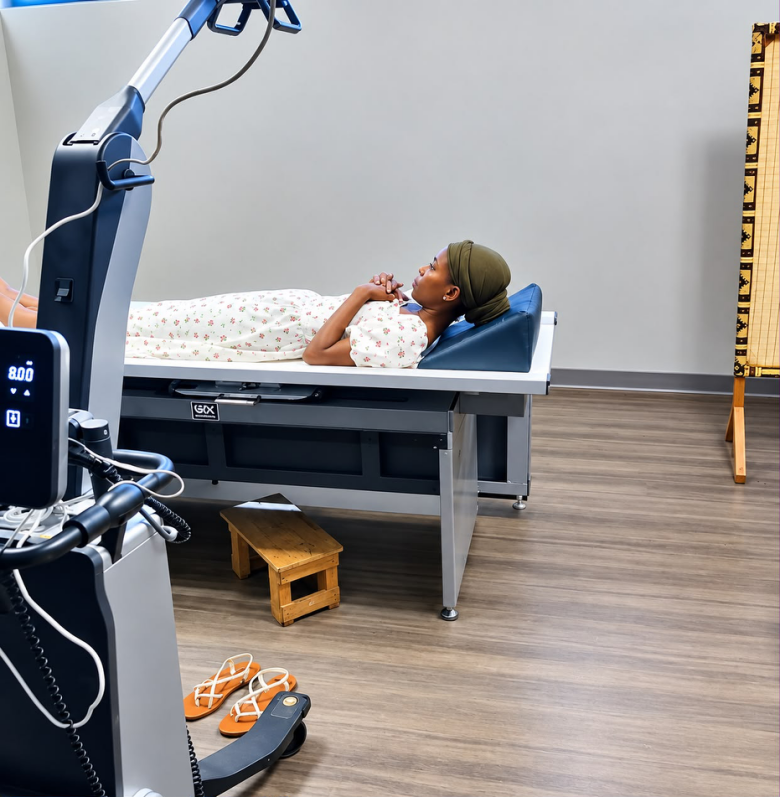
Restricted blood flow to Tilnette’s hip bones has caused them to crumble and die. Now, she has travelled to India for her second hip replacement surgery. She had the first hip replaced in Nigeria in 2023.
Mother and daughter know this is another stopgap measure. Until now, it has been impossible to get the medicine and support she needs to stay alive in Liberia.
“What am I coming back to?” Tilnette asks. “Am I coming back to a country that is going to give up on me? Like it always been giving up on me?”
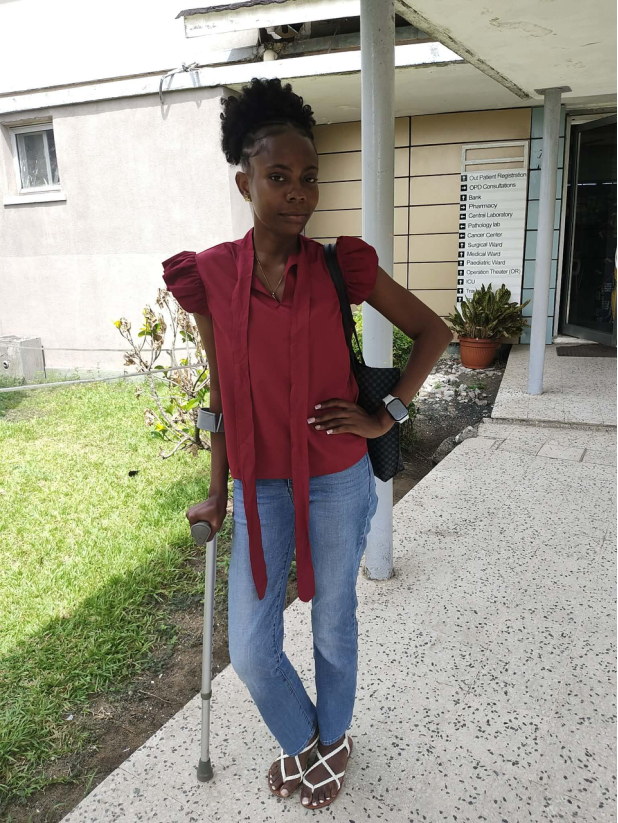
The question captures the challenge facing thousands of Liberians diagnosed with sickle cell disease, forced to spend all their money on drugs that keep them alive and seek surgery overseas when that fails.
Sickle cell disease is one of Liberia’s most common inherited illnesses, and one of its least visible. The country has never conducted a nationwide prevalence study and has no national registry for sickle cell disease patients. But a screening study of newborns at a Monrovia hospital found that about one in every 100 babies is born with the disease. Applied to Liberia’s roughly 160,000 births a year, that suggests that 1600 children are affected annually.
Without early diagnosis, most will die before their fifth birthday from infections their bodies cannot fight. But simple, cheap treatments – penicillin, vaccines and malaria prevention – can keep most of them alive.
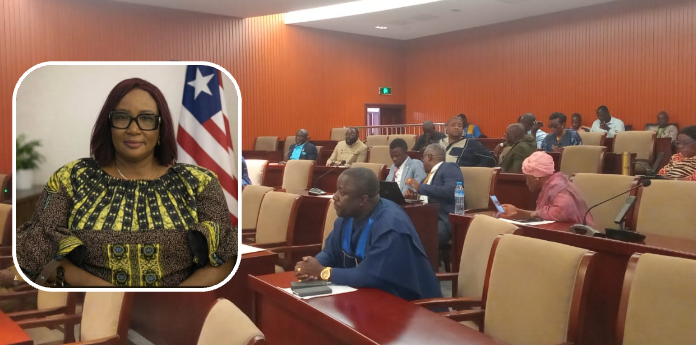
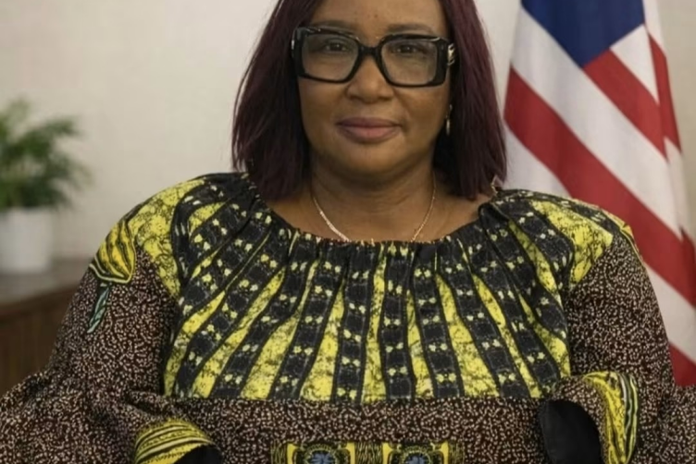
Now patient advocates are seeing some cause for optimism. The Boakai administration’s health ministry’s has worked with partners to initiate newborn screening in the J.J. Dossen Hospital In Maryland, the John F. Kennedy Hospital in Montserrado and the C.B. Dunbar Hospital in Bong counties, according to Jamesetta Smith, director of the ministry’s Non-Communicable Diseases and Injuries Unit.
Smith says the government plans to expand newborn screening nationwide by the end of 2030 and to include sickle cell in the next national demographic survey to get real data on sufferer numbers.
More than 300 health workers have been trained, Smith says. The building blocks for better treatment are in place.
“Sickle cell can be prevented. Sickle cell can be managed if people are aware early,” Smith says.
A Childhood of Unexplained Pain
As a baby, Tilnette cried whenever she tried to stand. Her family thought she simply did not want to walk. At 11 months, she was taken to Redemption Hospital, where doctors diagnosed an abscess in her leg and performed surgery. Finally, when she was a teenager, after repeated years of tiredness, dizziness, dehydration and anemia, Tilnette was diagnosed with sickle cell disease.
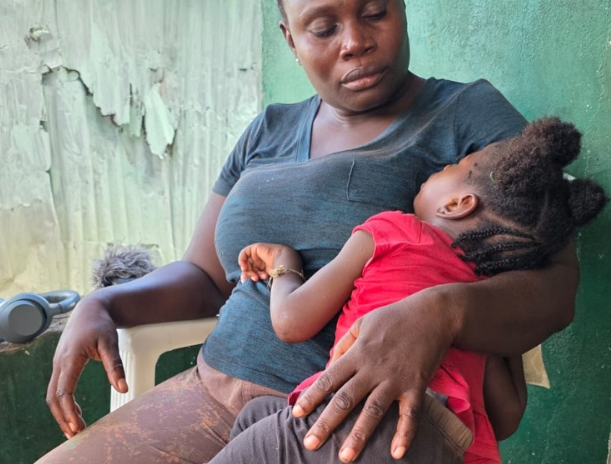
It was a devastating blow for her mother, Johnetta. “I was like, ‘God, how am I going to manage? How am I going to continue to carry on this load?’”
By then, the condition had already begun taking a toll. Tilnette loved dancing and playing with friends. But as the disease progressed, ordinary physical activities became increasingly difficult. During one dance performance, she attempted a split and could not get back up.
“My friends and my dance mates literally had to carry me off,” she recalls. “That was so humiliating.”
The experience forced her to begin researching her condition. She learned that she had to manage the illness every day, not just during crises. She must have plenty of water and avoid extreme heat, cold and physical exertion to prevent dehydration. Sleeping under a treated bed net was essential because malaria can trigger a life-threatening crisis.
Medicines matter – folic acid to help make new blood cells, penicillin to prevent infections, and hydroxyurea, a daily pill, to help stop red blood cells from turning hard and curved. Together they can cut crises by half. Hydroxyurea is now on the World Health Organization’s list of essential medicines, the basic drugs every health system should have. It was added to Liberia’s essential medicines list just last year, but the government is not currently purchasing it. Tilnette has to find it at local pharmacies and pay US$30 a month.
Any fever is an emergency because the disease damages the spleen and leaves the body unable to fight certain infections. Regular clinic visits, up-to-date vaccines and knowing the early signs of a crisis – pain in the chest, a sudden weakness on one side, yellowing eyes – can mean the difference between a hospital stay and a funeral.
By the time Tilnette was diagnosed, the damage to her hip bones was already done. Tilnette was preparing to enter her second semester of college in 2023 when her shattered hip sent her to the hospital. The cost for the replacement in Nigeria was US$10,000. She has started an online funding campaigns at Fundraizer and GoFundMe to raise the money needed for the India trip.
“You can’t be going to school, especially when you’re spending about $500, $600 a semester while you’re saving up for $10,000,” she says. “So I had to drop.”
For Johnetta, 50, her daughter’s illness has meant years of sacrifice. Money that she earns as a civil servant that might have gone toward clothes, shoes or other household needs is instead kept for emergencies. Tilnette’s father, her ex-husband, sometimes helps with money and provides his blood when the need arises.
“I won’t fix my hair. I won’t buy new bag. I won’t buy new shoes,” she says. “I must always have money on me to take care of her.”
The medication can be difficult to obtain. When local pharmacies run out, she has to order it from Ghana at a cost of $50. A month. Without it, the pain can be unbearable.
“Even lying down is painful,” she says. “I turn and toss and turn about 50 times a night before I go to sleep for a couple of hours.”
She has also faced stigma. “Sickle cell patients, when we ask for medicines, like pain medicines, back-to-back, people look at us like, ‘Oh, she’s a drug addict,’” she says.
‘Every Air You Breathe, You Face Severe Pain’
The pain caused by the disease is difficult to explain to people who have never experienced it, according to Wegee Taylor, acting executive director of the Sickle Cell Association of Liberia, a private organization, and a sufferer himself.
“If you look at the level of pain a sickler goes through, when he or she is in crisis, every air you breathe, you face severe pain,” he says.
Misconceptions about sickle cell remain widespread. Some people still attribute the disease to witchcraft or other supernatural causes. The Sickle Cell Association has raised private funds for awareness activities, training of health workers and providing nutritional support to more than 100 sickle cell patients in the association’s database according to Taylor. The Ministry of Health’s Non-Communicable Diseases and Injuries Unit has now focused on awareness-raising to reduce stigma and spread the message that the disease is medical, not a curse.
Just $1000 Allocated for Sickle Cell in Health Ministry’s Budget
The funding gap remains an obstacle. Sickle cell is now included in the Ministry of Health’s five-year non-communicable diseases strategy and 10-year policy. But from the ministry’s total $102 million annual budget, the entire Non-Communicable Diseases and Injuries Unit, which covers cancer, hypertension, diabetes, stroke and disabilities- diseases responsible for two in every five deaths in the country – received just $20,000. Only $1,000 was set aside for sickle cell.
“Generally, the entire department is under-supported,” says Smith.
The main donor-led effort is the American Society of Hematology’s Consortium on Newborn Screening project, run in Liberia since 2025 through the pediatrics department at John F. Kennedy Medical Center in Monrovia. A heel-prick test at birth, costing a few dollars, allows babies to start penicillin and malaria prevention in their first months, get the vaccines that protect a damaged spleen, and have parents who know that a fever is an emergency.
“We’re not waiting for the sickness to start showing itself,” says Dr. Patience Franklin, national coordinator for newborn screening. “We’re running in front of the sickness.”
But the pilot has only reached newborns delivered within JFK’s catchment and the consortium’s five-year period of work ended in September.
Liberia’s neighbors have already shown what is possible. Ghana has screened newborns in Kumasi since 1995, and children found early there survive at rates close to 90 percent. In 2024 the government launched a national sickle cell strategy and now covers hydroxyurea, folic acid and penicillin under its national health insurance, the first African country to offer that standard of care. Nigeria, which has more sickle cell births than any country on earth, has added sickle cell screening to babies’ immunization visits.
Dr. Franklin remains upbeat. The JFK program has trained 175 health workers. The foundation for expanding the program is there.
“What we need to do as a government is to integrate it into our care and make it a priority,” she says. The work on a national strategic plan is a good sign. “That gives me hope that there is some light. I don’t want to be too excited, but I see morelight.”
Knowledge Can Stop the Disease Before it Starts
A simple blood test for would-be parents, costing a few dollars, could be game-changing. Carriers of the gene that causes the disease are healthy and usually have no idea. But when two carriers have a child, there is a one-in-four chance with every pregnancy that the baby will be born with the disease. If people knew their status before they married or had children, couples could plan and seek counseling.
Other African countries have made the test routine. In Nigeria, many churches and mosques now require couples to show their genotype results before a wedding, and several states have passed laws encouraging premarital testing. In Ghana, testing is widely available through public hospitals and church-run pre-marriage counselling, and the government’s 2024–2028 sickle cell strategy makes carrier awareness a national goal.
In Liberia, the test is rarely offered outside a handful of Monrovia hospitals. But the Ministry of Health says it is working toward making genotype testing a compulsory part of premarital counseling once testing capacity improves.
Harris-Kamara wishes she had known more before her daughter was born.
“If I had really known, I would have never had to make her to go through all of this,” she says.
For now, Tilnette is grateful to the public donors who have made this latest hip surgery possible. But she also knows that fundraising cannot replace a health system designed to treat her. Her future and the future of thousands of other children suffering from sickle cell disease now depend on how much of a commitment the health ministry decides to make to helping them.
This story is a collaboration with New Narratives as part of the “Investigating Liberia” project. Funding was provided by the Swedish International Development Cooperation Agency. The funder had no say in the story’s content.
Support Independent Journalism
Your support helps FrontPage Africa continue delivering independent, credible, and impactful journalism. Every contribution strengthens our ability to investigate, inform, and hold power accountable while keeping quality journalism accessible to our readers.
Support our journalism or subscribe to receive the latest FrontPage Africa stories and updates.