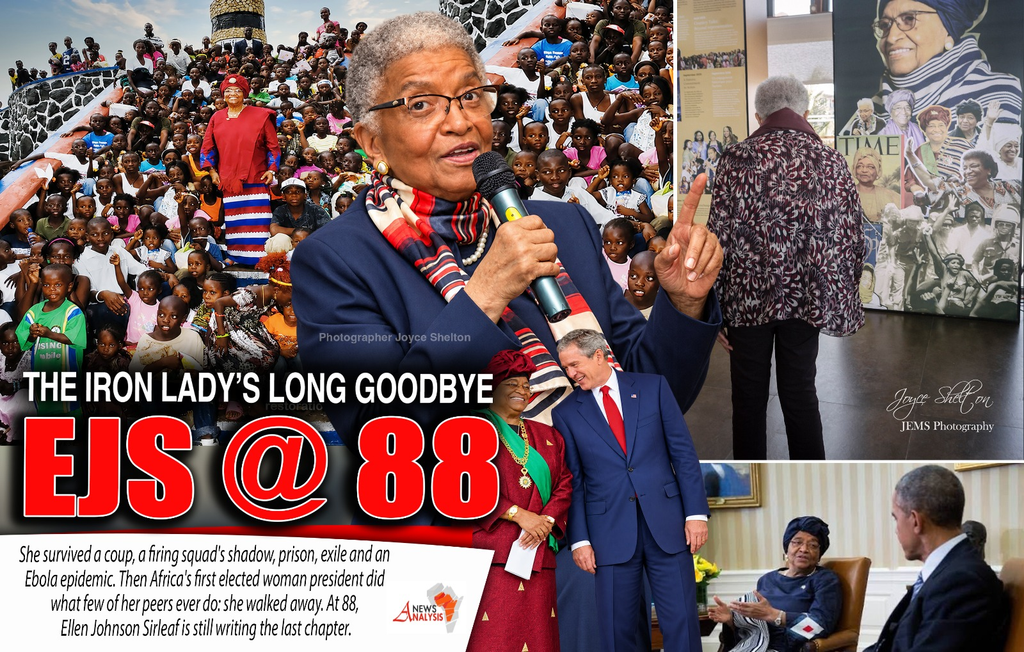
Monrovia – On a humid January morning in 2018, Ellen Johnson Sirleaf stood at the Samuel Kanyon Doe Sports Stadium in Paynesville and handed the keys of the Liberian state to a former footballer, George Manneh Weah. It was the first time in 74 years that one elected Liberian leader had peacefully passed power to another.
By Rodney D. Sieh
On a continent where presidents often rewrite constitutions to stay, she simply left. Her own party had expelled her weeks earlier. Many in the crowd blamed her for what had not changed. She smiled, waved and went home.
Today, October 29, the woman the world calls Africa’s “Iron Lady” turns 88. Her journey from a Monrovia schoolgirl to a Nobel laureate is, in many ways, the story of modern Liberia itself: brilliant, battered, contested and still unfinished.
A prophecy in Monrovia
Family lore holds that when baby Ellen was born in 1938, an elderly visitor looked at her and declared that the child would be great. Her father, Jahmale Carney Johnson, was the son of a Gola chief who rose to become one of the first indigenous Liberians in the national legislature. Her mother was a teacher and preacher of mixed Kru and German heritage.
That mix mattered. For more than a century, Liberia was ruled by a small elite descended from freed American slaves. Sirleaf straddled both worlds: rooted in the indigenous majority, yet schooled among the settler class at Monrovia’s College of West Africa.
She married James Sirleaf at 17 and had four sons in quick succession. The marriage was turbulent and later ended.
In 1961 the couple left for the United States, where she studied accounting at Madison Business College in Wisconsin, worked as a waitress to pay her way, and later earned a master’s in public administration at Harvard’s Kennedy School.
The finance official who talked back
Back home, she joined the Treasury and quickly earned a reputation for saying what others would not. In 1969, she delivered a blunt speech warning that corruption and economic mismanagement threatened the nation. It was a dangerous thing to say in the one-party state of President William Tubman.
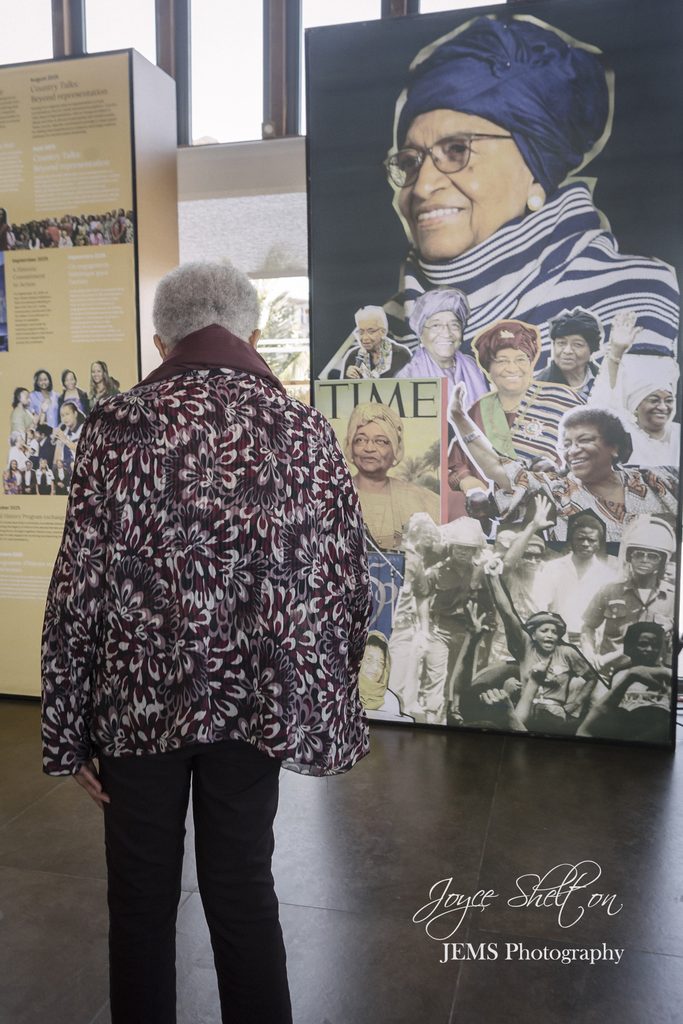
Under President William Tolbert, she rose to become Liberia’s finance minister in 1979. She was one of the few women at the top table, and among the most outspoken. Within months, the table would be overturned.
Coup, prison and exile
In April 1980, Master Sergeant Samuel Doe and a band of soldiers stormed the Executive Mansion and killed Tolbert. Days later, 13 senior officials were tied to posts on a Monrovia beach and executed by firing squad. Sirleaf was spared, reportedly because she had once criticised the old order. She soon fled into exile.
She worked for Citibank in Nairobi and the World Bank, but she could not stay away.
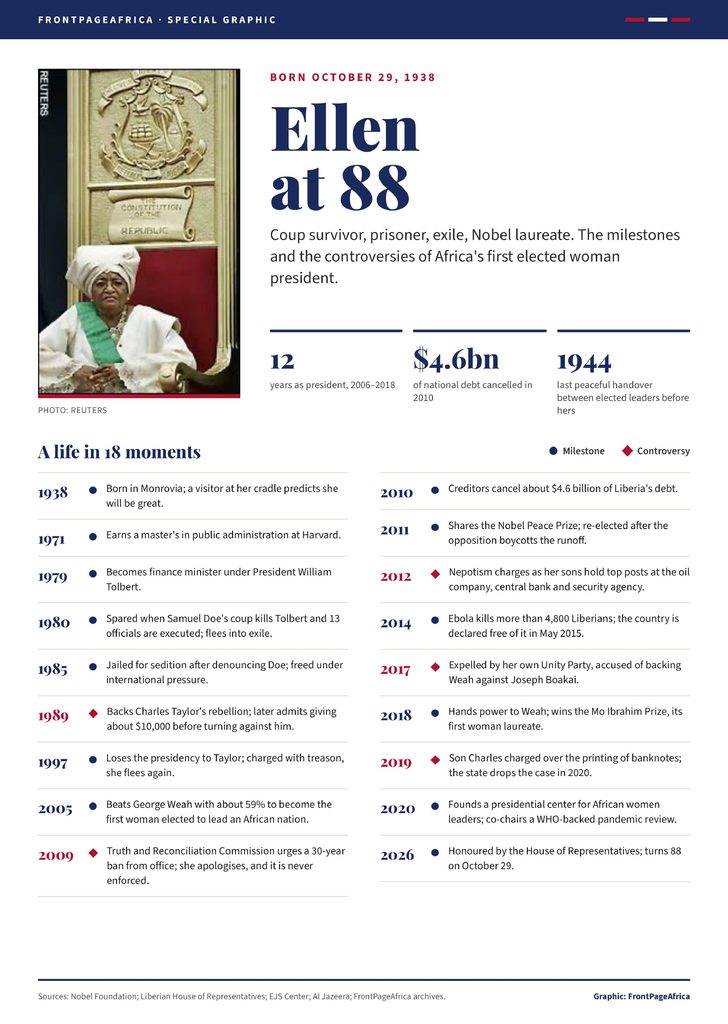
Returning in 1985, she called Doe’s regime “idiots” in a speech and was sentenced to 10 years for sedition. International pressure won her release. After a failed coup that November, she was arrested again and held for months. She later wrote of being threatened with rape by a soldier in her cell.
She won a Senate seat in Doe’s rigged 1985 vote, then refused to take it in protest. Once more she left the country, this time for banking jobs in Washington and, from 1992, a senior post at the United Nations Development Programme heading its Africa bureau.
The Taylor stain
The darkest chapter of her story began in 1989, when warlord Charles Taylor invaded from Côte d’Ivoire to topple Doe. Like many exiles, Sirleaf backed the rebellion at first. She later admitted giving Taylor’s movement money, a sum she put at about $10,000, before turning against him.
The civil wars that followed killed an estimated 250,000 people. Sirleaf ran against Taylor in 1997 and lost badly, finishing a distant second with under 10 percent of the vote. Taylor’s government charged her with treason, and she fled again. That early support for the man who became one of Africa’s most notorious warlords would haunt her for decades.
“Ma Ellen” takes power
When Taylor was forced into exile in 2003, Liberia was a ruin. There was no electricity grid in the capital and no piped water. Unemployment ran above 80 percent. The national debt stood near $4.9 billion, several times the size of the economy.
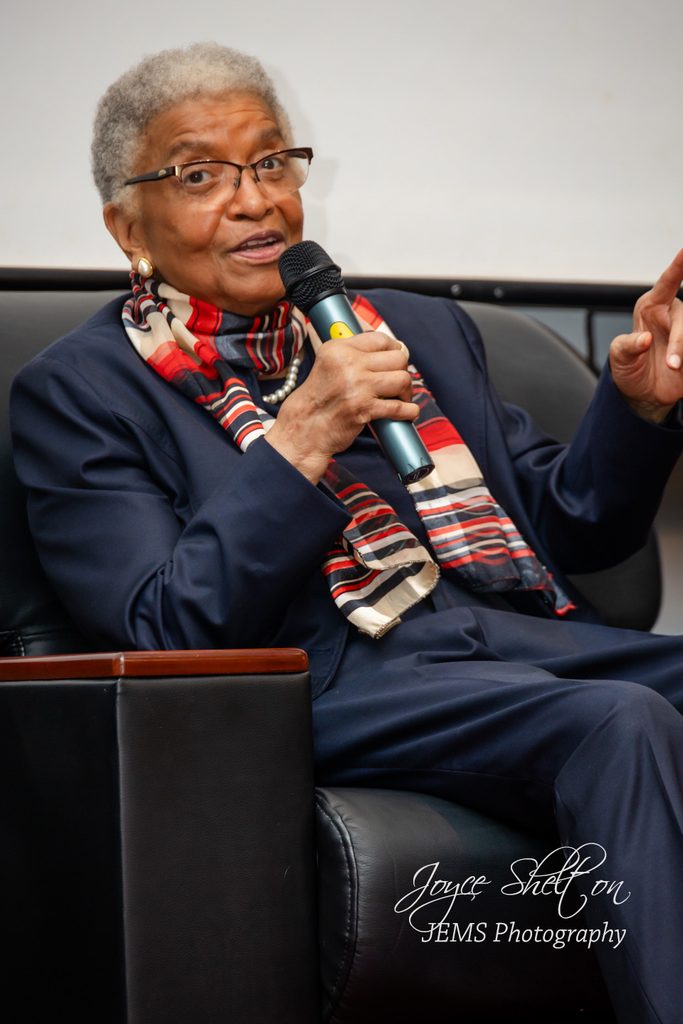
In November 2005, Sirleaf beat George Weah in a runoff with about 59 percent of the vote. Market women, who had campaigned for her door to door, called her “Ma Ellen”. In January 2006 she was sworn in as the first woman elected to lead an African nation.
Her government’s first-year budget was about $80 million.
She used her Washington Rolodex ruthlessly. Lights returned to parts of Monrovia. Schools reopened. In 2010, creditors cancelled about $4.6 billion of Liberia’s debt, one of the largest write-offs of its kind. She also asked that Taylor’s war crimes trial be moved to The Hague, fearing it would destabilise the region if held in Sierra Leone.
Nobel and Ebola
In October 2011, days before she sought a second term, Sirleaf shared the Nobel Peace Prize with fellow Liberian Leymah Gbowee and Yemen’s Tawakkol Karman. The committee honoured their non-violent struggle for women’s safety and for women’s full part in peace-building. Critics at home called the timing an election gift.
She won again, though her rival Winston Tubman boycotted the runoff and turnout collapsed to about 37 percent. Her second term brought its sternest test. In 2014 Ebola tore through Liberia, killing more than 4,800 people. Early quarantines provoked riots, and one boy was shot dead in the West Point slum. Yet by May 2015 Liberia was declared Ebola-free, and her letters pleading with world leaders were credited with speeding the global response.
The Iron Lady’s critics
Abroad she was a heroine. At home the verdict was far more complicated.
In 2009, Liberia’s Truth and Reconciliation Commission recommended that she be barred from public office for 30 years over her early support for Taylor. She apologised, saying she had been fooled by Taylor’s intentions, and the recommendation was never enforced.
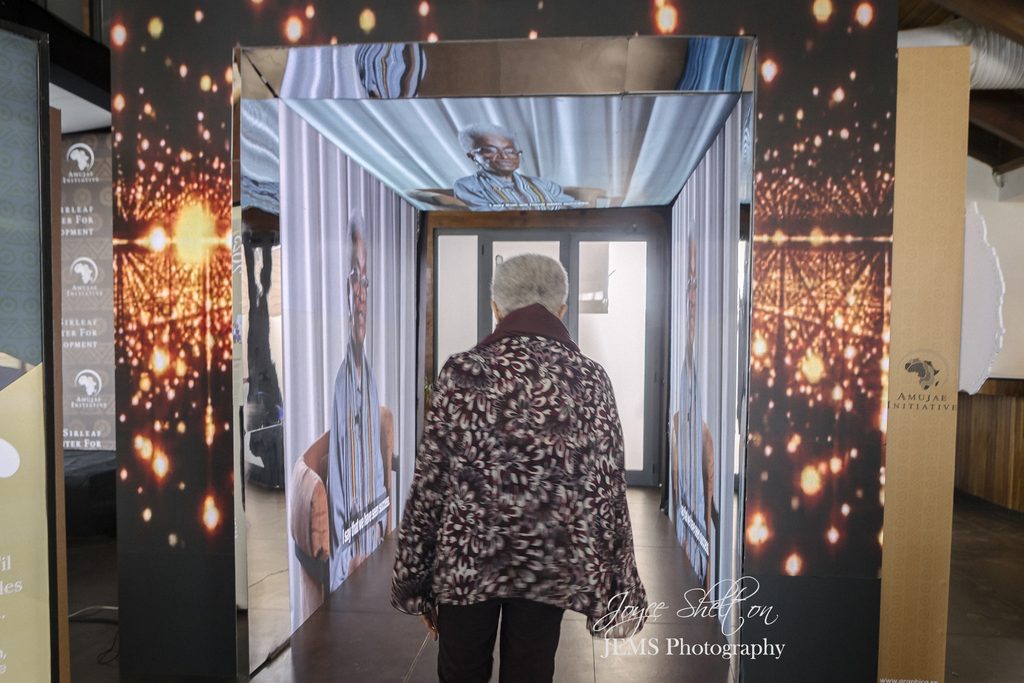
To her critics, it remained proof that the peacemaker had once financed war.
Then there was family. Her son Robert ran the national oil company, Charles served as deputy governor of the Central Bank, and Fumba headed the national security agency. She defended them as qualified professionals. Many Liberians saw nepotism. In 2019, after she left office, Charles was jailed over the controversial printing of Liberian banknotes; the state dropped the charges in 2020. He died in Accra in June 2024, a private grief for a mother who rarely speaks of her own pain.
She also admitted that corruption, which she once called “public enemy number one”, outlasted her. Concession deals were faulted for weak oversight, and she conceded in her farewell years that she had not won that war. Supporters answer that she inherited a gutted state on a shoestring budget and gave it 12 years of peace.
The handover
The 2017 election exposed how lonely the top had become. Her vice president of 12 years, Joseph Boakai, ran as the Unity Party candidate but kept her at arm’s length. At one debate he likened himself to a race car left parked in the garage for 12 years. When Boakai lost to Weah, the party expelled Sirleaf, accusing her of quietly backing the opposition. She denied it.
She did not fight back. On January 22, 2018, she handed power to Weah, the former striker she had beaten in 2005. It was the first peaceful transfer between elected Liberian leaders since 1944.
Weeks later, the Mo Ibrahim Foundation awarded her its Prize for Achievement in African Leadership, worth $5 million over 10 years. The prize is so demanding that it has often gone unawarded. She was its first woman winner. She dedicated it to Africa’s women and girls.
Reinventing the wheel
Most former presidents fade into memoirs and golf. Sirleaf built an institution. In 2020 she assembled a small team to found the Ellen Johnson Sirleaf Presidential Center for Women and Development in Monrovia, billed as the world’s first presidential center for a woman leader.
Its flagship Amujae Initiative selects up to 15 African women a year who are already rising in public life and trains them to aim for the very top. “Amujae” means “we are going there” in Kpelle. The fifth cohort launched in June 2026. In August, Senegal’s President Bassirou Diomaye Faye received her in Dakar before the centre opened its High-Level Leadership Forum there, with Namibia’s President Netumbo Nandi-Ndaitwah among the leaders in the room.
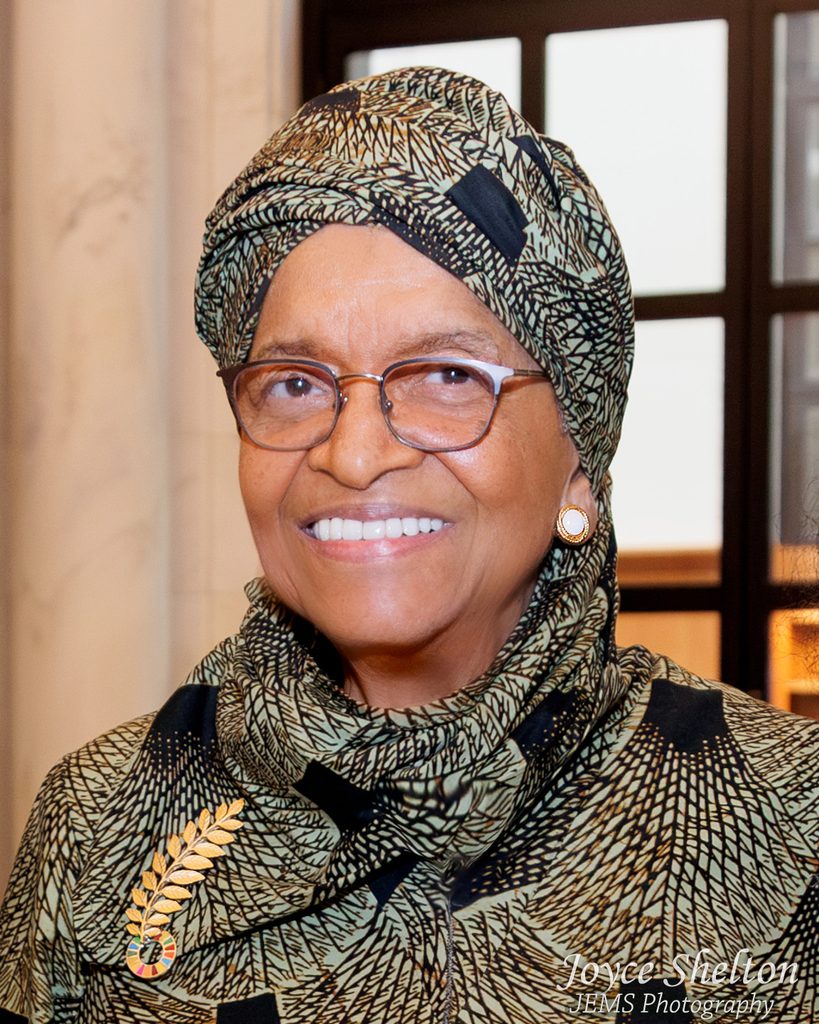
The global stage still calls. In 2020, the World Health Organization chose her and former New Zealand prime minister Helen Clark to co-chair an independent panel reviewing the world’s response to COVID-19, a nod to her Ebola years.
At home, her estranged former deputy, Boakai, won the presidency in 2023, and the Unity Party is back in power. In March 2026, she addressed the House of Representatives, which gave her a Special Legislative Citation of Distinguished Honor. She urged lawmakers to scrap the constitutional clause limiting citizenship to people “of Negro descent”, to fix land disputes and to elect more women; only 9 sit in the House and 3 in the Senate. On unfinished reforms, she said she would trust history’s judgment.
At 88
She still claims her share of credit. On a Monrovia radio talk show in April, she said many of the roads and projects now under way began under her government. In the same breath she insisted they were “Liberia’s projects”, not anyone’s trophies.
That is Ellen Johnson Sirleaf in miniature: proud, combative, impatient with ingratitude, yet disciplined enough to step aside. She was jailed by one dictator and wooed by a warlord. She was celebrated in Oslo and denounced in Monrovia. She buried a son and outlived most of her enemies.
Her legacy will be argued over in Liberian tea shops long after she is gone. But on one point even her harshest critics agree. When her time was up, she left. In much of Africa, that remains the rarest kind of greatness, and the old prophecy at her cradle may have meant exactly that.
Support Independent Journalism
Your support helps FrontPage Africa continue delivering independent, credible, and impactful journalism. Every contribution strengthens our ability to investigate, inform, and hold power accountable while keeping quality journalism accessible to our readers.
Support our journalism or subscribe to receive the latest FrontPage Africa stories and updates.