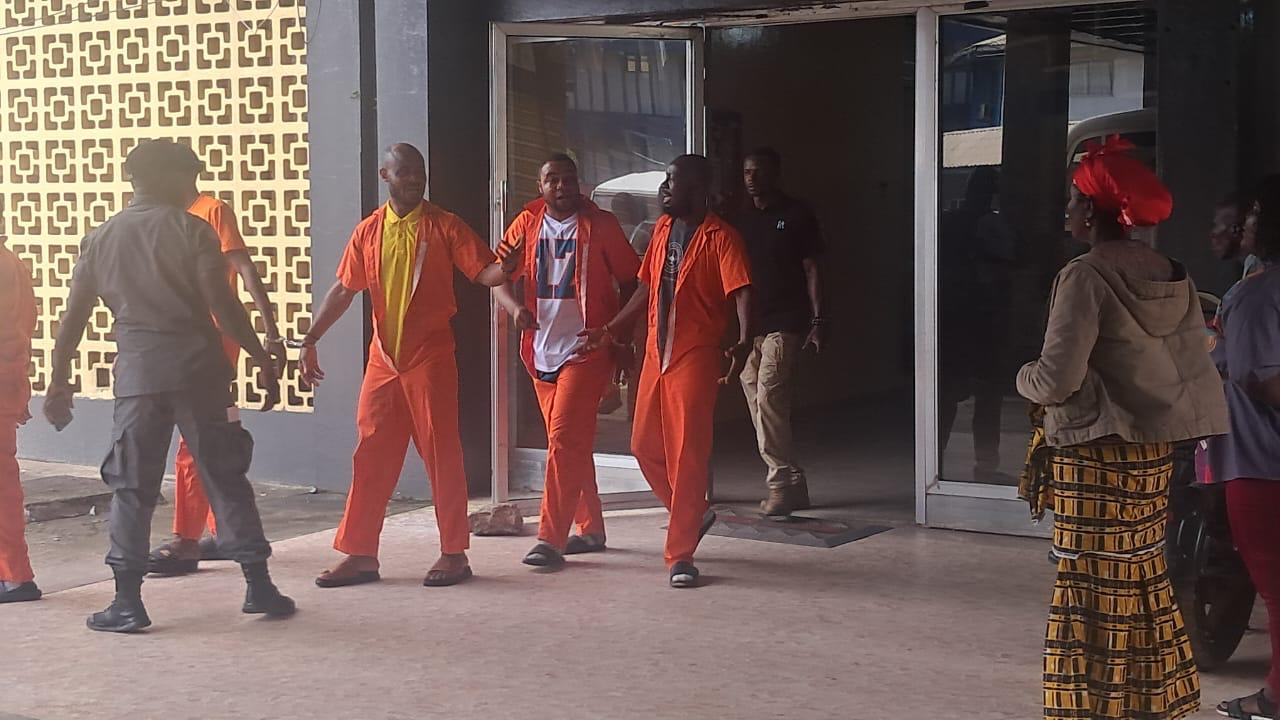
Monrovia – Shocking revelations from an independent medical report have thrown the Capitol Arson trial into deeper controversy, with findings strongly suggesting that three defendants — Eric Susay, Thomas Etheridge, and Jerry Pokah — were subjected to torture while in state custody.
By Willie N. Tokpah – [email protected]
The report, compiled under the Istanbul Protocol, the UN’s gold standard for documenting torture, was conducted by Dr. Philip Zochonis Ireland, Senior Physician and Medical Director at AMI Medical Healthcare Center. His conclusion: the defendants’ physical and psychological conditions are “highly consistent with allegations of torture.”
From JFK Rejection to Independent Review
The findings followed a defense motion for independent medical examinations after repeated concerns about the treatment of the accused in detention. Initially, the government proposed assessments at John F. Kennedy Medical Center (JFK), but defense lawyers rejected the idea, citing possible bias. Instead, the court approved AMI Medical Healthcare Center as a neutral facility.
The AMI report, finalized on September 16, is based on comprehensive physical and psychological evaluations conducted in line with UN standards.
Key Findings
Eric Susay (40) reported being blindfolded for two days and beaten with handcuffs and firearms. Doctors confirmed chronic dislocation of the left shoulder (X-ray verified), numbness and pain in the right arm, irregular heart rhythm and symptoms of PTSD including anxiety, hypervigilance, and emotional distress
Dr. Ireland concluded: “The irregular cardiac rhythm, history of blunt trauma, and ongoing psychological manifestations are highly consistent with sustained torture and ill-treatment.”
For Thomas Etheridge, the report recommended urgent psychiatric therapy for PTSD, ophthalmology review for blurred vision in the left eye, and orthopedic assessment for a dislocated shoulder.
On Jerry Pokah, the report confirmed skin lesions on the wrist, finger, and upper arm consistent with blunt trauma, with psychological findings further corroborating torture claims. Referrals included psychiatric care, ophthalmology, cardiology, and vascular evaluation.
Courtroom Impact
The report will weigh heavily in Presiding Judge Roosevelt Z. Willie’s expected ruling on September 24 regarding a defense motion to suppress statements allegedly obtained under torture.
Defense lawyers insist the evidence discredits confessions used by prosecutors.
“This isn’t just about the Capitol Arson case anymore; it’s about basic human rights and the rule of law,” one defense attorney told FrontPageAfrica. “No evidence obtained through torture can be allowed in a fair trial.”
Broader Implications
Lawyers say if Judge Willie excludes the contested statements, the prosecution’s case could be severely weakened and broader scrutiny may fall on the conduct of Liberia’s security forces.
Legal observers say the case could set an important precedent for how Liberia handles torture allegations in detention and could force stronger judicial and human rights safeguards.
The report also calls for immediate orthopedic, cardiology, neurology, and psychological care for the defendants, along with strict preservation of medical evidence for use in court or international human rights proceedings.
Government Silent So Far
As of press time, the Ministry of Justice and Office of National Security had not responded to the findings. Officials have previously denied torture claims, insisting detainees are treated in line with Liberian and international law.
But with a UN-standard medical report now on the record, pressure is mounting on the judiciary to address the claims and potentially reshape the trajectory of one of Liberia’s most closely watched trials.
Support Independent Journalism
Your support helps FrontPage Africa continue delivering independent, credible, and impactful journalism. Every contribution strengthens our ability to investigate, inform, and hold power accountable while keeping quality journalism accessible to our readers.
Support our journalism or subscribe to receive the latest FrontPage Africa stories and updates.