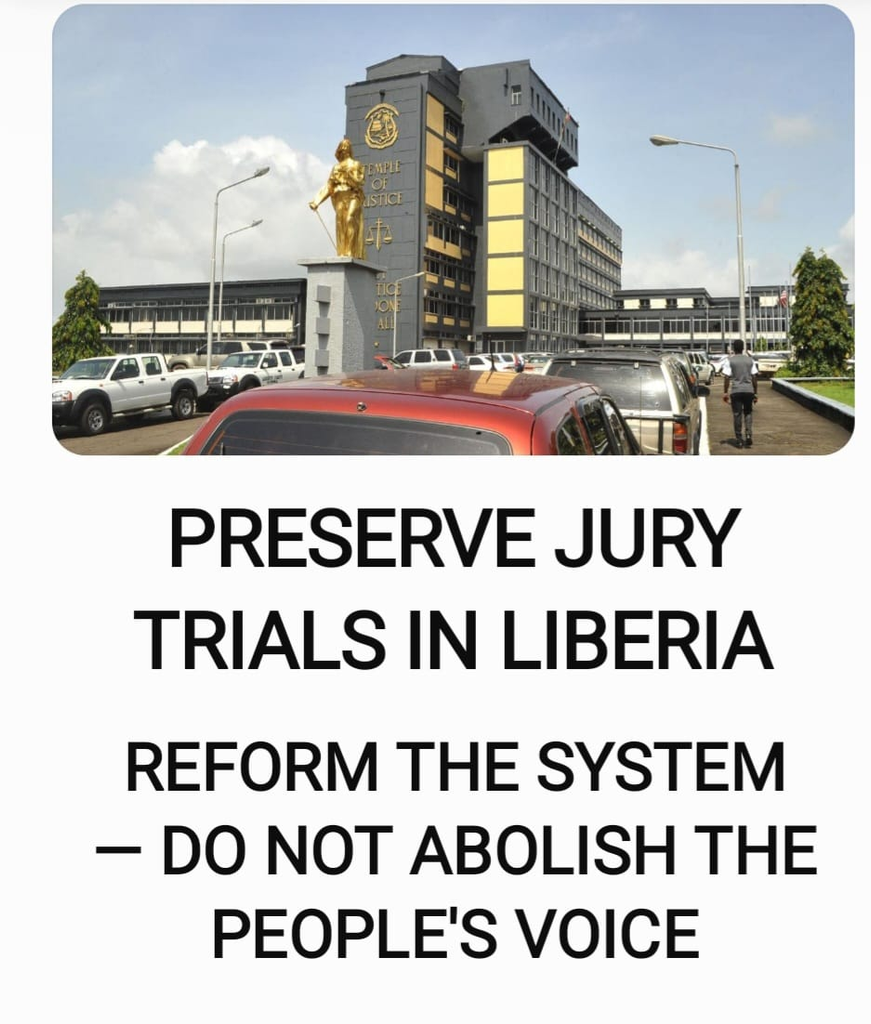
Constitution of Liberia — Article 20(a): “Justice shall be done without sale, denial or delay.”
A message to the Liberian people:“The jury system may need repair, but its imperfections should inspire reform rather than indifference to the people’s constitutional role. Preserve the principle; improve the practice.”-Austin S Fallah.
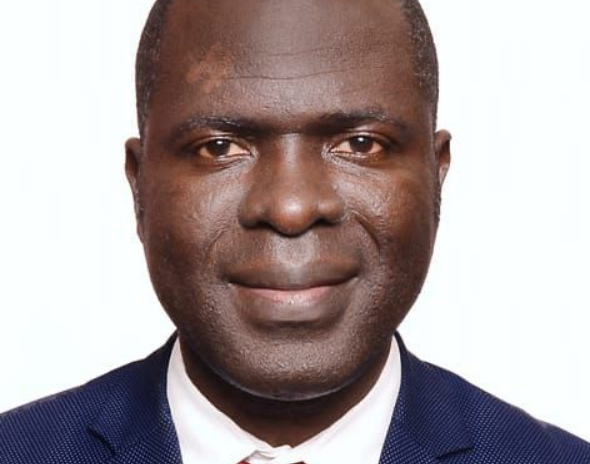
By: Austin S Fallah – A True Son of the Planet Earth Soil:[email protected]
The ultimate message:
“Preserve jury trials in Liberia. Reform the system, strengthen the safeguards, expedite the process, and protect the people’s voice. Justice must be efficient, but efficiency must never become an excuse to disregard constitutional liberty.” – Austin S Fallah
President Joseph Nyuma Boakai — March 2025
“without fear, favor, or delay”: The President used this phrase in urging the Supreme Court to dispense justice consistently with Liberia’s constitutional principles. Source: Executive Mansion — March 2025 Supreme Court Address
President Boakai — October 2025: “When justice is blind to status and fair in its rulings, citizens grow to trust their institutions, and democracy flourishes.” This documented statement offers a foundation for arguing that reform should protect impartiality and confidence in justice. The same address acknowledged concerns about trial delays and access to justice.
Former President Ellen Johnson Sirleaf: At the formal seating of the Supreme Court in March 2006, former President Sirleaf stated, as quoted in Chief Justice Korkpor’s 2017 address: “Under my administration, the Judiciary will be recognized and accorded its proper place as one of the separate, coordinate, and co-equal branches of our Government, equal in importance to the Legislative and Executive Branches.Abuse: Judgesesesesesesation supports judicial independence.
Former President George Manneh Weah: In November 2018, former President Weah told commissioned judges, “You are called to serve the people of Liberia.” He also called on judges to dispense justice fairly and honestly, without fear or favor. His remarks reflect the broader principles of impartial justice and public service—source: Executive Mansion — President Weah Charges Judges to Dispense Justice with Honesty and Fairness.
Former Chief Justice Francis S. Korkpor Sr. — Supreme Court of Liberia: Addressing prospective jurors in 2016, former Chief Justice Korkpor advised: “Always decide cases based on the facts; because if you don’t, you may punish an innocent person or set a guilty person free, by the wrong decision you make. Always do what your conscience says is right.” Source: Liberian Judiciary — Jury Orientation Exercise, October 2016.
International judicial and legal perspectives:Lord Ackner — United Kingdom House of Lords: During a parliamentary debate on jury trials, Lord Ackner’s argument was recorded in the following words: “Trial by jury is the people’s justice. It is a decision by the people, for the people, and of the people.”
The people’s voice Original civic advocacy quotation: “A jury is more than a panel of citizens; it is the people’s voice within the courtroom. Preserve that voice, reform its weaknesses, and strengthen the justice it is meant to serve.”
Constitutional democracy
Original legal advocacy quotation: “Democracy does not end at the ballot box. It must also be reflected in the administration of justice, where ordinary citizens can participate in determining the facts under the guidance of an independent judiciary.”
Judicial reform Original reform proposal: “When a justice system faces delay, bias, or inefficiency, the answer should be meaningful reform, stronger safeguards, and accountability, not the abandonment of constitutional rights without compelling justification.”
Liberia’s constitutional promise: Original Liberian civic advocacy quotation: “Liberia’s democratic future depends on institutions that protect the rights of every citizen. Let us reform jury selection, improve juror education, prevent improper influence, and ensure that justice is delivered fairly and without unnecessary delay.”
The rule of law and legal advocacy: “The strength of a democracy is measured not merely by the power of its judges, but by the fairness of its institutions, the protection of the accused, and the confidence of the people in the administration of justice.”
A call to the Liberian Legislature for rational and true reform: “Let the national debate be guided by evidence, constitutional fidelity, and the public interest. Identify what is broken in the jury system, correct what can be corrected, and protect the people’s lawful participation in justice.”
At the prestigious Hamline University School of Law, I learned in my law classes that jury trial is more than a courtroom procedure.
It is one of the most important constitutional protections ordinary citizens have against the misuse of government power.
In Liberia, where the rule of law continues to develop after conflict, political instability, economic inequality, and longstanding public distrust of institutions, the jury system plays an especially important role.
It brings citizens directly into the justice system.
It ensures that decisions involving serious criminal accusations are not left entirely in the hands of judges, prosecutors, police officers, or political authorities.
Legitimate concerns have arisen that some jurors have accepted bribes from parties involved in litigation.
Such conduct is unacceptable.
A juror who sells justice for money, favors, family connections, or political influence betrays the Constitution, the accused, the victim, and the public.
Courts should investigate corrupt jurors, remove them, prosecute them where the law permits, and bar them from future jury service.
However, the wrongdoing of some jurors should not be used as an excuse to abolish jury trials altogether.
Eliminating juries because some individuals have acted dishonestly would punish the entire Liberian people for the misconduct of a few.
It would also remove one of the strongest structural safeguards against government overreach, judicial bias, politically motivated prosecutions, and state corruption.
Liberia should preserve and strengthen the jury trial system.
The proper response to jury corruption is reform, accountability, and better administration, not constitutional reversal or transferring unchecked authority to judges and government officials.
First, jury trials are essential because they embody direct citizen participation in the justice system.
In a democratic society, justice should not happen only among lawyers, judges, prosecutors, and politicians behind closed doors.
People are not merely subjects of the law; they also help enforce it.
A jury permits citizens from different communities, professions, ages, and backgrounds to bring their experiences, values, and common sense into the courtroom.
This participation helps ensure that the legal system reflects the standards of the society it serves.
In Liberia, this principle matters especially.
The country comprises diverse ethnic groups, languages, religions, counties, and communities.
A single judge, regardless of education or integrity, can not fully represent all those perspectives.
Judges are trained in law, and their legal knowledge is necessary.
Yet legal training alone does not fully protect against error, prejudice, political pressure, or disconnection from the realities ordinary Liberians face.
Jurors help close that gap. They bring the community into the courtroom and make justice more understandable, visible, and legitimate to the public.
A jury is therefore not simply a group of people selected to listen to evidence.
It is a constitutional expression of popular sovereignty,the idea that the people ultimately hold governmental authority.
When citizens sit on a jury, they exercise a serious civic responsibility.
They evaluate evidence, judge credibility, deliberate with others, and help decide whether the state has proven its case.
This process prevents the justice system from becoming an institution controlled entirely by officials who may be distant from the communities affected by crime, poverty, political tension, and unequal power.
Second, jury trials serve as a vital safeguard against oppressive government power.
Criminal prosecution is one of the state’s strongest powers.
The government can arrest a person, detain them, bring charges, restrict liberty, damage their reputation, and, in serious cases, seek severe punishment.
Because this power is so great, it must be limited by independent checks. A jury is one such check.
Without juries, an accused person may face the combined authority of police, prosecutors, investigators, and a judge, with little meaningful public involvement.
Even an honest and capable judge may face institutional pressures.
Abuse: Judges may worry about political consequences, public criticism, reassignment, professional relationships, or retaliation from powerful individuals.
In countries where political influence matters, a judge may face direct or indirect pressure to decide a case a certain way.
A bench trial, where a judge alone determines guilt or innocence, can therefore create the appearance, and sometimes the reality, that the state is judging its own actions.
A jury reduces this danger by distributing decision-making power among several citizens.
It is harder to influence, intimidate, or control an entire jury than to pressure one person.
Jurors deliberate together, challenge each other’s assumptions, and are expected to reach a decision based on the evidence presented in court.
Their diversity can help prevent one official’s narrow viewpoint from controlling the outcome.
Although juries are not perfect, they make it harder for any single political actor, wealthy litigant, prosecutor, or judge to dominate a criminal case.
This safeguard matters especially in politically sensitive cases.
When someone is accused of criticizing government leaders, participating in opposition politics, exposing corruption, organizing protests, or challenging powerful interests, criminal charges may be influenced by motives other than justice.
A jury can serve as a barrier between the accused and an overreaching state.
It reminds the government that the people, not only government officials, must be persuaded before liberty can be taken away.
Third, abolishing jury trials because of bribery would not eliminate corruption.
It could merely shift corruption into a less visible, more dangerous form.
Those who argue for replacing juries entirely with judges may assume that judges are automatically immune from bribery, bias, fear, or political influence.
That assumption is unrealistic.
Every human institution can be corrupted. Judges, court clerks, lawyers, police officers, investigators, and public officials can all be vulnerable to improper influence.
A system led by a single judge may be efficient, but efficiency is not justice.
In fact, concentrating power in one judge can make corruption easier.
If a litigant, politician, or powerful businessperson wants to influence a case, it may be simpler to target one decision-maker than to influence a group of citizens.
A single judge may face private pressure that the public never sees.
There may be fewer voices in the deliberation process, fewer perspectives to question a questionable conclusion, and fewer opportunities for citizens to observe whether justice is being done.
The problem is not that jurors are involved in justice; the problem is that Liberia must build stronger protections to ensure that jurors act honestly.
The solution is reform. Liberia can strengthen jury trials through practical measures that protect both the court’s integrity and the accused’s rights.
Juror selection should be more transparent and carefully supervised.
Jurors should be selected through procedures that reduce favoritism, political interference, and manipulation by parties to a case.
Courts should maintain reliable jury lists and ensure jurors are selected fairly and randomly, with appropriate screening for conflicts of interest.
Jurors should also receive clear orientation before trial.
Many citizens may not fully understand their responsibilities, the importance of impartiality, or the legal consequences of accepting a bribe.
Courts should explain that jurors must not discuss the case outside the courtroom, communicate with parties or lawyers, accept money or gifts, seek outside information, or allow personal relationships to influence their decisions.
Courts should give these instructions in plain language and, where necessary, in forms accessible to citizens with different educational backgrounds.
Moreover, Liberia should provide reasonable compensation and protection for jurors.
People struggling to feed a family, pay transportation costs, or miss work may be more vulnerable to financial pressure.
Adequate juror stipends will not eliminate corruption, but they can reduce the economic hardship that makes bribery more tempting.
Jurors should also be protected from threats, intimidation, and retaliation.
If citizens fear that serving on a jury will endanger them or their families, they may be unwilling to participate honestly.
A strong jury system requires the state to treat jury duty as an honorable public service and to protect those who perform it.
Courts should also establish confidential mechanisms for reporting attempts to bribe or intimidate jurors.
A juror who receives an improper offer should have a safe way to report it immediately to the judge or an independent court officer.
Investigations should be prompt, professional, and fair.
If evidence confirms corruption, those responsible, including jurors, litigants, lawyers, intermediaries, or officials, should face serious consequences.
Punishing corrupt conduct is necessary not because the jury system has failed, but because the nation must demonstrate that justice cannot be bought.
At the same time, reforms must not become tools for weakening the independence of juries.
Judges should instruct jurors on the law and ensure that trials are conducted fairly, but judges should not pressure jurors to reach a preferred verdict.
Prosecutors should present evidence ethically, not use their influence to manipulate jury selection or intimidate citizens.
Defense lawyers should be allowed meaningful opportunities to challenge biased jurors and protect the accused’s right to a fair trialir trial.
Reform should improve integrity while preserving the jury’s independent role as the voice of the peoplehe community.
Public trust is another major reason to preserve jury trials.
Courts depend not only onn legal authority but also on public confidence.
People are more likely to respect judicial decisions when they believe that the process was fair, open, and connected to the community.
If citizens see that serious criminal cases are decided exclusively by government-appointed or state-employed officials, they may suspect that the outcome was predetermined.
This suspicion can be especially strong when the accused is poor, politically unpopular, or powerless.
By contrast, jury trials offer the public a visible role in justice. When citizens know that people like themselves participate in deciding serious cases, they are more likely to view the system as legitimate.
The jury does not guarantee that every verdict will be correct, but it demonstrates that justice is not solely the property of elites. It belongs to the people.
Liberia’s constitutional order should be guided by the principle that rights are most valuable when they protect people during difficult times.
It is easy to support jury trials when every juror behaves perfectly.
The true test comes when the system faces corruption, delay, or public criticism.
Abolishing the jury in response to those problems would be a short-term reaction with long-term consequences.
It would weaken citizen participation, centralize judicial power, and reduce an important barrier against abuse by the state.
Liberia should not surrender a fundamental democratic safeguard because some individuals have dishonored it.
The nation should identify and punish corrupt jurors, improve jury selection, protect jurors from pressure, provide proper compensation, and enforce strict penalties against bribery and interference.
These reforms can make the system more trustworthy without destroying the people’s constitutional role in justice.
Ultimately, a jury trial is a declaration that no government should have unlimited power to accuse, punish, and imprison its citizens.
It affirms that the community has a right to participate in judging serious wrongdoing and protecting individual liberty.
In Liberia, preserving jury trials means preserving a vital check on state power, strengthening public confidence, and honoring the democratic promise that justice must be done not only by officials, but with the meaningful participation of the people.
Support Independent Journalism
Your support helps FrontPage Africa continue delivering independent, credible, and impactful journalism. Every contribution strengthens our ability to investigate, inform, and hold power accountable while keeping quality journalism accessible to our readers.
Support our journalism or subscribe to receive the latest FrontPage Africa stories and updates.