MONROVIA – Two Liberian senators have publicly rejected the Chief Justice’s call to abolish jury trials, arguing that the answer to allegations of compromised jurors is a stronger jury system rather than no jury at all.
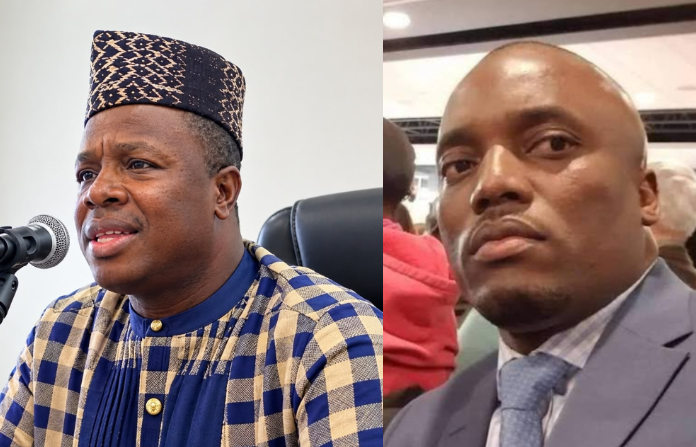
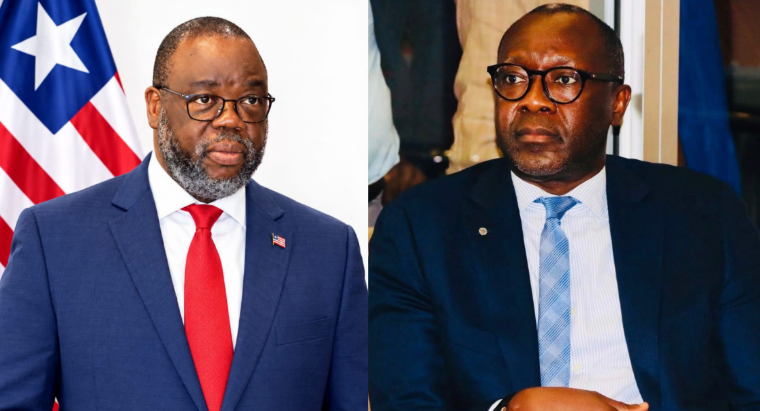
Senator Snowe, a senior member of the Senate and former Speaker of the House of Representatives, and Senator Konneh, who chairs the Senate Committee on Public Accounts, issued separate statements responding to Chief Justice Gbeisay. The Chief Justice made his appeal at the opening of the October Term of Court, citing concerns that jurors have been bribed or otherwise compromised in criminal cases.
Neither senator brushed aside those concerns. Both acknowledged that bribery, intimidation and interference are real threats to justice. But they said ending jury trials would punish the public for the misconduct of a few.
A Right Beyond the Reach of Ordinary Law
Senator Konneh framed the dispute first as a legal one. “Before it is a policy question, it is a constitutional question,” he said.
Both men pointed to the 1986 Constitution, which guarantees due process and trial by jury. Snowe cited Article 20(a), which protects due process and jury trial subject to constitutional exceptions, and Article 21(h), which covers the right to a speedy, public and impartial jury trial in the cases it addresses. That article also lets an accused person waive the right under set conditions.
Senator Konneh argued that neither an ordinary statute nor a directive from the judiciary can lawfully strip a citizen of a constitutionally protected right. The only route, he said, runs through Articles 91 and 92.
Under Article 91, an amendment needs the approval of two-thirds of the membership of both houses of the Legislature. It must then be ratified by two-thirds of registered voters voting in a national referendum held at least one year after the legislative vote. Article 92 sets further requirements on publishing and voting on proposed amendments.
The senators also drew a line between an accused person choosing to give up a jury and the State taking the option away from everyone.
Judges Can Be Bribed Too
The senators’ sharpest objection was that abolition would not cure the underlying disease. “Removing juries from the courtroom would not remove corruption from the courtroom,” Konneh said. He warned that judges are also vulnerable to bribery, intimidation and political pressure, and that placing a verdict in the hands of one judicial officer could hand manipulators a single target. “Corruption follows power. Wherever verdicts are decided, corrupt actors will attempt to influence that process,” he said.
Senator Snowe extended the point beyond the bench. Improper influence can reach prosecutors, investigators, court staff and witnesses, he said, and weakness at any stage of a case can undermine its outcome. He urged the country to examine the whole chain of criminal justice, from how crimes are investigated and evidence is kept to how witnesses are protected and cases are prosecuted.
Senator Snowe stressed that corruption “demands investigation, accountability, and institutional repair,” but that its existence “does not, by itself, justify withdrawing a fundamental right from the Liberian people.” He added that he is not a lawyer, and said his legislative experience and constitutional duties require him to weigh the matter independently.
Caution on Reading Acquittals
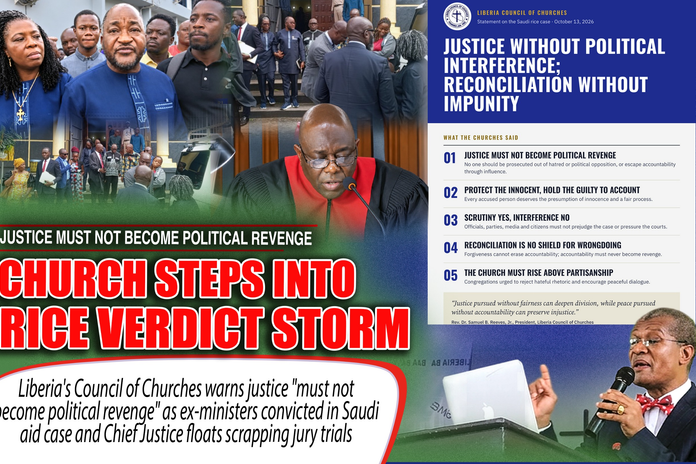
Senator Snowe also warned against treating every not-guilty verdict as proof of a bought jury. Referring to the proceedings involving former Finance Minister Samuel Tweah and Abdullah Kamara, he said verdicts, misconduct allegations, later court rulings and the evidence in each case must be judged on their own terms.
An acquittal, he said, can reflect thin evidence, unreliable testimony or a prosecution that failed to prove guilt. Where there is credible evidence of interference, he said, it should be investigated through lawful procedures, not inferred from public unhappiness with an outcome.
What the Senators Want Instead
Both men offered reform agendas, though with different emphases.
Senator Konneh called for:
– Mandatory sequestration and anonymity for jurors in serious criminal cases
– Meaningful compensation and protection for people who serve
– Tougher penalties for jury tampering
– A transparent, professionally managed selection system
He also asked the Chief Justice to submit a comprehensive Jury Reform Act to the Legislature.
Senator Snowe’s list was broader. He wants the existing Office of Jury Management strengthened, better education for jurors, and a review of how jurors are paid. He called for jury selection that is transparent and auditable, with screening for conflicts of interest, bias and improper relationships, while keeping both prosecution and defence able to challenge unsuitable candidates.
He said jurors should receive adequate allowances, timely payment, transportation, meals and safe accommodation where needed, so that citizens are not left out of pocket for performing a public duty. He also proposed channels for reporting threats or improper approaches, with safeguards for jurors’ identities and communications where justified, balanced against the accused’s right to challenge bias.
On accountability, Senator Snowe said investigators should pursue not only jurors who take bribes but also anyone who offers money, arranges improper contact or threatens jurors. He asked for a review of existing offences and penalties to see whether new legislation is needed.
Use the Laws Already on the Books
Senator Snowe argued that Liberia has not yet exhausted its existing tools. He noted that the Office of Jury Management was created through the 2013 legislative reform, which he said he supported. The office is responsible for jury selection, managing the central jury pool and educating prospective and sitting jurors. He urged authorities to assess how well it is performing and where it falls short, instead of bypassing it.
He also cited provisions in the Judiciary Law that bar jurors from accepting bribes or rewards meant to influence their duties, and said enforcement of those provisions should be examined before lawmakers consider new ones.
“Passing another law will achieve little unless the responsible institutions have the resources, independence, and commitment to enforce it,” he said. He called for stronger criminal investigations, better evidence collection, effective witness protection and improved prosecution and legal representation. He also proposed a costed implementation plan with clearly assigned responsibilities and regular reports to the relevant legislative committees. Oversight, he said, should cover spending, trial delays, protection arrangements and the handling of misconduct complaints, while respecting judicial independence and the confidentiality of jury deliberations.
Public Hearings Urged
Both senators asked for wider consultation. Snowe proposed public hearings bringing together the Judiciary, the Ministry of Justice, the Liberian National Bar Association, jury administrators, civil society groups and citizens who have served as jurors. Such hearings, he said, should establish what is failing, which reforms have already been tried and which can realistically be funded and carried out.
He also urged lawmakers to accept their own share of responsibility for giving the justice system the legal framework and resources it needs.
Senator Konneh said hearings would help identify practical ways to curb jury interference without moving immediately to eliminate jury trials. He did not rule out abolition forever. “If reform ultimately fails, the constitutional amendment process exists for exactly that reason,” he said. “But abolition cannot be our first answer.”
Juries as a Check on State Power
Beyond the mechanics of verdicts, the senators described the jury as a matter of citizenship. Konneh called it a way for ordinary people to take part directly in justice and to check the use of State power. He said Liberia’s history makes safeguards against concentrated, unchecked authority especially important.
Senator Snowe said the country must show it can punish corruption and strengthen accountability while staying faithful to its constitutional commitments. He said he is ready to work with the Chief Justice and fellow lawmakers on reforms that protect citizens, deter misconduct and improve the delivery of justice.
The senators were careful to say they are not dismissing the Chief Justice’s alarm. Their quarrel is with his proposed cure. As the debate continues, the question for Liberia’s justice system is whether the flaws he identified can be fixed while the right to a jury trial is preserved. For Snowe and Konneh, the answer is yes, and it starts with repairing the system rather than abolishing the right it exists to protect.
Support Independent Journalism
Your support helps FrontPage Africa continue delivering independent, credible, and impactful journalism. Every contribution strengthens our ability to investigate, inform, and hold power accountable while keeping quality journalism accessible to our readers.
Support our journalism or subscribe to receive the latest FrontPage Africa stories and updates.