Liberia cannot claim to prioritize education while the capital’s public schools survive on less than 1 percent of a billion-dollar budget.
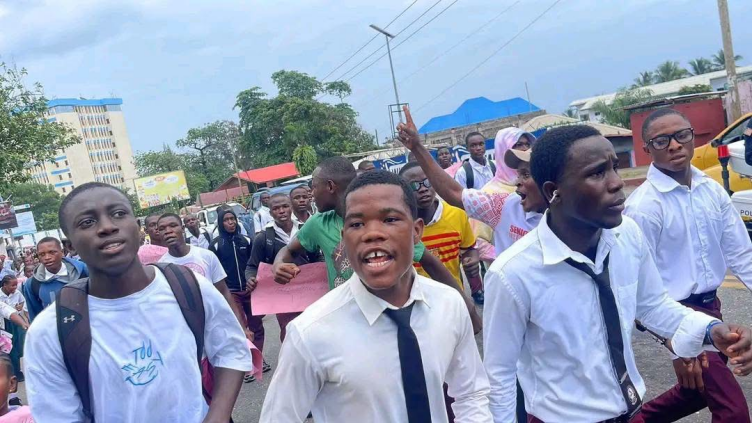
THIS WEEK, THOUSANDS of children in school uniforms marched to the Capitol instead of sitting in class. Their chant was the simplest demand any child can make of a government: “We want to learn too.”
THAT THEY HAD to make it at all is an indictment of all of us.
THE STUDENTS OF the Monrovia Consolidated School System are not troublemakers. They are the sons and daughters of families who cannot afford private school fees. For much of this year, they have watched their teachers walk out over unpaid salaries and broken promises. They have sat in classrooms without enough chairs, without books and without science supplies. Now they are spending school days on the streets, petitioning lawmakers to do what should have been done months ago.
EVERY DAY A child spends protesting is a day of lost learning. Every strike pushes the syllabus further behind. Ninth and twelfth graders face national examinations that do not pause for disputes between adults. Children who fall behind in a weak system rarely catch up. Some drop out for good. This is how a country quietly loses a generation — not in one dramatic moment, but one lost school day at a time.
WE DO NOT cheer children taking to the streets. Protests put students at risk, and there are troubling allegations that some adults are using students to settle personal and political scores. Those claims must be investigated, and student leaders must be protected from intimidation. But it would be dishonest to blame the children for a crisis they did not create.
A budget that forgot the classroom
THE ROOTS OF this crisis are written in the national budget. The government rightly celebrates Liberia’s first billion-dollar budget. Yet the school system that serves the capital’s poorest children receives US$7.2 million — 0.58 percent of the total.
THE LEGISLATURE’S DRAFT allocation alone is about seven times that amount. Debt service is 32 times larger. Security spending outpaces the entire education sector.
INSIDE THE SCHOOL system’s own budget, the priorities are no better. Schools receive less for educational materials than for stationery. Laboratory supplies for every science class in the system were cut to US$5,000 for the year. Generator fuel rose 27-fold. The government’s own projections cut operating funds by a further 44 percent in 2027.
THEN THERE IS the question of where the money actually goes. Budget records list most of the school system’s 2025 capital spending under projects that have nothing to do with schools: electoral reform, a new Finance Ministry headquarters, small-business support and an airport upgrade. Only 24 percent is labeled as school renovation. This may be an accounting error. But if the government cannot accurately record what it spends on its schools, how can parents trust that the money reaches them?
THE TEACHER CRISIS follows the same pattern. Volunteers are absorbed onto the payroll in emergencies, often with one-off money from the World Bank, rather than through the core budget. Tuesday’s decision to add 201 MCSS volunteer teachers is welcome. But it came only after children marched. Commitments that arrive only under pressure teach students a dangerous lesson: that the only way to be heard is to leave the classroom.
What must happen now
THIS NEWSPAPER CALLS on the government to match its words about education with money that reaches the classroom.
FIRST, THE FINANCE Ministry and the MCSS must publicly explain the capital spending recorded against airport, ministry and electoral projects. If it is an error, correct the record. If money meant for schools went elsewhere, return it and hold those responsible to account.
SECOND, RING-FENCE CLASSROOM funds. Educational materials, laboratory supplies and school repairs should not be the first lines cut when budgets tighten. The 2027 budget must reverse, not deepen, this year’s cuts.
THIRD, PAY TEACHERS from the core budget. Volunteers absorbed onto the payroll must be funded year after year, not rescued by one-off donor money. The salary reform promised to MCSS teachers needs a published timeline, not an open-ended assurance.
FOURTH, THE LEGISLATURE must do its oversight job. The House committees now reviewing the students’ petition should summon the Finance Ministry, the Education Ministry and
MCSS leadership in public hearings. Lawmakers who approved a budget that gives themselves seven times more than the capital’s public schools owe the students an explanation.
FIFTH, PROTECT THE students. Allegations that student leaders have been threatened, and that adults are drawing children into political disputes, must be investigated swiftly and transparently.
TO THE STUDENTS, we say: your cause is just, and you have been heard. Keep your voices peaceful, stay safe, and do not allow anyone to use your struggle for their own ends. The best way to hold leaders accountable is to stay in school and become the educated citizens they cannot ignore.
THE GOVERNMENT HAS made education one of the pillars of its development agenda. Pillars must bear weight. A billion-dollar budget that leaves children without teachers, books, or science supplies is not a sign of progress. Let the children learn.
Support Independent Journalism
Your support helps FrontPage Africa continue delivering independent, credible, and impactful journalism. Every contribution strengthens our ability to investigate, inform, and hold power accountable while keeping quality journalism accessible to our readers.
Support our journalism or subscribe to receive the latest FrontPage Africa stories and updates.