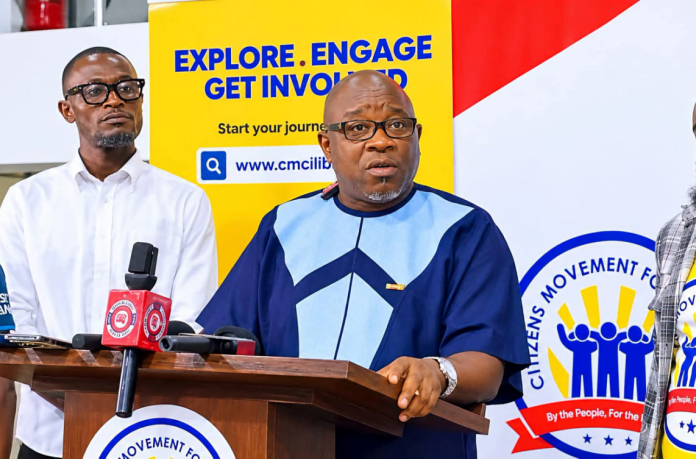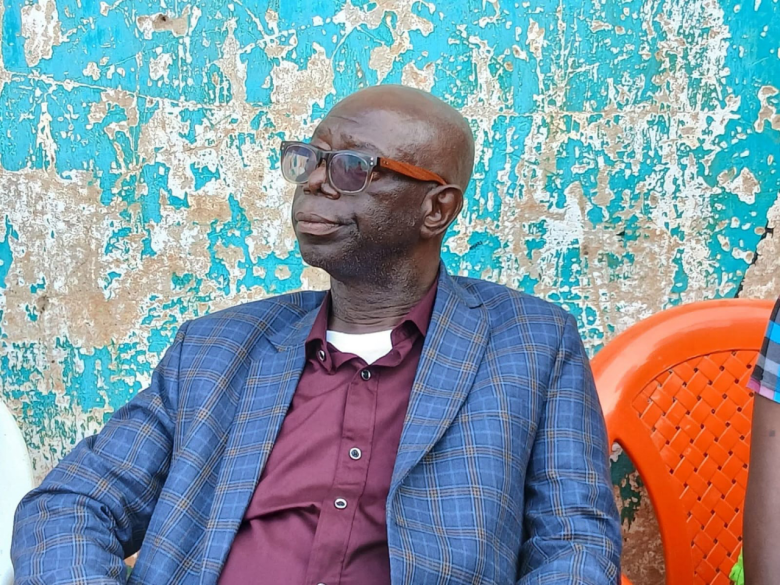
GBARNGA, Bong County – Representative Robert Flomo Womba’s second consecutive term in the House of Representatives is increasingly being defined by an expanding portfolio of legislative initiatives, educational interventions and community-based development projects, raising the possibility that the Bong County District 4 lawmaker could eventually seek another mandate that would further distinguish his political career.
By Selma Lomax, [email protected]
Having already overcome a longstanding electoral pattern in which no sitting representative from the district had secured a second consecutive term, Womba now finds himself in a different political position as he moves toward the halfway point of his current tenure.
His re-election in 2023 represented a departure from the district’s political history and established him as the first lawmaker to successfully break the barrier that had prevented previous representatives from returning to the Legislature for another consecutive term. The achievement has added another dimension to his political standing, particularly as his current legislative and constituency activities continue to attract attention across the district.
Although he has not publicly declared an intention to contest for a third consecutive term, the possibility of another electoral bid is emerging as an interesting question surrounding his political future.
A successful third-term campaign would mark another unprecedented achievement in District 4, where Womba has already demonstrated that voters can return an incumbent representative for another mandate.
However, beyond the political significance of his re-election, the lawmaker’s second-term performance is increasingly being measured against the projects he has supported, the legislation he has introduced and the extent to which his interventions are addressing longstanding challenges confronting residents.
At the Legislature, one of the most significant developments associated with his legislative work is the transformation of the Bong County Technical College into a public university. The legislation, which repealed the 2015 Act establishing the technical college and created the Bong County University, received approval from the House of Representatives and the Liberian Senate before being signed into law by President Joseph Nyuma Boakai.
The new institution has been granted a national university charter, providing the legal framework for it to expand its academic offerings beyond the limitations of its previous technical college status. Under the new arrangement, the university is authorized to offer bachelor’s, master’s and doctoral degree programs, potentially creating additional opportunities for students from Bong and surrounding counties to pursue higher education within central Liberia.
For many families in Bong County, the transformation is particularly important because access to university education has historically been constrained by the cost of travelling to Monrovia, accommodation expenses and the high tuition fees associated with private institutions. The county has approximately 41 high schools producing graduates annually, creating a substantial demand for affordable tertiary education opportunities.
With the expanded status of Bong County University, more students could have the opportunity to continue their education without necessarily leaving their communities or families. The long-term success of the institution, however, will depend on the availability of adequate funding, qualified lecturers, modern facilities and the necessary academic standards to support its expanded mandate.
Nevertheless, the passage of the university legislation stands among the major policy developments connected to Womba’s second-term legislative activities, particularly because its anticipated benefits extend beyond his immediate constituency.
His legislative agenda has also extended into the healthcare sector through a proposed law seeking to establish the Liberia National Dialysis Center as an autonomous government institution. The proposed Act to Incorporate the Liberia National Dialysis Center and Grant It a Charter as an Autonomous Agency of the Government of Liberia is currently undergoing legislative consideration in committee.
The proposal seeks to create a specialized public institution with responsibility for providing kidney-related healthcare services, including hemodialysis, peritoneal dialysis, renal replacement therapy and continuous monitoring of patients suffering from kidney complications.
It also provides for the management of chronic kidney disease and treatment of acute kidney injury. The proposed institution is intended to improve the country’s capacity to respond to kidney failure and other renal conditions, which often require specialized treatment and continuous medical attention.
If enacted and adequately supported, the legislation could establish an institutional framework for more accessible and organized dialysis services, reducing some of the challenges faced by patients who require regular treatment.
Unlike the Bong County University legislation, which has already become law, the dialysis center proposal remains pending before the relevant legislative committee. Rep. Womba has also exercised his oversight responsibilities through a communication requesting a comprehensive payroll audit of employees at the Central Administration of the House of Representatives, as well as a broader audit of the House.
The requests form part of his legislative interventions aimed at examining administrative and financial accountability within the Legislature. While his activities at the Capitol have focused on legislation and oversight, his constituency engagements have increasingly centered on infrastructure, education, access to water and economic empowerment.
Across District 4, the lawmaker has supported the establishment of pipe-borne water systems in eight communities: Jorwah, Naama, Payetai, Belefanai, Gbalatuah, Gbonyea, Foequelleh and Belemu. The projects are intended to improve access to safe drinking water and reduce the difficulties residents encounter in obtaining reliable water supplies.
For rural households, access to clean water remains an important development concern, affecting public health, household activities and the general welfare of communities.
The interventions are therefore among the constituency projects through which Womba has sought to respond to basic social needs. His infrastructure initiatives also include the construction of the Shamkpallai Youth Center, Gbansu Nyankai Guest House, Warta Women Center and Kollie-ta Guest House.
In addition, rehabilitation work has been undertaken on the Nyansue-to-Narwai and Nyansue-to-Denyea roads. These routes serve communities where residents depend on road transportation to access markets, schools, healthcare facilities and other essential services. The road rehabilitation initiatives are expected to improve movement between communities, particularly for farmers and traders whose economic activities depend on reliable transportation.
Education has also remained a major component of Womba’s constituency development agenda, with the lawmaker supporting students at both the secondary and tertiary levels. At Bong County University, he is currently sponsoring 140 students pursuing studies at various academic levels. The sponsorship represents one of his direct interventions in addressing the financial difficulties confronting young people seeking university education.
In addition to the scholarship support, Rep. Womba recently distributed 75 whiteboards and various educational supplies to schools throughout the district. The materials included markers, sheets of paper, copybooks and other instructional items intended to improve classroom activities and provide teachers with additional resources.
The distribution covered a wide range of schools, including Victoria Tolbert Yancy School in Jorwah, Liaward School, William T. Womba School in Sheankpali, Nyansue Community School, Naama School and Gorpu Dolo Boi School in Belefanai. Other beneficiary institutions included William R. Tolbert High School in Gbalatuah, C.G. Woah High School in Belemu, Dolo Kelen Paye School in Forquelleh, Gbonota Community School, Gbonyea Community School, Gbansu Nyankai School, Warta School, Garmue School and Palala School.
The provision of whiteboards is intended to encourage schools to move away from traditional chalkboards while creating a more conducive environment for teaching and learning.
Rep. Womba has linked his interest in educational development to his personal experience as an educator and his own academic journey, which began in a rural community. One of the most notable educational developments in the district during his current term is the elevation of Gorpu Dolo Boi Public School in Belefanai, Zota District, to senior high school status.
The development is expected to reduce the need for students from Belefanai and surrounding communities to travel to Gbarnga to complete their secondary education.
For years, students completing junior high school in the area faced the challenge of either travelling considerable distances or abandoning their education because their parents could not afford the additional transportation and accommodation expenses.
The school’s expansion is being supported through the County Social Development Fund, with Womba providing legislative oversight of the project. Construction activities include additional classrooms, administrative offices and learning spaces intended to accommodate students at the senior high school level.
The development is particularly significant for families who have struggled to finance their children’s education outside their immediate communities.
Beyond the physical expansion of the institution, Rep. Womba has announced plans to install a Starlink internet system to provide the school with reliable internet access.
The proposed installation is intended to give students and teachers access to online research materials, educational resources and digital learning opportunities that are often unavailable in rural schools. The lawmaker believes that internet connectivity is increasingly necessary for students to compete academically with their counterparts in urban areas.
His interventions in the education sector, therefore, combine financial assistance, classroom materials, institutional expansion and plans for improved access to technology.
Women empowerment has also featured prominently in his constituency engagements, with financial packages distributed to women’s groups in several communities. At the dedication of the Naama water system earlier this year, Womba provided L$500,000 to women in the community as an empowerment package.
He subsequently made a similar L$500,000 contribution to women in Gbalatuah. In another intervention, the lawmaker distributed L$660,000 among women and communities in Belefanai, Gweayea, Fetuah, Balatain-la and Danenai.
The distribution included L$500,000 for women in Belefanai, L$100,000 for women in Gweayea and L$60,000 shared among women in Fetuah, Balatain-la and Danenai.
The financial contributions are intended to strengthen women’s economic activities and provide assistance for community-based initiatives. More recently, Womba announced plans to construct a modern motorcyclist terminal and two bus stops in Belefanai, accompanied by a solar power system.
The announcement followed a community engagement tour on Sunday, November 15, 2026, during which he outlined plans to address transportation difficulties confronting residents of the commercial town. Belefanai serves as an important transportation and trading center in Zota District, with commercial motorcyclists playing a major role in moving passengers and goods between surrounding communities.
However, the absence of an organized terminal has left many riders operating along the roadside, while passengers frequently wait for transportation without adequate shelter. The proposed motorcyclist terminal is expected to provide an organized location for riders to park, rest and conduct their daily transportation activities.
The two planned bus stops are intended to provide shelter for passengers, particularly market women, students, farmers and people travelling to health facilities. The solar power component is expected to provide nighttime lighting, improve visibility and allow passengers and riders to charge mobile phones.
Rep. Womba said the proposed facilities are intended to address practical challenges confronting ordinary residents rather than concentrate development efforts solely on larger urban centers.
“Belefanai deserves a modern terminal. Our riders deserve dignity. Our passengers deserve safety. Our market women deserve shelter. This project is for the ordinary people,” he said. Construction is expected to begin in the coming weeks after the selection of suitable locations, consultations with community members and mobilization of construction materials.
The representative has also called on residents to cooperate with the implementation process and take responsibility for protecting the facilities once completed.
Rep. Womba, who chairs the Unity Party Legislative Caucus, has acknowledged working with Bong County Senator Prince Kermue Moye Sr. and President Boakai in pursuing development opportunities for the district. However, he has maintained that he will continue undertaking initiatives to address the immediate needs of his constituents.
“Development is not only about big buildings in Gbarnga. Development is about a motorcyclist having a place to park. Development is about a market woman having shelter. Development is about a passenger having light at night. That is what we are doing in Belefanai,” he said.
A Possible Third Consecutive Term
The accumulation of these legislative and constituency initiatives is likely to become an important part of the political conversation as Womba approaches the middle of his second term. His electoral achievement has already placed him in a distinctive position within District 4, having succeeded where previous representatives failed by winning a second consecutive mandate.
That accomplishment could provide a foundation for another political ambition, should he decide to seek a third term. A third consecutive victory would further distinguish his political record and potentially establish a new electoral precedent in the constituency.
However, the prospect of another term will depend on several factors, including the completion of ongoing projects, the delivery of announced commitments and the extent to which residents believe his representation has improved their circumstances. The transformation of Bong County Technical College into a university, the expansion of educational opportunities in rural communities, improved water access and road rehabilitation are among the initiatives that could feature prominently in any future assessment of his performance.