The $54.7 million national ID deal ignored the procurement regulator, shut out every competitor and stripped away the safeguards protecting Liberians’ biometric data. Rejecting it is not enough. The President must find out who tried to slip it past him, and hold them to account
A NATION’S IDENTITY is not a commodity. It is the record that says who belongs, who can vote, who can open a bank account, who can cross a border and come home. The National Identification Registry was created to keep that record in Liberian hands, under Liberian law.
THAT IS WHY the House joint committee’s report on the $54.7 million concession with OeSD International should alarm every Liberian. The committee found more than 40 defects in the agreement. Several, it said, were violations of the law committed before the deal was even signed. No vote of the Legislature can cure them.
STRIP AWAY THE technical language and the story is simple. In May 2025, the Public Procurement and Concessions Commission refused a request to hand the contract to OeSD without competition. Then, on May 30, the NIR signed a contract with OeSD anyway. In July 2025, the PPCC ordered open international bidding and a formal concession plan. That order, the committee says, “was never followed.”
RIVAL FIRMS, INCLUDING Liberian ones, came forward. They were ignored. No Certificate of Concession was obtained, though the regulations say a concession without one “shall be void.” No summary of terms was published. No county consultations were held. Liberian officials even made their due-diligence trip to Austria at OeSD’s expense, vetting a company that was paying their way.
WHAT EMERGED WAS a contract that would have handed a private company the exclusive power to assign every Liberian’s national ID number. It would have made paid verification mandatory for banking, SIM cards, permits and the courts. It would have sent disputes to London and waived the Republic’s immunity over its assets abroad. It would have charged nearly $20 million for a data center Liberia does not need, when LIBTELCO already has one. And it would have done all this without requiring that Liberians’ fingerprints and faces be stored in Liberia, or that the government hold the keys to them.
THE CONTRACT EVEN contained a clause letting the parties waive legislative ratification. Chapters on data protection, anti-corruption and state auditing that appeared in a January 2026 draft were gone by the time it was signed.
THIS WAS NOT carelessness. Mistakes do not repeat themselves at every step, each time in the same direction. A process that ignores the regulator twice, shuts out every competitor and quietly deletes the safeguards is a process designed to avoid scrutiny.
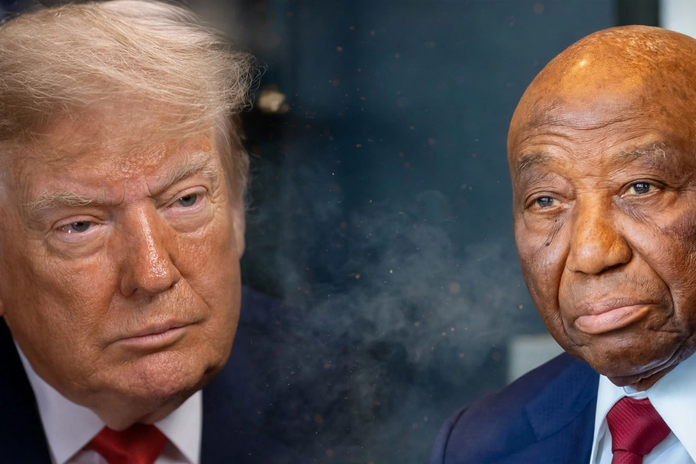
PRESIDENT JOSEPH NYUMA Boakai approved this agreement and sent it to the Legislature in July. Sources tell this newspaper he was badly misled by those who brought it to him. We are prepared to believe that. A President cannot read every annex. He must rely on the people around him to tell him the truth.
BUT IF THE President was misled, then someone misled him. And the people who did so are still in place.
THE HOUSE SHOULD adopt the committee’s report and reject the deal in full. That is only the first step. Killing a bad contract does nothing to fix the process that produced it, or to stop the same people from trying again under a new name.
WE THEREFORE CALL on the President to act on three fronts.
FIRST, ORDER AN independent review of how this concession was put together. It should establish who decided to bypass the PPCC, who signed the May 2025 contract, who approved the OeSD-funded trip to Austria and who removed the safeguards from the January draft. The General Auditing Commission and the Liberia Anti-Corruption Commission are equipped to do this work, and the findings should be made public.
SECOND, HOLD ACCOUNTABLE those responsible. Officials who knowingly ignored a binding order of the procurement regulator, or who put a deal before the President without telling him it had been rejected, should be suspended while the review runs. Where the review finds wrongdoing, they should be dismissed and, if the law was broken, prosecuted. A government that came to power promising to rescue Liberia from impunity cannot let this pass with a quiet withdrawal.
THIRD, START OVER, the right way. That means open international bidding, as the PPCC ordered more than a year ago. It means a real value-for-money test that weighs upgrading the systems Liberia already owns. It means fair room for Liberian technology firms. And it means firm guarantees, written into the contract, that Liberians’ biometric data stays in Liberia under Liberian control.
THE REGISTRY’S LEADERSHIP owes the public answers too. This newspaper has put detailed questions to the NIR. We are still waiting.
MEANWHILE, ID CARD issuance has been suspended since June 2025. Liberians still need the card to bank, register a SIM card and get basic services. They have waited long enough for a working system. They should not also be asked to pay for one built to dodge the rules.
THE HOUSE COMMITTEE has done its part. Now it is the President’s turn. He should find out who tried to slip this deal past him, and past the Liberian people, and make sure it never happens again