Liberia’s proposed 2027 budget is the biggest in the country’s history, promising higher pay for teachers and police, more money for hospitals and a plan to repay nearly US$60 million owed to the state pension fund. But it rests on a revenue milestone that was lifted in part by a one-off mining payment, and the government has yet to explain how it will keep the money coming.
By Rodney D. Sieh
MONROVIA, Liberia – Liberia’s government on Friday asked lawmakers to approve a US$1.538 billion spending plan for 2027, the largest in the West African nation’s history, betting that a recent surge in tax collections can pay for higher wages, new hospital equipment and a long-delayed fix for public-sector pensions.
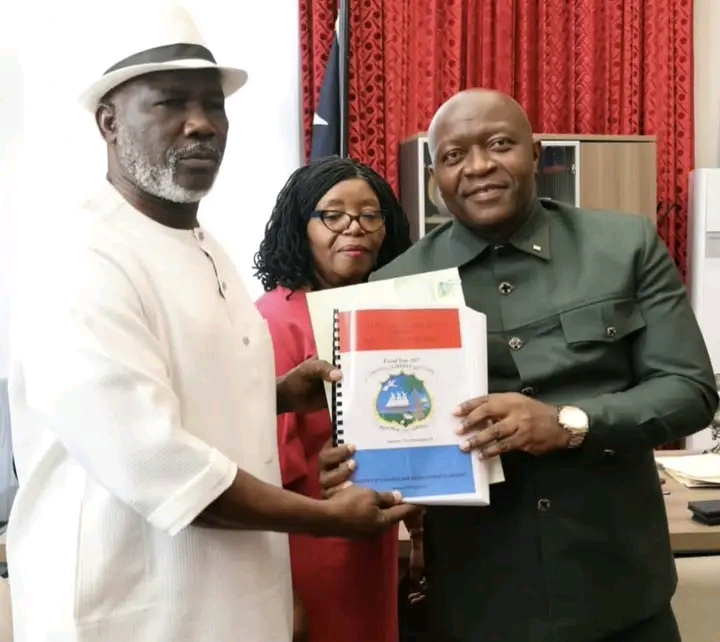
Finance Minister Augustine Kpehe Ngafuan delivered the draft budget and President Joseph Nyuma Boakai’s budget message to House Speaker Richard Nagbe Koon on November 6. The plan is about 18 percent larger than the current year’s revised US$1.302 billion budget.
Boakai titled his message “A Growing Budget for Bigger Impact,” tying the plan to the ARREST Agenda, his government’s development blueprint. He told lawmakers the budget was bigger not only in size but in its potential to change lives, and urged them to pass it quickly.
The pitch leans heavily on one number. In September, Liberia’s domestic revenue crossed US$1 billion for the first time in its 179-year history. How durable that figure is – and how much of it reaches ordinary Liberians – is likely to dominate the debate in the Capitol over the coming weeks.
The billion-dollar question
On September 16, the Liberia Revenue Authority (LRA) reported that collections for the year had reached just over US$1.005 billion. That is roughly 63 percent more than the government collected in 2023, the year before Boakai took office, when revenue stood at about US$612 million.
Boakai’s budget message presents the milestone as proof that the state can now finance its own development. Economists and opposition lawmakers are likely to ask how much of it will repeat.
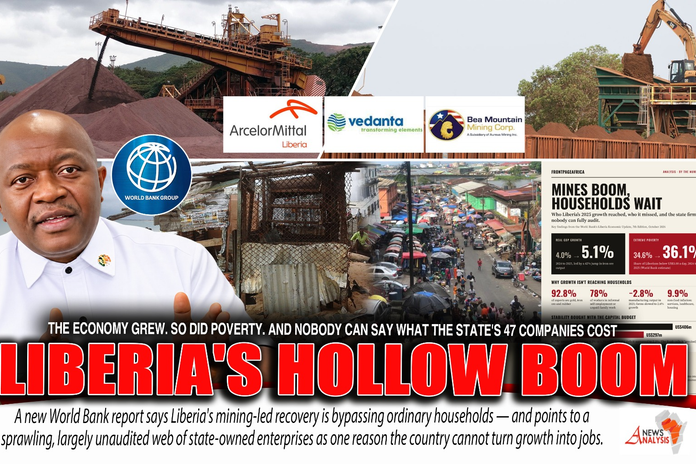
A large share came from a single source. The 2026 budget counted a US$200 million signature bonus from steelmaker ArcelorMittal, part of a renegotiated iron ore deal. The company was the country’s biggest taxpayer this year, accounting for about US$270 million of collections. LRA Commissioner General James Dorbor Jallah has argued that Liberia would have neared the billion-dollar mark even without the bonus.
The underlying trend is more modest. Stripping out one-off payments, the LRA’s monthly collections ran at around US$88 million between January and July – a pace that would yield roughly US$1.06 billion over a full year. The 2027 budget asks for close to US$1.54 billion.
The Finance Ministry’s summary of the budget does not say how much of the 2027 total will come from domestic taxes, how much from donors, and how much from borrowing. Nor does it name new tax measures. Ngafuan disclosed in August that ministries and agencies had initially requested about US$1.92 billion for 2027, showing the pressure on the budget even before lawmakers add their own priorities.
The government is targeting US$1.3 billion in domestic revenue by December; the LRA’s own forecast is higher, at US$1.42 billion. Whether the 2027 plan is built on the target, the forecast or the underlying monthly pace is the first question lawmakers are likely to put to the finance minister.
At the clinic, the classroom and the payslip
For most Liberians, the budget will be judged less by its total than by whether hospitals have medicine, teachers are paid and pensions are honoured.
Health. Spending rises 22 percent, from US$110.9 million to US$135.8 million. The money is meant to staff and equip the New Redemption Hospital in Monrovia, buy dialysis machines and other equipment for the John F. Kennedy Medical Center (US$5.3 million), keep medicines flowing to rural clinics through a community pharmacy programme (US$1 million) and launch a national hepatitis B response (US$800,000). Even so, health takes under 9 percent of the budget, well short of the 15 percent African governments pledged in the 2001 Abuja Declaration.
Education. The sector gets US$163.5 million, up 13.9 percent from US$143.6 million. The headline item is US$7 million to continue renovating the University of Liberia. Public schools in Monrovia, where students have protested over conditions this year, get US$1.5 million for repairs.
The change teachers are most likely to feel is a new pay floor across government schools: US$650 a month for those with a master’s degree, US$400 with a bachelor’s, US$240 with an associate degree or B-Certificate, and US$200 with a C-Certificate.
Wages. The government says more than 17,000 people will benefit from pay changes – nearly 13,000 existing workers getting raises and about 4,350 new hires, including volunteers. They include 1,934 police officers, 616 staff of the Liberia Drug Enforcement Agency who will get a 15 percent raise, and 358 health workers. From January, no government director will earn less than US$500 a month.
Pensions. In one of the budget’s most significant admissions, Boakai confirmed the government owes nearly US$60 million to the National Social Security and Welfare Corporation (NASSCORP) in employer contributions it never paid. From 2027, the government says it will pay its full 6 percent share on time and clear the arrears in instalments – a promise retiring civil servants will watch closely.
Youth and women. The budget sets aside US$2 million for commercial motorcyclists, including roadside rest stops, and funds 1,400 new recruits for the army and police. It provides US$3 million for the national football team, the Lone Star, plus US$650,000 for former players. The Ministry of Gender, Children and Social Protection gets a 77 percent increase, while US$2.5 million is earmarked for small businesses, mostly run by women, and US$3 million for school feeding.
What lawmakers will want to know
The ministry’s summary leaves several gaps that the Legislature’s budget committee is likely to probe in hearings.
It does not give a dollar figure for the 77 percent rise at the gender ministry, or say how much of the total goes to salaries rather than roads, clinics and schools. It does not say over how many years the NASSCORP debt will be repaid. And it is silent on agriculture – the “A” in the ARREST Agenda – a sector that has received less than 1 percent of recent budgets despite employing a large share of Liberians.
The priorities themselves invite scrutiny. The football team’s US$3 million allocation is three times what the government plans to spend keeping essential medicines in rural clinics.
Liberia’s fiscal year now runs from January to December, so lawmakers have less than two months to pass the plan. Boakai has asked them to act quickly. The size of the budget, and the questions over how it will be paid for, suggest the debate will not be brief.
Support Independent Journalism
Your support helps FrontPage Africa continue delivering independent, credible, and impactful journalism. Every contribution strengthens our ability to investigate, inform, and hold power accountable while keeping quality journalism accessible to our readers.
Support our journalism or subscribe to receive the latest FrontPage Africa stories and updates.