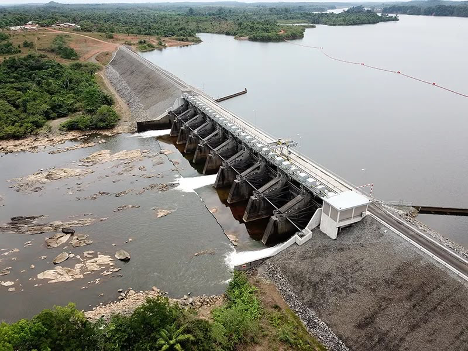
Mount Coffee hydropower plant, Liberia’s main domestic source of electricity. Photo Credit: Liberia Electricity Corporation
By Aria Deemie | Climate and Environment Reporter
- Liberia is expanding solar power as declining hydropower generation during the dry season increases reliance on expensive fuel and electricity imports.
- The government plans to expand solar generation and add battery storage, while upgrading the network that delivers electricity to consumers.
- Rural electrification projects are underway, but reliable supply, financing and the disposal of used solar equipment remain concerns.
Every dry season, falling water levels at the Mount Coffee hydropower plant reduce electricity generation, leaving Liberia more dependent on expensive fuel and electricity imports from neighboring Côte d’Ivoire.
The government is turning to solar power to help address the shortfall. In June 2026, President Joseph Boakai dedicated a 20-megawatt solar plant at Mount Coffee. Plans are also underway to expand the facility and install batteries to store electricity for use after sunset.
The challenge is not just generating more electricity. Liberia also needs storage, a stronger power network and a plan for disposing of old solar equipment.
“No matter how much energy we generate, it is as good as the network that is taking the energy to the people,” said Moses Farley, Director for Projects at the Liberia Electricity Corporation, during a discussion on renewable energy and infrastructure at Liberia’s pavilion at COP31 in Antalya, Türkiye.
Liberia’s National Energy Compact shows how heavily the country depends on hydropower. Of the 126 megawatts of installed generation capacity identified in the document, 88 megawatts come from the Mount Coffee hydropower plant and 38 megawatts from heavy fuel oil. Mount Coffee’s generation can decline by more than 75 percent between January and May.
Solar power offers another source of electricity during those months. The government has set a target of reaching 90 megawatts of utility-scale solar generation by 2029.
The 20-megawatt Mount Coffee plant, developed under the World Bank-supported Regional Emergency Solar Power Intervention Project, is part of that effort. It was dedicated in June and licensed in August.
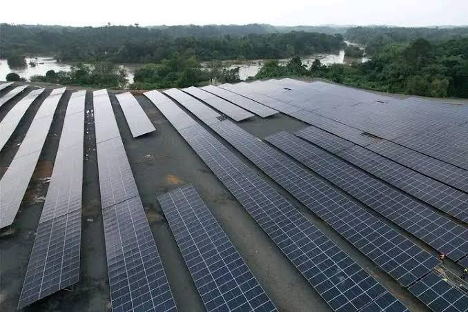
Solar panels at the Mount Coffee solar power facility, part of Liberia’s effort to expand renewable electricity generation. Photo Credit: Liberia Electricity Corporation
But the plant does not yet have battery storage. Electricity generated during the day cannot be stored for use in the evening.
Farley said the corporation plans to add batteries and increase the plant’s capacity from 20 to 30 megawatts.
“The solar will work when the sun is up. When the sun goes down, the solar doesn’t work. The battery stores the power and it can carry us during the evening time,” he said.
The World Bank’s project documents also outline plans to support additional solar capacity, battery storage and improvements to the electricity network. The project includes a proposed 12-megawatt-hour battery storage system.
Ashish Khanna, Director General of the International Solar Alliance, said solar and hydropower could complement each other, with solar generating electricity during the day and hydropower helping to supply it later.
“Hydro is a natural storage. So, in the day you use solar, and in the evening, you use hydro,” Khanna said.
He said solar could be particularly useful during droughts and the dry season, when hydropower generation falls.
“In a drought time or in the dry season, when hydro is not there, solar will always be there. So there’s a complementarity of hydro and solar,” he said.
In April 2025, the International Solar Alliance and INENSUS GmbH held consultations with Liberian institutions on solar tariff calculations, mini-grid regulations and feed-in tariffs. The discussions focused on policies and regulations that could help attract investment in the sector. The consultation report outlines the issues discussed.
But generating more electricity will not solve the problem if the network cannot deliver it.
At the COP31 discussion, Farley described plans to strengthen transmission lines, reinforce overloaded substations and replace ageing equipment. The corporation is also building a system to monitor parts of the electricity network and identify faults from a central control center.
“We are currently constructing a SCADA center, and we are supposed to go live by mid-December,” he said.
The system, known as supervisory control and data acquisition, is expected to help the corporation monitor equipment and respond more quickly to disruptions. Other planned improvements include replacing damaged poles, conductors and transformers and introducing smart meters to help identify electricity losses, including illegal connections.
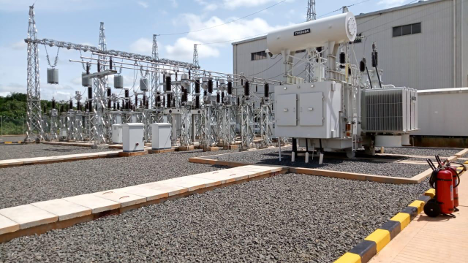
Electricity transmission infrastructure. Photo credit: Liberia Electricity Corporation
The effects of unreliable electricity have also been felt in essential services. In 2020, FrontPage Africa reported that a fuel shortage at Phebe Hospital in Bong County left generators unable to provide electricity for emergency services. Medical staff said patients requiring emergency surgery and life-support equipment were affected. Some women also described having to deliver their babies by candlelight and mobile-phone torches.
Outside the main electricity network, Liberia is pursuing solar projects to extend access to rural communities.
Stephen V. Potter Sr., Deputy Executive Director for Program at the Rural Renewable Energy Agency, said a four-megawatt solar system with 15 megawatt-hours of battery storage was being prepared for Lofa County. Communities including Voinjama, Foya and Kolahun are expected to benefit. He said the system had been tested and was undergoing final work ahead of a planned December rollout.
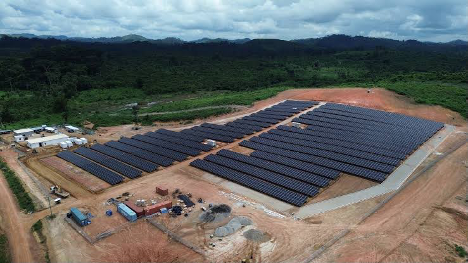
An aerial view of the solar photovoltaic plant in Barkuma Town near Voinjama, Lofa County, developed under the Liberia Renewable Energy Access Project to supply electricity to surrounding rural communities. Photo: Courtesy of Rural and Renewable Energy Agency
Potter said the first phase of the project provided electricity to 90 health facilities. A second phase is expected to cover another 85 health facilities and 50 schools across the country.
Beyond these projects the agency is also seeking private-sector participation to help implement the country’s Rural Energy Strategy and Master Plan.
For communities that have already received electricity, keeping the supply running remains a concern. In June 2026, FrontPage Africa reported that prolonged power interruptions in Zowienta, Bong County, were affecting businesses, schools, health services and households. Business owners said outages had forced them to spend more on alternative power sources.
As solar installations increase, Liberia will also have to deal with the equipment when it reaches the end of its useful life. Solar panels can operate for decades, but batteries generally need replacing sooner. Without proper collection and recycling arrangements, used panels and batteries could become a source of hazardous waste.
Emmanuel K. Urey Yarkpawolo, Executive Director of the Environmental Protection Agency, raised concerns about how used batteries would be handled.
“When the battery stays for five or 10 years, the time finish, what do you do with the battery? Because battery now, bad chemical, right? That’s one of the problems,” Yarkpawolo said.
Khanna said countries should consider recycling when purchasing solar equipment rather than waiting until panels and batteries become waste.
“You need to create a process by which you procure a solar panel and a battery that can be reprocessed. So that’s a procurement question,” he said.
He said solar panels typically last about 25 years, while batteries last between 10 and 15 years. He also described the International Solar Alliance’s SUNRISE program, which works with countries and institutions on standards and business models for recycling solar panels and batteries.
“But then you need to have a model that when the waste happens, somebody collects it, recycles it, and makes money,” Khanna said.
Liberia has a general National Solid Waste Management Policy, but the reporting for this story found no evidence of a dedicated nationwide collection and recycling system for solar panels and batteries. The issue adds to the country’s wider waste-management concerns.
Financing is also central to the expansion. At COP31, a $15 million first-loss payment guarantee was announced for Liberia’s solar program. It is intended to reduce payment risks for investors and help mobilize additional investment in solar power and battery storage.
Separately, Xolisa Ngwadia, special adviser to the chair of the African Group of Negotiators, said the group wants the COP31 cover decision to focus on the thematic areas already covered by the UN climate convention and the Paris Agreement, with voluntary initiatives addressed separately. He said some proposed initiatives, including electrification and methane targets, could prejudge the outcomes of negotiations and existing commitments.
Yarkpawolo said Liberia has the water resources, technical knowledge and data to generate more electricity and potentially export it to neighboring countries. But turning that potential into reality requires financing.
“The knowledge is there, the data is there. I think our problem is no money, no money, no money,” he said. “When you get the money, you get the gold, you get the diamond, you get everything. So how do we put those things together? I think that’s what the government is working on.”
This story was produced as part of the COP31 Climate Change Media Partnership,a journalism fellowship organized by Internews’ Earth Journalism Network, Informed Earth and the Stanley Center for Peace and Security.