By Aria Deemie
- Liberia’s waste-recycling initiatives are growing, but limited funding, machinery and infrastructure are preventing them from operating at scale.
- The country’s waste policy provides a framework for recycling and private-sector investment, but weak data and implementation gaps remain.
- At COP31, waste pickers and climate leaders are calling for greater investment, recognition of waste workers and a shift toward preventing waste rather than simply managing it.
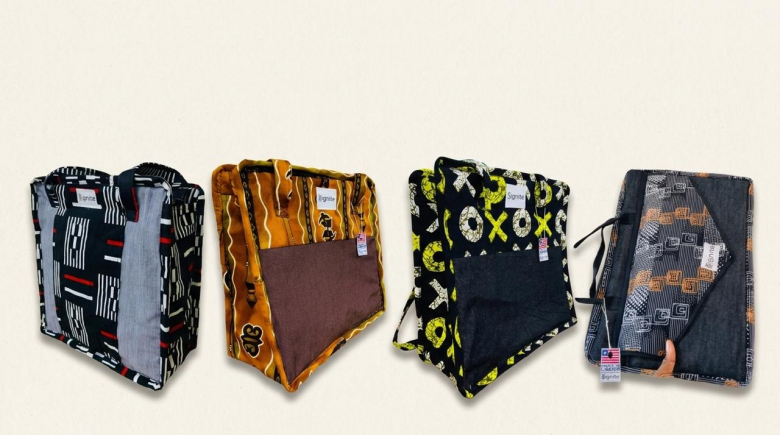
Discarded advertising banners are being turned into solar-powered backpacks in Liberia. At Ignite EcoGear, the materials are repurposed into bags fitted with solar panels, rechargeable batteries and LED lights, giving discarded materials a new use.
Archie Forpoh, who runs the initiative, sees waste as an opportunity to create products and businesses. “Waste is not the end of a product’s journey; it can be the beginning of another opportunity,” he said.
While Forpoh sees waste as an opportunity to create products and businesses, waste pickers say their contribution to recycling must also be recognized.
“We make a living from waste, we work with waste, but we do not want to become waste,” said María Soledad Mella Vidal, a Brazilian waste picker and representative of the International Alliance of Waste Pickers.
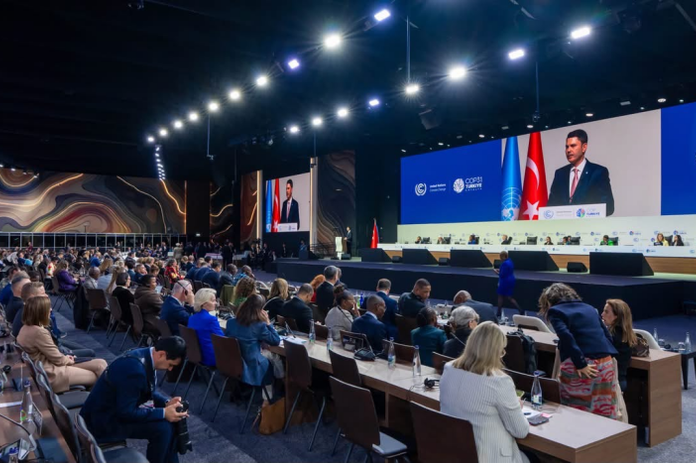
Her words speak to a wider challenge facing countries such as Liberia, where waste collection and recycling initiatives are growing but investment, infrastructure and recognition remain limited. At the 31st United Nations Climate Change Conference in Antalya, Türkiye, waste has been elevated as a priority in the COP Presidency’s Action Agenda for the first time, drawing attention to waste reduction, recycling and the people whose livelihoods depend on recovering discarded materials.
The COP31 Zero Waste Action Agenda aims to halve the projected increase in global annual waste generation by 2035. For Liberia, the question is whether existing initiatives can grow into a functioning waste economy.
Lucia N. Yeenee, founder and executive director of Zero Plastic Liberia, said the organization was established in 2024 in response to plastic pollution and weak waste management systems.Its activities include community clean-ups, environmental education, youth mentorship and campaigns. Yeenee said the organization has expanded across eight counties, engaging more than 15,000 students and community members in 2025. It has also mobilized 80 community members in Grand Bassa County, whom it calls eco-warriors, to help organize clean-ups and educate residents about environmental protection. The organization has partnered with more than 11 institutions.
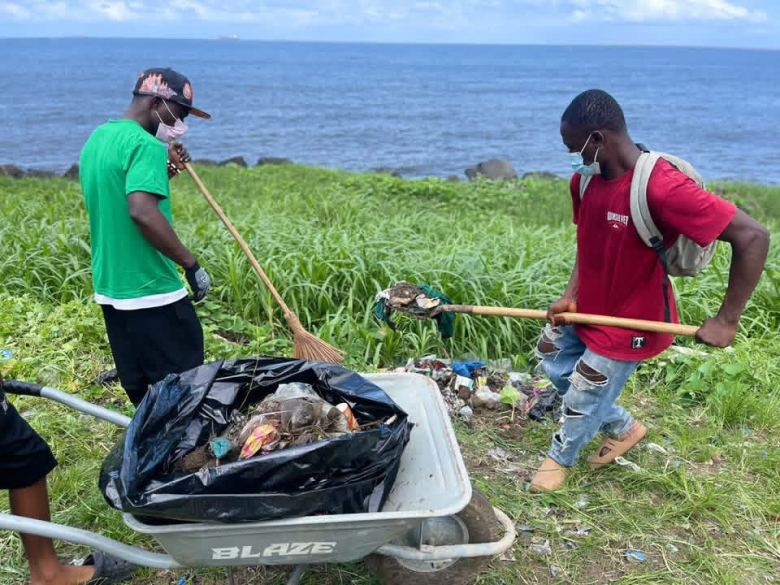
Despite collecting more than 150 tonnes of waste, Zero Plastic Liberia still sorts and stores much of its recovered plastic because it lacks the facility and machinery to process it at scale.
“Liberia must move from seeing plastic as waste to recognizing it as a resource and an opportunity,” Yeenee said.
“The challenge is not that Liberia lacks people willing to act. The challenge is that we have not invested enough in the systems that can turn their commitment into sustainable results,” she added.
Liberia has a policy framework intended to address some of these gaps. The Environmental Protection Agency published the National Solid Waste Management Policy in October 2024. It outlines measures to improve waste collection, separation, recycling and recovery, while encouraging private investment and public-private partnerships.
The policy also calls for extended producer responsibility, incentives for recycling markets and health protections for waste workers. But these commitments depend on implementation, financing and enforcement.
Liberia’s Environmental Protection Agency Executive Director Emmanuel Yarkpawolo said the government was considering legislative measures to strengthen plastic waste management. A proposal submitted by Senator Augustine Chea of Sinoe County is under consideration, while the EPA is preparing its own draft. Public consultations are expected after COP31.
Liberia also lacks reliable national data on the amount and types of waste generated, collected and processed, Yarkpawolo said.
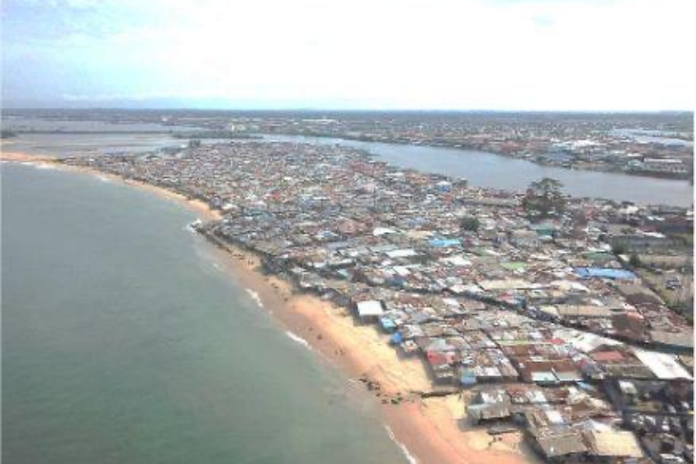
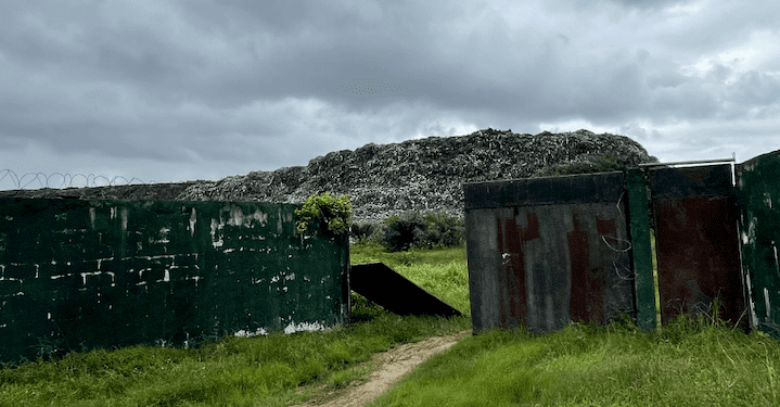
“That data is not clear right now,” he said.The challenges are evident around W(h)ein Town, Monrovia’s largest landfill and the country’s only engineered landfill. In a September 2024 investigation, this reporter documented residents’ concerns about unsafe water, damaged reservoirs and waste spilling into homes. In 2026, residents again called for the landfill’s closure, citing health and environmental risks.
Speaking at the Zero Waste Museum in Antalya during the launch of the Fair Ton initiative, Carlos Silva Filho, senior adviser to the COP31 Climate High-Level Champion and adviser to the Zero Waste Foundation, said reliable data is essential to attracting investment.
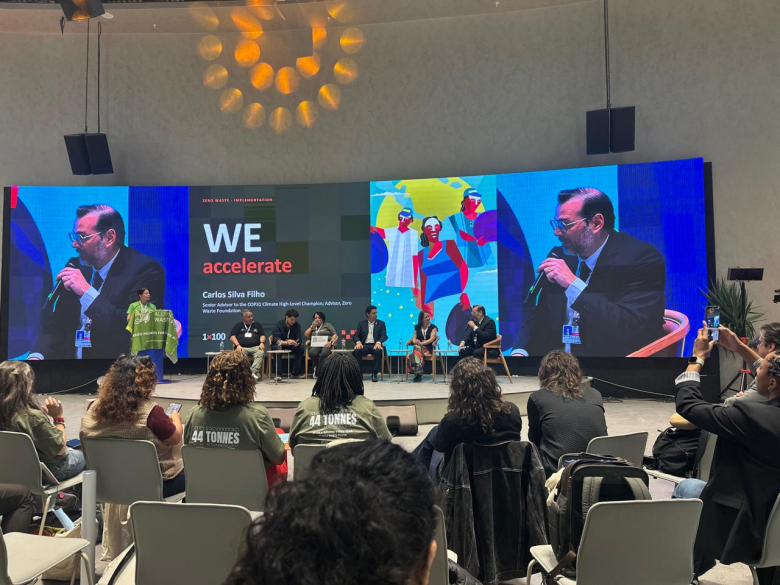
“When we look in terms of funding, the first thing we need is reliable data. If we do have reliable data, I’m sure that funds will come. Because we really need to understand what is there, what is needed, and plan and implement this alternative infrastructure and system,” he said.
He also stressed the need to recognize the people who collect and recover waste.
“We really need to understand and value the people that are working on a daily basis to ensure that we have a livable, clean, and healthy environment,” he said.
Silva Filho said waste recovery is also an economic development opportunity, reducing dependence on the extraction of finite natural resources.
“And third, because we really need to understand that it is also an economic development matter. Because we cannot continue extracting raw materials and natural resources from the planet, because they are finite. They will run out. We are really going at the speed of light, so we need to recover those resources that we already have,” he said.
For Desmond Alugnoa, Africa program manager for the Zero Waste and Climate Program at the Global Alliance for Incinerator Alternatives, building a successful waste system starts with organizing communities and including informal waste workers.
Alugnoa said waste pickers should be part of a wider movement because their daily work gives them practical knowledge of how different materials can be recovered and reused.
“Waste is generated by every individual and every household. Now, to collect all of it, you require a big movement. You require a strong movement,” he said.
He identified source separation, or sorting waste where it is generated, as another essential step. It does not require expensive bins, he said.
“The most basic infrastructure you need is not fancy waste bins. It’s just any container that you can put waste in. That is good enough,” Alugnoa said.
Organic waste can be separated for uses such as composting and biogas production, while plastics can be sorted and prepared for recycling. But processing waste at a commercial scale requires land, storage space and suitable machinery.
“If you are going to recycle it yourself, you need some basic machinery that is efficient,” he said.
Asked about a youth-led effort in Liberia reportedly using plastic in charcoal production, Alugnoa warned against burning plastics because of the pollutants released in the process.
“When you burn plastics, it emits a lot of pollution. And those pollutions that are emitted are very toxic to human health,” he said, cautioning that such projects risk becoming false solutions.
He pointed to Ghana’s efforts to organize waste pickers as one lesson Liberia could consider. The Green Africa Youth Organization,with support from the Ministry of Local Government and development partners, launched the Federation of Informal Sector Waste Workers Associations of Ghana on July 31, 2026. The federation brings together waste worker leaders from all 16 regions and gives them a platform to engage government, municipalities and businesses. Ghana’s Minister for Labor, Jobs and Employment, Abdul-Rashid Pelpuo, confirmed the union’s formation as lawful under the country’s Labor Act.
Ghana also has entrepreneurs developing products from construction waste, electronic waste and plastics, including school desks made from recovered plastic.
For Liberia’s waste businesses, however, access to start-up funding remains a major obstacle. Alugnoa said grants and philanthropic funding are often better suited to covering the initial costs of land, storage and machinery than loans.
“There should be more philanthropy-based funding for the CAPEX, the capital cost, which is the cost that you incur setting up the business,” he said.
He also urged young entrepreneurs not to expect quick returns.
“Do not see it as quick money,” Alugnoa said, advising businesses to start with public education and source separation to obtain cleaner materials that are easier to process.
Some private recycling activity is already taking place in Liberia. Yarkpawolo said a facility on Bushrod Island collects plastic sachets and bottles and turns them into products such as washing buckets, plates and plumbing pipes. He said some materials are also exported to Sierra Leone. The scale of the operation and its contribution to the country’s overall waste recovery remain unclear.
But recycling is not only about the materials recovered or the products made from them. It also depends on recognizing the people who collect and sort waste and the environmental services they provide.
Brazilian waste picker Severino Lima Jr., president of the International Alliance of Waste Pickers, said their work should be treated with dignity, not charity.
“I am not a poor, pitiful thing. I don’t live in the landfill just to survive,” Lima said. “It is a dignified form of work that needs to be improved and humanized.”
The alliance is developing the Fair Ton platform with Fundación Avina, Red LACRE (the Latin American Network of Recyclers), and Global Methane Hub. The methodology combines scientific research and local knowledge to measure the materials recovered by waste pickers and the greenhouse gas emissions avoided through their work. It aims to generate evidence that can help secure recognition and financing for waste picker organizations.
Silva Filho said the COP31 Solutions Platform is intended to connect projects and help turn climate commitments into local action.
“This is where ambition becomes implementation,” he said. The platform aims “to connect the different initiatives, to accelerate results, to maximize climate action, and to deliver solutions on the ground at the local level for the people.”
For Yeenee, Liberia’s opportunity lies not simply in collecting more waste but in changing how the country produces, uses and disposes of materials. That will require stronger systems to support communities, create opportunities for young people and prevent plastic from becoming pollution.
“We must stop asking how to manage the waste we produce and start asking how to prevent waste from being produced in the first place,” she said.
This story was produced as part of the COP31 Climate Change Media Partnership, a journalism fellowship organized by Internews’ Earth Journalism Network, Informed Earth and the Stanley Center for Peace and Security.
Support Independent Journalism
Your support helps FrontPage Africa continue delivering independent, credible, and impactful journalism. Every contribution strengthens our ability to investigate, inform, and hold power accountable while keeping quality journalism accessible to our readers.
Support our journalism or subscribe to receive the latest FrontPage Africa stories and updates.