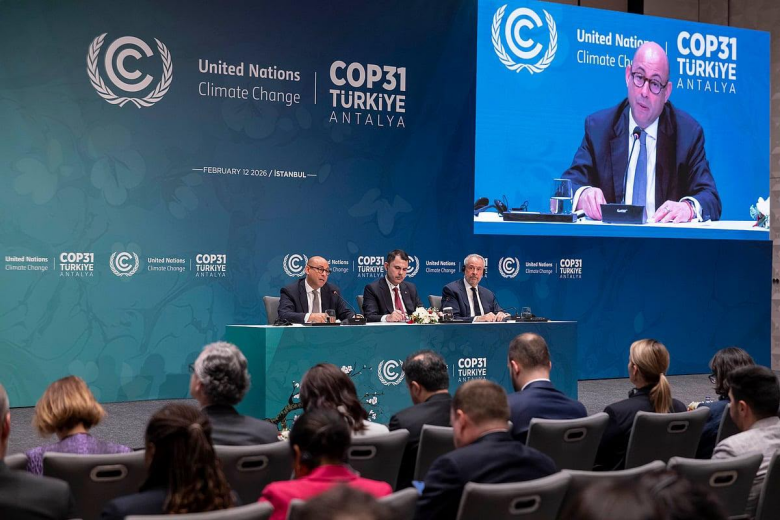
When Liberia joins other countries at the United Nations climate conference in Antalya, Türkiye, in November, it will be asking for many of the things climate-vulnerable countries have demanded for years: more climate finance, support for adapting to a changing climate, action on loss and damage and greater accountability from countries that have contributed most to global warming.
By Aria Deemie
But months before the 31st Conference of the Parties, Liberia found itself on the opposite side of a major international climate vote.
On May 20, Liberia was the only African country among eight nations that voted against a United Nations General Assembly resolution welcoming the International Court of Justice’s advisory opinion on climate change. The resolution received 141 votes in favor, eight against and 28 abstentions.
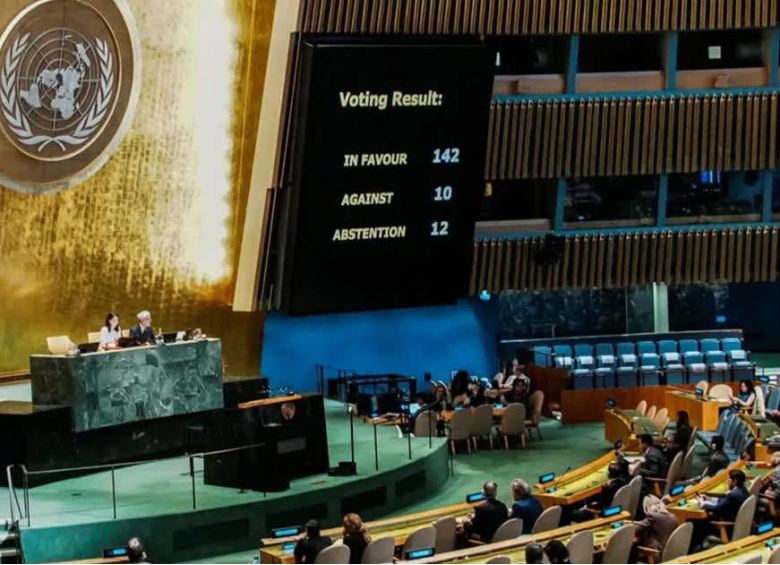
The vote was surprising because Liberia is one of the countries most vulnerable to climate change, while contributing very little to the greenhouse gas emissions responsible for global warming. The government later said the vote was an error.
So, what exactly was Liberia voting against, why did the vote matter, and what does it mean for a country preparing to demand stronger international action on climate change?
The International Court of Justice is the United Nations’ highest court, established to resolve legal disputes between sovereign countries. In July 2025, it issued an advisory opinion on climate change after being asked by the United Nations General Assembly to clarify the obligations countries have under international law to protect the climate system.
The Court said countries have obligations under international law to protect the climate and environment from human-caused greenhouse gas emissions. Countries that breach those obligations may face legal responsibility, including an obligation to prevent the harm from continuing, ensure it does not happen again and provide full reparation for harm caused.
The opinion was important because it strengthened the legal basis for arguments around climate responsibility and accountability. It does not operate like a normal court judgment ordering a particular country to take a particular action, but its findings can influence governments, negotiations and climate-related legal cases.
The United Nations General Assembly resolution adopted in May did not create the Court’s opinion. Vanuatu, a small Pacific island nation on the frontlines of the climate crisis, led a cross-regional “Core Group” of like-minded countries to author the draft text. They introduced the resolution to welcome and operationalize the International Court of Justice’s landmark 2025 advisory opinion. By the time it was put to a vote on May 20, 2026, Vanuatu’s initiative had attracted 90 co-sponsoring countries before passing with an overwhelming majority of 141 votes.
The United Nations General Assembly welcomed the Court’s findings and called on countries to take them into account.
This is why Liberia’s vote drew attention. For a country like Liberia, climate change is not simply an international debate. It is already affecting people’s lives.
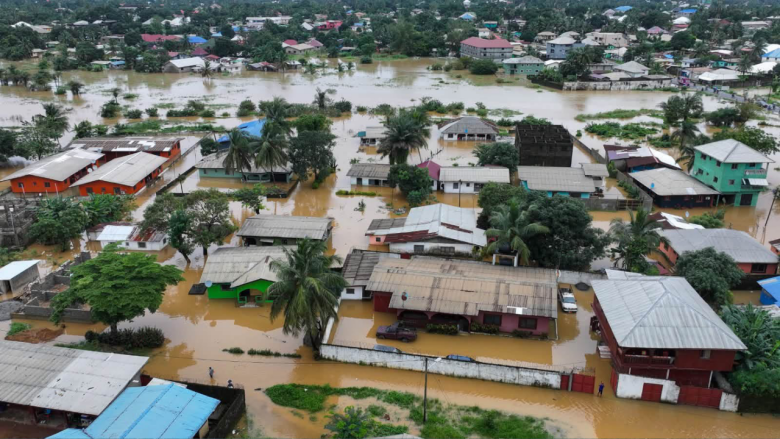
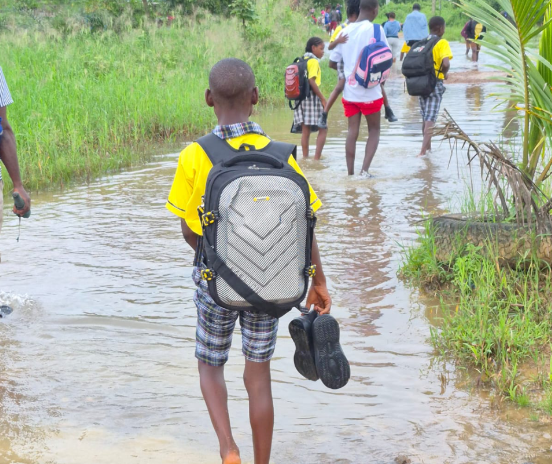
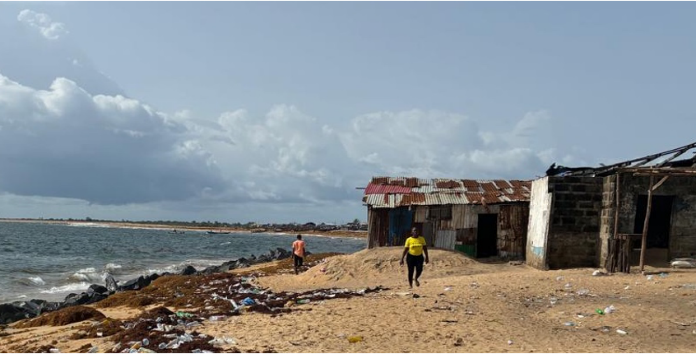
Farmers are dealing with changing rainfall patterns, extreme heat and crop losses. Communities are increasingly exposed to flooding, while the country continues to face major gaps in the systems needed to forecast and respond to extreme weather.
Liberia’s contribution to global emissions is very small, yet the country is among those that need international support to adapt to climate change.
That has made climate justice an important part of Liberia’s international climate position.
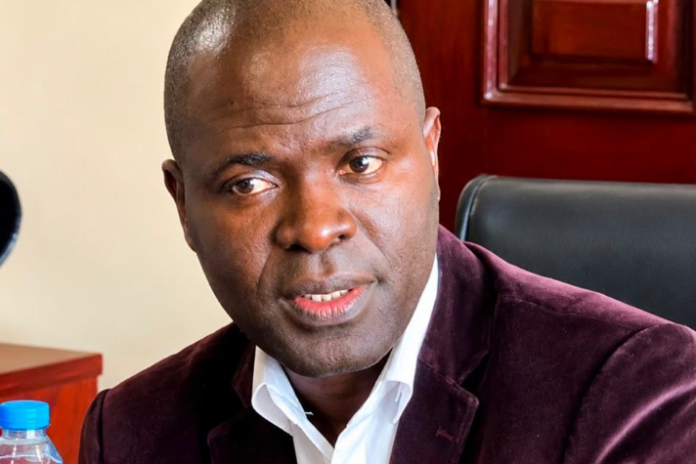
“It was a complete contradiction to what we stand for,” said Ezekiel Nyanfor, Programs Coordinator and Climate Justice and Humanitarian Inspirator at ActionAid Liberia.
Nyanfor said Liberia has a moral obligation to protect the environment for present and future generations, but is also among countries with very low readiness to respond to climate change. He described the vote as a misalignment with Liberia’s principles, national policies and national priorities.
Nyanfor was among the civil society representatives who met with officials from the Ministry of Foreign Affairs and the Environmental Protection Agency on July 3 to seek an explanation for the vote.
During the meeting, government officials said the negative vote had been cast in error. They said Foreign Minister Sara Beysolow Nyanti had instructed that Liberia’s vote be withdrawn and replaced with an affirmative vote supporting the Court’s advisory opinion. Government officials also said administrative measures had been taken to prevent similar incidents in the future.
Civil Society representatives welcomed the clarification but called on the government to issue a public statement formally clarifying the circumstances surrounding the vote.
In August, Foreign Minister Sara Beysolow Nyanti publicly said at a Ministry of Information Culture Affairs and Tourism press briefing that Liberia had officially written to correct its position and that the correction was registered. She said Liberia’s position was consistent with its membership in the African Group and its climate priorities at the United Nations.
The official United Nations voting record for Resolution 80/263, however, still lists Liberia as having voted “No” on May 20.
But civil society representatives did not consider the matter settled. They called for a fuller public explanation of what had happened, how the error occurred and what corrective measures had been taken. Three months after the meeting, they said that fuller clarification had still not been provided.
“An explanation is different from accountability and institutional learning,” said Dayugar Johnson, Chairman of the Management Team of the NGO Coalition, who also attended the meeting.
In an interview with this reporter, Johnson said civil society wants to know how the error occurred, what position Liberia had intended to communicate before the vote, who was responsible for communicating that position and what safeguards are now in place to prevent a similar incident.
For the civil society representatives who attended the meeting, the issue is therefore not simply that the government said the vote was an error. It is that the government has yet to publicly clarify in detail how the error occurred and what corrective steps were taken.
The original vote remains part of the official voting record, but a delegation can communicate a correction to its voting intention after a vote. United Nations guidance says such corrections should be addressed directly to the Secretariat after voting has concluded. The United Nations Delegates Handbook also says a footnote can be added to the verbatim record to reflect how a Member State intended to vote.
This means a government can clarify its intended position without changing the original tally of votes cast.
This is not the first time Liberia has had to explain an unexpected vote at the United Nations.
In December 2023, Liberia voted against a United Nations General Assembly resolution calling for an immediate humanitarian ceasefire in Gaza. The resolution passed with 153 countries voting in favor, 10 against and 23 abstaining.
The administration of former President George Weah subsequently said Liberian diplomats had voted without the President’s backing, and the Foreign Ministry requested that the vote be reversed and registered in favor of the ceasefire.
The Gaza vote and the climate vote concerning the International Court of Justice concern very different issues and happened under different administrations. But both resulted in Liberia later saying that a vote recorded at the United Nations did not reflect the position the government intended to take.
The two episodes also highlight the importance of how Liberia communicates and verifies its positions before important international votes.
For climate advocates, that issue is particularly important as Liberia prepares for the 31st Conference of the Parties.
Liberia will be going to the climate talks with several competing interests to navigate. The country needs more support for adaptation and loss and damage, while also pursuing opportunities through carbon markets and forest finance.
Those opportunities could provide resources for a country facing significant climate and development challenges. But they also raise questions about whether the benefits reach the communities that depend on Liberia’s forests and other natural resources and how those communities are protected.
“Liberia’s preparation for the 31st Conference of the Parties offers an opportunity to reinforce our position on climate justice,” Nyanfor said.
He pointed to preparations involving young people, who are expected to engage government on their priorities ahead of the climate conference.
He also said President Joseph Boakai’s recent international statements have helped reposition Liberia on climate justice. In his address at the United Nations, the President said climate responsibility must be paired with climate justice and called on developed countries to meet their financial obligations to vulnerable countries, including through the operationalization of the loss and damage fund.
For Nyanfor, those statements demonstrate that Liberia is again publicly positioning itself as a voice for climate justice.
But he said the government still needs to fulfil the commitment made during the civil society-government meeting by informing Liberians about the corrective action taken after the Court vote.
Support Independent Journalism
Your support helps FrontPage Africa continue delivering independent, credible, and impactful journalism. Every contribution strengthens our ability to investigate, inform, and hold power accountable while keeping quality journalism accessible to our readers.
Support our journalism or subscribe to receive the latest FrontPage Africa stories and updates.