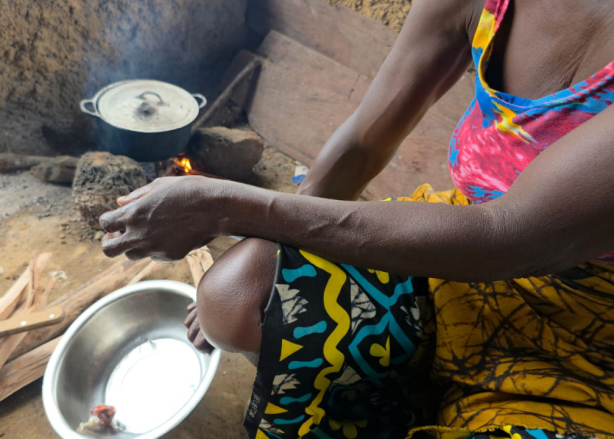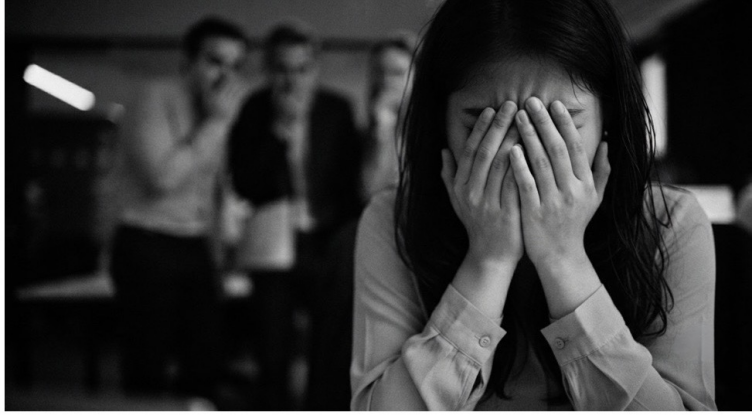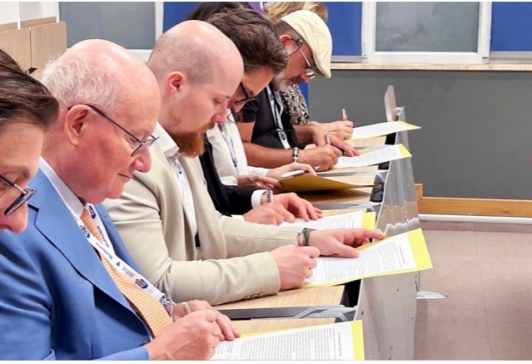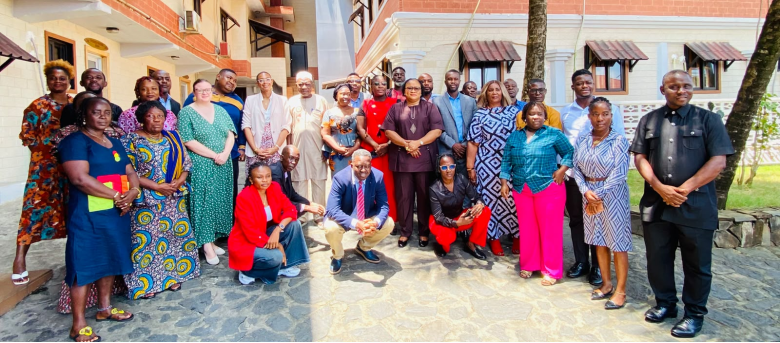
Monrovia – Human rights defenders in Liberia are facing increasing threats ranging from intimidation, online harassment and gender-based violence to physical attacks, while a long-awaited national protection policy remains stalled, participants at the ENSURE Project Policy Dialogue have warned.
By Patience M. Jones
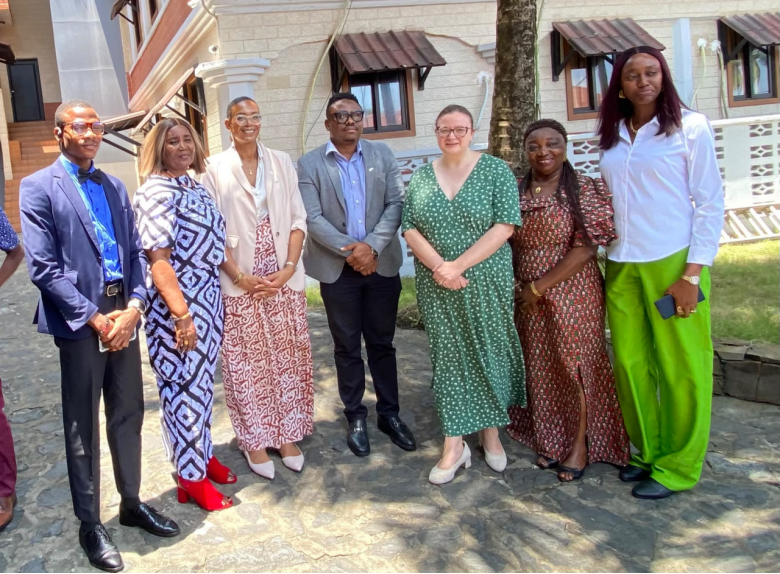
The dialogue, organized by Kvinna till Kvinna in partnership with Nunlai Research and Consulting at the Cape Hotel in Mamba Point, Monrovia on Wednesday, August 5, brought together government officials, civil society organizations, human rights defenders, researchers, diplomats and international development partners to review new evidence on the
shrinking civic space in Liberia and chart a path toward stronger protection for those defending human rights.
Speaking on behalf of the Embassy of Ireland, Development Lead Meagan Beare reaffirmed the Embassy’s support for initiatives that strengthen democratic governance, civic participation and the protection of human rights defenders in Liberia.
Presenting findings from the ENSURE Project, Lead Researcher Dr. Tanya Garnett said the study paints a troubling picture of the realities confronting human rights defenders, particularly women.
According to the research, conducted across six counties—Montserrado, Grand Bassa, Bong, Nimba, Grand Cape Mount and River Gee—human rights defenders continue to face death threats, physical violence, sexual violence, cyberbullying, economic intimidation, stigmatization and online harassment.
The mixed-method study surveyed 100 human rights defenders, conducted 30 focus group discussions involving 193 participants and interviewed 16 key informants from government institutions, civil society and international organizations.
Dr. Garnett said one of the study’s most striking findings was that traditional and community leaders emerged as the largest reported source of threats against human rights defenders, followed closely by family members, highlighting the deep-rooted social and cultural barriers confronting activists.
“The backlash we are witnessing is not simply a rollback of rights,” she explained. “In our context, it is resistance to social change rooted in patriarchal norms, conservative traditions and weak institutional protection.”
She further disclosed that Liberia’s civic space has deteriorated, noting that the country was downgraded by CIVICUS from “Narrowed” to “Obstructed,” reflecting increasing restrictions on civic freedoms.
The research recommends the urgent enactment of Liberia’s Human Rights Defenders Protection Policy, stronger legal safeguards, improved enforcement of existing laws, enhanced cybercrime protection, increased public awareness and greater investment in community-based initiatives that challenge discriminatory social norms.
Dr. Garnett stressed that the research was never intended to end with publication. “We want these recommendations to move beyond paper and become action,” she said. “Protecting human rights defenders requires legal reforms, institutional independence and long-term efforts to transform harmful social norms.”
Delivering a presentation on “Civil Society and Policy Advocacy in Liberia: Historical Evolution and 21st Century Relevance,” Aaron Weah of the Ducor Institute for Social and Economic Research urged policymakers to draw lessons from Liberia’s post-war governance reforms and transitional justice journey.
Mr. Weah argued that although Liberia has made democratic progress since the civil war, serious structural challenges remain beneath the surface.
He emphasized that the country’s youthful population, weak policy implementation and unresolved post-conflict issues pose long-term governance and security risks if left unaddressed.
Reflecting on Liberia’s Truth and Reconciliation Commission (TRC), Mr. Weah pointed out that the country must honestly evaluate the successes and shortcomings of previous transitional justice efforts to avoid repeating past mistakes.
He called for broader public engagement, stronger national ownership and better preparation of state institutions before implementing major accountability mechanisms.
“The opportunity before Liberia is to learn from what worked, acknowledge what failed and strengthen future justice processes,” he said.
The Executive Director of the Office for the Establishment of the War and Economic Crimes Court for Liberia (OWECC-L), Prof. Dr. Cllr. Jallah A. Barbu, applauded the Embassy of Ireland for supporting dialogue on accountability and governance.
Cllr. Barbu stressed that research findings should not remain within conference halls but must reach ordinary Liberians.
“I ask that these reports are not kept within this room,” Cllr. Barbu said. “The information must reach the broader public because national transformation requires that citizens understand the issues affecting them.”
He also called on development partners to expand support beyond funding meetings by investing in public awareness campaigns capable of reaching communities across the country.
A major focus of the dialogue centered on Liberia’s proposed Human Rights Defenders Protection Policy, which has remained pending despite being validated more than a year ago.
During a panel discussion moderated by Luther Jeke, Chief Executive Officer of iCampus Liberia, panellists said the absence of a legal protection framework continues to expose activists, journalists, lawyers, women’s rights advocates and anti-corruption campaigners to increasing risks.
Human rights advocate, Duana Kingsley Kamara, disclosed that the proposed policy is currently before Cabinet awaiting endorsement.
According to him, once approved, the policy will provide official recognition and protection for the work of human rights defenders while laying the foundation for future legislation.
He urged the Executive Branch to prioritize the policy, warning that prolonged delays could further shrink Liberia’s civic space.
Women’s rights advocate Hawa C. Wilson described the unique challenges confronting women human rights defenders, noting that they often face both institutional barriers and harmful gender stereotypes.
She said women advocating for political participation and human rights frequently encounter public shaming, online attacks and cultural expectations that discourage female leadership.
Madam Wilson added that social media has significantly intensified harassment, allowing misinformation, character assassination and cyberbullying to spread rapidly without accountability.
She emphasized that passing the Human Rights Defenders Policy must be accompanied by effective implementation and nationwide public education.
Also speaking during the panel discussion, Governance and Accountability Advocate, Adama Dempster, said Liberia has already demonstrated its commitment internationally by referencing the proposed Human Rights Defenders Policy during the United Nations Universal Periodic Review process.
He revealed that discussions with government officials indicate the policy could soon be presented before Cabinet for consideration.
Mr. Dempster argued that protecting human rights defenders ultimately strengthens democracy by enabling citizens to hold public institutions accountable without fear of intimidation.
“Human rights defenders support governance,” he said. “When they are protected, they help expose abuses, promote accountability and strengthen democratic institutions.”
Participants concluded the dialogue by calling for stronger collaboration among government, civil society organizations, international partners, traditional leaders and the media to ensure that human rights defenders can operate safely and effectively.
The dialogue ended with a collective appeal for Liberia to urgently enact and implement the Human Rights Defenders Protection Policy while advancing broader legal and institutional reforms aimed at safeguarding civic space and protecting those who work to defend the rights of others.
Support Independent Journalism
Your support helps FrontPage Africa continue delivering independent, credible, and impactful journalism. Every contribution strengthens our ability to investigate, inform, and hold power accountable while keeping quality journalism accessible to our readers.
Support our journalism or subscribe to receive the latest FrontPage Africa stories and updates.