
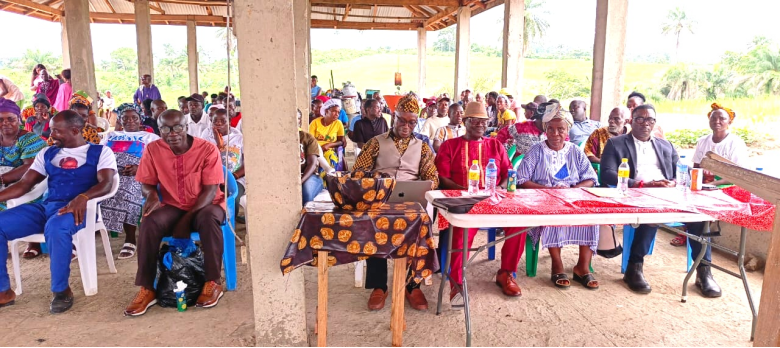
ZOTA DISTRICT, BONG COUNTY — On the morning of July 31, 2026, the Shankpallai Micro-Zone Farm hosted a historic gathering. Surrounded by tree shade and local rice fields, meaningful dialogue began well before the official schedule. The crowd brought together a diverse group of roughly 160 participants—including local elders, youth, traditional chiefs, public officials, farmers, teachers, journalists, and development experts—all sharing a sense that a major new tradition was taking root.
By: Nukanah Kollie, Contributing Writer
Organized by Quanuquanei Alfred Karmue, the event was billed as the First Independence Conversation, serving as the inaugural public assembly for The Independence Papers. Held on the eve of the farm’s anniversary, Karmue described the initiative as the launch of a permanent platform intended to safeguard Liberia’s intellectual legacy so that subsequent generations do not have to start from scratch.
The day featured several major milestones, beginning with the launch of Research Cycle 001 and the introduction of the first official Independence Paper. It also established Liberia’s permanent research question: “What wisdom must Liberia preserve so that every generation begins farther ahead than the last?” Additionally, Dr. Emmanuel Urey Yarkpawolo delivered an inaugural keynote address titled “The Things We Leave Behind,” which was accompanied by a Founding Recognition Ceremony honoring key contributors and personal reflections shared by founding participants. Selecting the Shankpallai Micro-Zone Farm as the venue was intentional. Walking through the fields, attendees observed active agricultural practices, demonstrating how theoretical concepts connect directly to hands-on rural development and sustainable community enterprise.
A Field Returning to Bush: The Metaphor of Forgotten Knowledge In his opening remarks, Karmue invoked a familiar agricultural sight: a cleared plot of land that, when abandoned, is quickly reclaimed by dense brush, forcing someone to clear it all over again with a cutlass. He presented this image as a metaphor for the nation’s history, asking whether Liberia has spent nearly two centuries uncovering critical solutions only to continually lose them, or if hard-won insights simply vanish whenever a political administration changes or an NGO project ends.
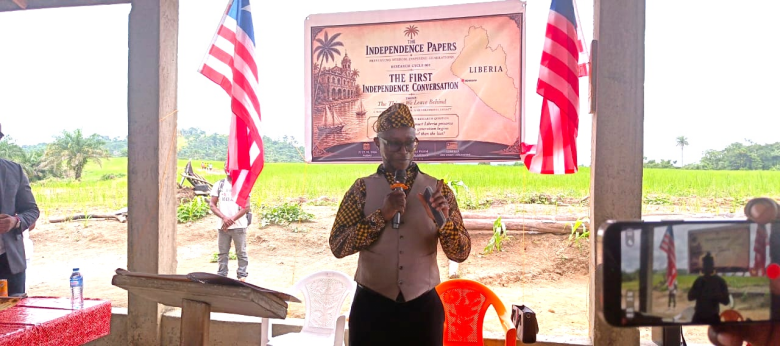
Karmue stressed that the nation’s primary loss isn’t merely damaged infrastructure or failing institutions, but the decline of creative vision. Prolonged hardship pushes people into survival mode, substituting long-term possibility with daily struggle. Yet, he argued, the country’s potential remains intact across every sector. Farmers look at dense brush and imagine commercial farms, nurses view struggling rural clinics and envision modern diagnostic centers, and builders see housing shortages and plan thriving communities. The fundamental issue is not a lack of vision, but the absence of durable systems to document, store, and build upon these ideas.
To illustrate the patience needed for sustainable progress, Karmue shared a story of a woman who grew up under a century-old butter-pear tree and later planted her own avocado tree. When its young branches appeared crooked and slow to grow, a neighbor advised her not to cut them down, but to nourish the soil and trust the root system. He cautioned that Liberians too often abandon promising concepts simply because they originate from an opposing political party, a previous government, or an unexpected source.
Defining True Legacy: Beyond Material Wealth
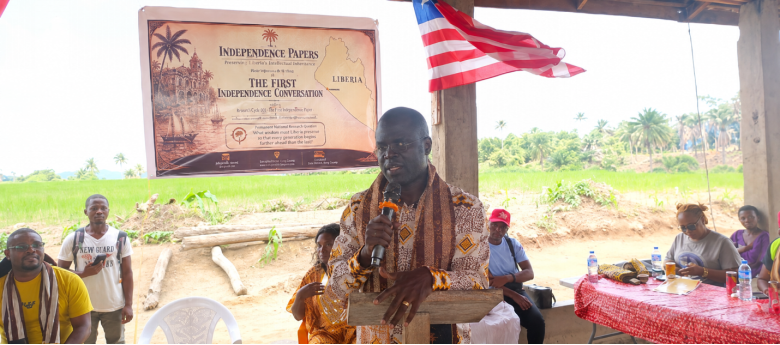
Dr. Emmanuel Urey Yarkpawolo, Executive Director of the Environmental Protection Agency (EPA), framed his keynote around a personal reflection, asking the audience what tangible legacy they will leave behind once they are gone. Reflecting on his father who lived in the local area and passed away at age 104, Dr. Yarkpawolo noted that while his father had few material possessions, he left behind a highly respected name, a peaceful life, and invaluable guidance. True legacy, he emphasized, is defined by character, education, employment opportunities, peace, and hope.
Addressing cultural traditions, Dr. Yarkpawolo noted that Kpelle heritage including family structures and traditional institutions like Poro and Sande contains deep generational wisdom worth documenting. However, he advocated for reforming practices that hinder children’s access to formal schooling, asserting that local heritage and modern education must complement one another. This philosophy underpins his support for the Yarkpawolo Public School in Gomue, as well as his investments in local palm farming and a renewable-energy palm-oil processing plant designed to keep economic opportunities within the district. These efforts run parallel to Karmue’s local initiatives in rice cultivation and microloans.
Dr. Yarkpawolo also referenced comments by President Joseph Nyuma Boakai, who previously called him “a gift to the nation” during the dedication of the EPA headquarters and laboratory. Rather than treating it as praise, Dr. Yarkpawolo described it as a serious responsibility to serve the public good.
Insights from Local Leaders
Local leaders also shared significant reflections during the program. Bong County Superintendent Loleyah Hawa Norris expressed deep gratitude for being part of the event and praised the platform for safeguarding Liberia’s heritage while encouraging collective forward-thinking. She pledged the county administration’s ongoing backing for local agricultural, educational, and cultural projects. Similarly, former Bong County Senator Franklin O. Siakor commended the initiative as a visionary step toward preserving critical ideas before they fade. He stressed that modernization should not require abandoning native traditions, languages, and community values, which ought to serve as the foundation upon which future progress is built.
A Dual Strategy for National Progress
While Karmue focused on establishing intellectual systems to preserve institutional memory, Dr. Yarkpawolo emphasized practical action: recording elders’ stories, encouraging students to learn directly from their grandparents, and viewing Independence Day as an ongoing effort built through food security, education, peace, and accountability.
Both speakers agreed that this responsibility spans across all sectors of society. Elders must pass down historical knowledge, parents must prioritize learning, youth must stay engaged and dedicated, farmers must collaborate, and leaders must safeguard both peace and land rights.
Preserving Liberia’s Collective Memory
In closing, Karmue reiterated that the First Independence Conversation was designed to be much more than a single conference, it marks the beginning of an ongoing national repository. Through The Independence Papers, the goal is to systematically document community experiences, research, and practical solutions so that future generations inherit a rich foundation of knowledge alongside the land.
Support Independent Journalism
Your support helps FrontPage Africa continue delivering independent, credible, and impactful journalism. Every contribution strengthens our ability to investigate, inform, and hold power accountable while keeping quality journalism accessible to our readers.
Support our journalism or subscribe to receive the latest FrontPage Africa stories and updates.