
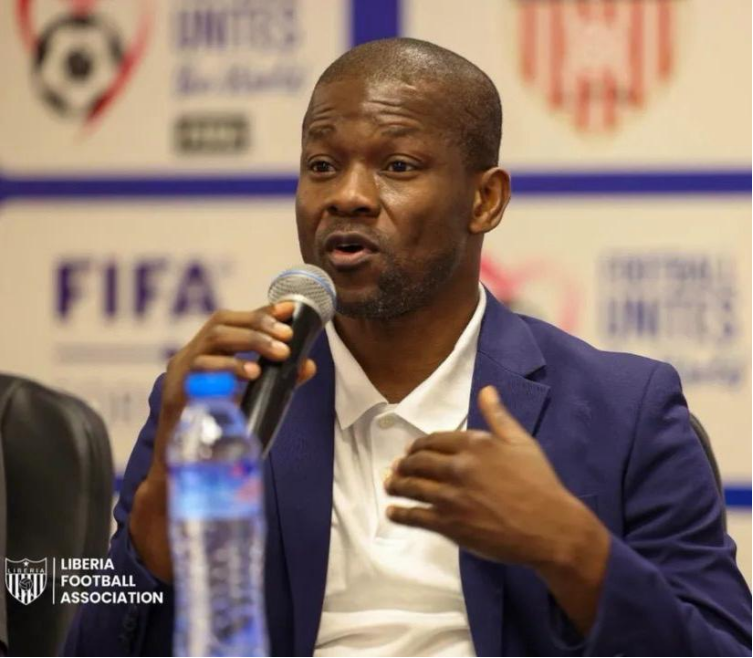
MONROVIA – The President of the Liberia Football Association (LFA), Mustapha Raji, believes Liberian football can survive and even thrive without depending entirely on financial support from FIFA.
By Christopher C. Walker [email protected] | 0777898224
In an ambitious and wide-ranging vision unveiled during the popular sports program LFA Decides on Intel Sports, Raji outlined what could become one of the most aggressive football self-sustainability projects in West Africa.
The strategy includes plans for football academies, local equipment production, hotel investments, agriculture, and other commercial ventures aimed at generating long-term revenue for football development in Liberia.
“There is no limit or boundary for us,” Raji declared.
“This is not only about sponsorship. It is about exploring ways for the LFA to become involved in agriculture, restaurants, business, and other ventures so that the profits can be reinvested into football development.”
The announcement comes as many football federations across Africa continue to rely heavily on FIFA Forward funding the multi-million-dollar development initiative launched by FIFA in 2016 to support infrastructure, youth football, administration, and operational activities among member asociaciones.
However, Raji argues that Liberia must now begin building a football economy capable of sustaining itself beyond international grants and donor assistance.
Academy Project at Center of Long-Term Vision
At the heart of the LFA’s sustainability blueprint is the proposed Henry Nyumah Brown Academy a football academy expected to operate directly under the Football Association.
According to Raji, the academy will focus on identifying and developing young Liberian talent while creating future transfer opportunities and partnerships with international clubs.
Across Africa, football academies have increasingly evolved into major economic assets. Countries such as Senegal, Ghana, Nigeria, and Ivory Coast have generated millions of dollars through player transfers to Europe and Asia. Senegal’s Génération Foot, for example, helped produce international stars including Sadio Mané.
Raji believes Liberia can follow a similar model.
“The funds generated from the academy will be reinvested directly into football programs in Liberia,” he explained, adding that the project is not only about producing elite footballers but also creating a long-term economic structure capable of supporting the game nationwide.
LFA to Produce Footballs Locally
In another groundbreaking initiative, the LFA President revealed plans for the Football Association to begin manufacturing footballs locally.
The move is intended to reduce the high cost of sports equipment for clubs and academies while creating a new source of income for the association.
Local clubs especially community teams and lower-division sides have long struggled with equipment shortages and limited financial support.
Raji said locally manufactured footballs would be sold at affordable prices to clubs, schools, and communities across the country.
“The footballs will be marketed at a very low cost, helping clubs save money, while profits will again be reinvested into the growth of the game,” he stated.
Hotel Project to Address National Team Challenges
Raji also disclosed plans for the construction of an LFA-owned hotel to accommodate national teams and visiting football delegations.
The proposed “LFA Hotel” is expected to address longstanding concerns over accommodation and logistical arrangements involving Liberia’s national teams.
Liberian football authorities have often faced criticism over camp arrangements, accommodation costs, and travel logistics for players and officials.
“Today we still owe the RLJ [Resort], and we should be doing that for national teams,” Raji noted, referencing past accommodation obligations.
According to him, the hotel would not only provide quality lodging for players but would also operate as a commercial business capable of generating stable income for the LFA.
Building Beyond One Administration
Currently serving what is expected to be his third term as LFA President, Raji said the sustainability drive is about laying foundations that will outlive his administration.
“We do not want the LFA to be only about Mustapha Raji,” he explained. “When we took over, we pushed Liberians into positions within WAFU, CAF, and FIFA. We want to continue networking and introducing others to football leadership so they can succeed when we are no longer at the LFA.”
He highlighted efforts made under his leadership to increase Liberian representation within the West African Football Union (WAFU), the Confederation of African Football (CAF), and FIFA.
The strategy reflects a growing trend among African federations seeking financial independence and institutional continuity.
For Liberia a country that produced football legend George Weah but continues to struggle with infrastructure the success of such a model could potentially reshape the future of the sport for generations to come.
Support Independent Journalism
Your support helps FrontPage Africa continue delivering independent, credible, and impactful journalism. Every contribution strengthens our ability to investigate, inform, and hold power accountable while keeping quality journalism accessible to our readers.
Support our journalism or subscribe to receive the latest FrontPage Africa stories and updates.