MONROVIA — The Government of Liberia has launched its Third National Action Plan (NAP III) on Women, Peace and Security for 2026–2031, with Gender, Children and Social Protection Minister Gbeme Horace Kollie challenging government institutions, development partners and civil society organizations to move beyond policy commitments and ensure that the plan delivers tangible results for women and girls across the country.
By Patience M. Jones
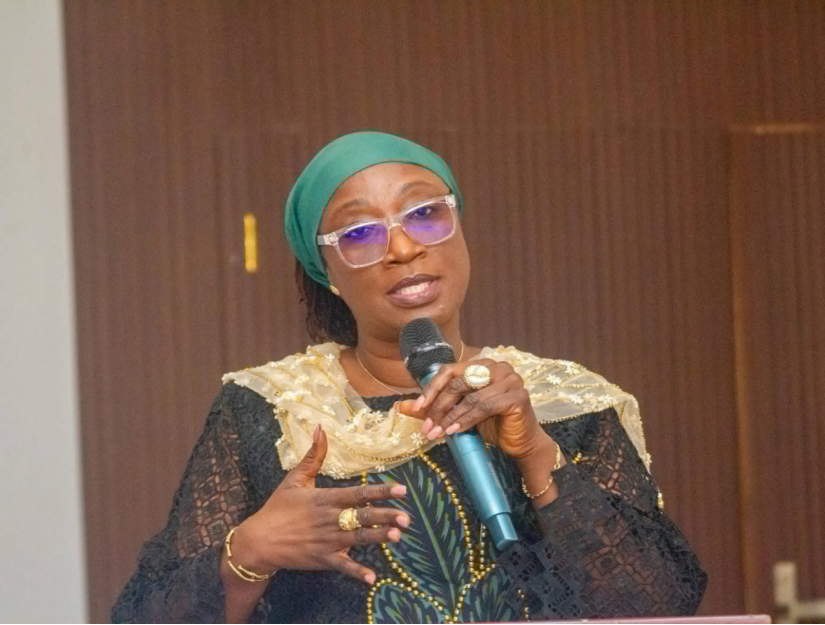
Speaking Friday at the Belle Casa Hotel Conference Hall in Monrovia during the official launch of the five-year national framework, Minister Kollie warned against treating the document as another government policy that would be celebrated at its launch and subsequently abandoned without meaningful implementation.
She emphasized that the success of the Third National Action Plan would depend on political commitment, adequate resources, effective coordination and the active participation of women, particularly those in rural communities.
The launch, organized by the Ministry of Gender, Children and Social Protection in collaboration with UN Women and development partners, brought together government officials, diplomats, civil society organizations, women’s peacebuilding groups, youth representatives and members of the media.
The event also coincided with activities commemorating the 26th anniversary of United Nations Security Council Resolution 1325, which recognizes the importance of women’s participation in conflict prevention, peacebuilding, conflict resolution and post-conflict recovery.
Addressing participants, Minister Kollie expressed confidence that Liberia’s new action plan would receive stronger government support, particularly following President Joseph Nyuma Boakai’s expressed commitment to the initiative ahead of its international launch in New York.
According to her, the President had demonstrated overwhelming commitment to the plan, raising expectations that its priorities would be integrated into the government’s national development processes rather than remain on paper.
“I’m confident that the government does not see this as another paper that we’ve developed and are going to put down. It’s going to be integrated into our development processes in a more intentional way,” Minister Kollie said.
She disclosed that discussions surrounding the plan’s implementation had extended to government budget considerations, expressing appreciation to officials of the Ministry of Finance and Development Planning for their commitment during budget discussions.
The Gender, Children and Social Protection Minister specifically acknowledged the support of government officials who, according to her, demonstrated an understanding of the importance of financing the plan.
She stressed that the resources and commitments required to implement NAP III must translate into practical interventions that improve women’s participation and strengthen peace and security throughout Liberia.
Minister Warns Against Poor Coordination and Weak Implementation
While acknowledging the political commitment surrounding NAP III, Minister Kollie identified coordination among implementing institutions as a major factor that could determine whether the plan succeeds or fails.
She cautioned that overlapping responsibilities, weak collaboration and the failure of institutions to recognize their shared objectives could undermine the implementation process.
According to her, all institutions and organizations involved must understand their respective responsibilities and work collectively toward achieving the objectives outlined in the national framework.
“Sometimes we overlap. Sometimes, for some reasons, we forget the common goal. But I want to encourage all of us, because we are all actors in the room, let’s make sure that the role we are to play is played in a more responsible way,” she stated.
She further called on the Ministry of Gender, Children and Social Protection as the lead government institution, to ensure that all relevant actors are engaged throughout the implementation process.
Minister Kollie also emphasized the need to develop a clear first-year implementation programme to establish immediate priorities, guide institutional responsibilities and provide a practical roadmap for achieving the plan’s objectives.
She argued that launching the document without clearly identifying the activities to be implemented, the institutions responsible and the expected results could weaken the entire process.
The Minister maintained that implementation must be deliberate and inclusive, warning that poor execution would ultimately prevent the government and its partners from achieving the intended outcomes.
Rural Women Must Not Be Left Behind
Beyond government institutions and national-level commitments, Minister Kollie placed particular emphasis on ensuring that NAP III reaches women at the grassroots level.
She warned against limiting the implementation of the plan to ministries, diplomatic institutions and national-level stakeholders while excluding rural women, cross-border women and community-based structures that are equally important to peacebuilding.
According to her, the plan must reach women across Liberia’s 15 counties, including those whose contributions to peace and community development are often overlooked.
She stressed that women in rural communities must be informed about the plan, understand its provisions and participate meaningfully in decisions affecting their lives.
“This plan should not be something like the Ministry of Foreign Affairs, Defence, and it ends there,” she emphasized.
The Minister further challenged the technical team and implementing partners to ensure that women at the community level are not excluded from the process or informed about activities only after decisions have already been made.
She called for greater transparency, timely communication and inclusive consultations, particularly when institutions are preparing to undertake activities in communities.
Minister Kollie noted that Liberia’s international recognition for its contributions to the Women, Peace and Security agenda must be reflected in the actual experiences of women within the country.
She observed that while other nations increasingly look to Liberia as an example because of its peacebuilding experience and leadership, the government must ensure that the realities confronting women at home reflect the country’s international reputation.
The Minister also commended Liberian women for their longstanding contributions to peacebuilding and acknowledged the work of consultant Goma and the technical team involved in developing the action plan.
She praised their dedication, expertise and commitment, recognizing the considerable effort required to bring the document to completion.
UN Women Says Success Depends on Implementation
Meanwhile, UN Women Deputy Country Representative Yemi Falayajo described the launch of NAP III as both a significant national achievement and an opportunity to renew Liberia’s commitment to advancing women’s leadership and participation in peace and security.
Speaking following the official launch, Falayajo commended the Government of Liberia, particularly the Ministry of Gender, Children and Social Protection, for its leadership in developing the national framework.
She acknowledged Minister Kollie and her team for demonstrating commitment to advancing the Women, Peace and Security agenda, adding that UN Women had supported the process from its early stages.
According to Falayajo, the launch represents an important milestone in Liberia’s contribution to the global Women, Peace and Security agenda, particularly as the country commemorates 26 years since the adoption of United Nations Security Council Resolution 1325.
She noted that Liberian women have consistently demonstrated courage, leadership and perseverance in promoting peace, emphasizing that women should not be viewed merely as beneficiaries of peace initiatives but as essential partners in building and sustaining peace.
“Liberian women have demonstrated, through courage, leadership and perseverance, that women are not only beneficiaries of peace, but indispensable partners in building and sustaining it,” Falayajo said.
However, she cautioned that the true value of the new action plan would not be determined by the ceremony or the document itself but by the changes it produces in the lives of women and girls.
She identified meaningful participation in decision-making, opportunities for young women to assume leadership positions, sustained support for women peacebuilders and improved peace and security in communities across all 15 counties as important measures of success.
Falayajo also stressed the importance of making the plan accessible and understandable to ordinary Liberians, noting that its provisions must be localized and communicated so communities can understand their roles and contributions.
She welcomed the emphasis on national ownership and shared responsibility, explaining that government institutions, civil society organizations, development partners, the United Nations, women and young people all have important roles to play in translating the plan’s commitments into practical outcomes.
Development Partners Pledge Continued Support
Falayajo reaffirmed UN Women’s commitment to working alongside the Government of Liberia, women’s organizations, civil society groups and development partners to support the implementation of NAP III.
She also recognized the contributions of international partners, including the governments of Ireland and Sweden, the European Union and the Peacebuilding Fund (PBF), for their financial and institutional support toward advancing the Women, Peace and Security agenda in Liberia.
She praised the partners for not only providing financial assistance but also actively participating in discussions and contributing to the process.
The UN Women Deputy Country Representative further acknowledged the technical team and individuals whose efforts contributed to the development and successful launch of the action plan.
She called on all stakeholders to maintain the momentum generated by the launch and move from commitments to measurable results.
Falayajo said Liberia should aim to demonstrate practical progress before the next United Nations General Assembly, so that the country can present not only its policy framework but also evidence of successful implementation to other nations.
She urged stakeholders to ensure that NAP III becomes a living document that guides national action rather than a policy framework that remains largely on paper.
From International Recognition to National Results
Liberia’s Third National Action Plan on Women, Peace and Security, covering 2026–2031, is expected to provide a framework for strengthening women’s participation in peacebuilding, decision-making, conflict prevention and security processes over the next five years.
Its launch comes at a time when Liberia continues to position itself as an important voice in the global Women, Peace and Security agenda, drawing on the country’s history of women’s involvement in peacebuilding and its experience in post-conflict recovery.
However, the messages delivered by both Minister Kollie and UN Women underscored a common challenge: translating Liberia’s international reputation and policy commitments into meaningful improvements in the lives of women and girls.
For the plan to achieve its objectives, stakeholders will need to demonstrate accountability, ensure adequate financing, strengthen coordination and create opportunities for women, particularly those in rural and underserved communities, to participate in decisions affecting their security and development.
With the official launch now completed, attention is expected to shift toward the development of an implementation programme that will outline immediate priorities and guide the responsibilities of institutions involved.
The challenge, as highlighted by the Gender, Children and Social Protection Minister, is to ensure that NAP III does not become another policy document celebrated at a launch ceremony but one that produces measurable results for women across Liberia.
Support Independent Journalism
Your support helps FrontPage Africa continue delivering independent, credible, and impactful journalism. Every contribution strengthens our ability to investigate, inform, and hold power accountable while keeping quality journalism accessible to our readers.
Support our journalism or subscribe to receive the latest FrontPage Africa stories and updates.