Summary
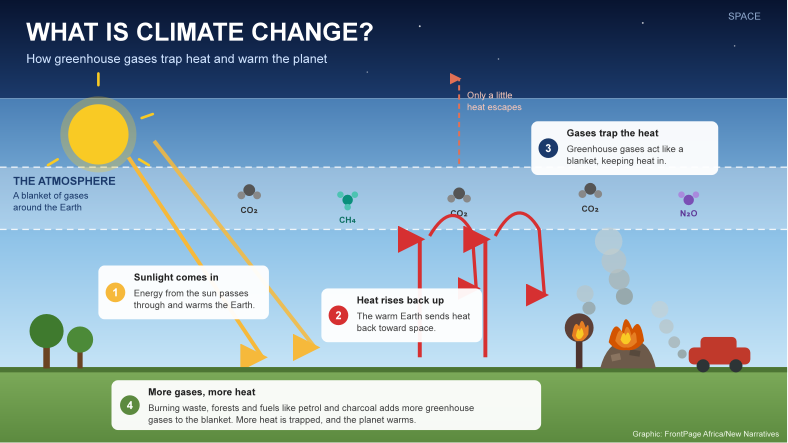
- Liberia has held its first national coordination meeting to plan implementation of its latest plan to cut greenhouse gas emissions that are causing global warming and help millions of Liberians adapt to floods, heat, and devastation wrought by climate change.
- But the plan says only 10 percent of the promised reduction can be financed domestically.
- The money is there. Nearly $300 million has already been approved but sits in global coffers. Experts say the question is whether the government can provide the capacity and the co-financing to unlock it.
By Nemenlah Cyrus Harmon, climate correspondent with New Narratives
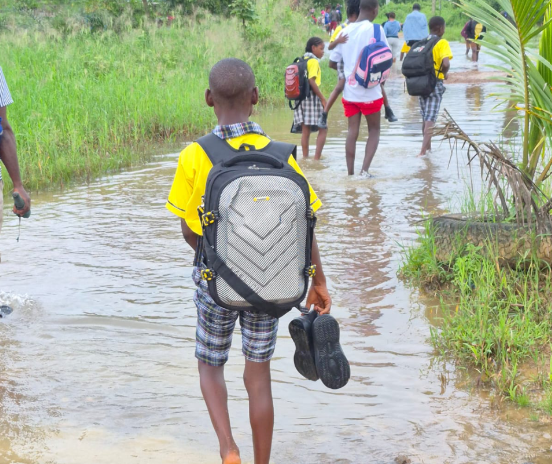
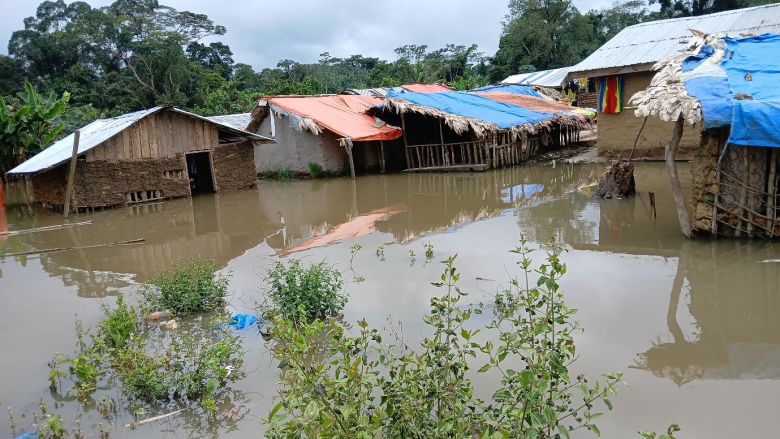
Last year, the Boakai government made an ambitious promise to its people and the world: Liberia would cut emissions of the so-called “greenhouse” gasses that are causing climate change, by 64 percent by 2035, and make the radical adaptation efforts needed to protect the forests, farmers and coastlines that make the country one of the world’s most climate-vulnerable.
The pledge, contained in Liberia’s third Nationally Determined Contribution, or NDC 3.0, a requirement of the 2016 global Paris Agreement to halt climate change, was validated at a ceremony in Monrovia in September and submitted to the United Nations. This year, the hard part began.
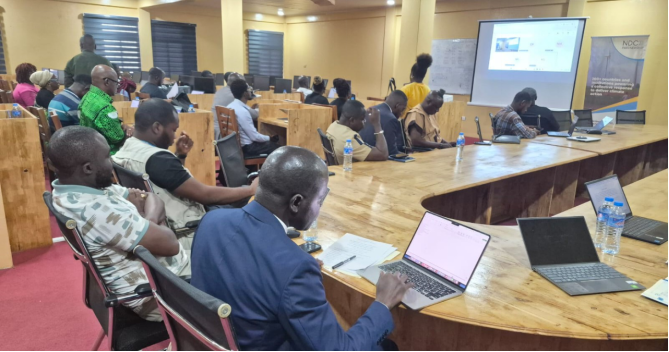
Last week, the Environmental Protection Agency brought together leaders from each of the sectors that are included in the plan along with government ministries, United Nations agencies and development partners to work out how to deliver on the commitments it has made and, importantly, measure it.
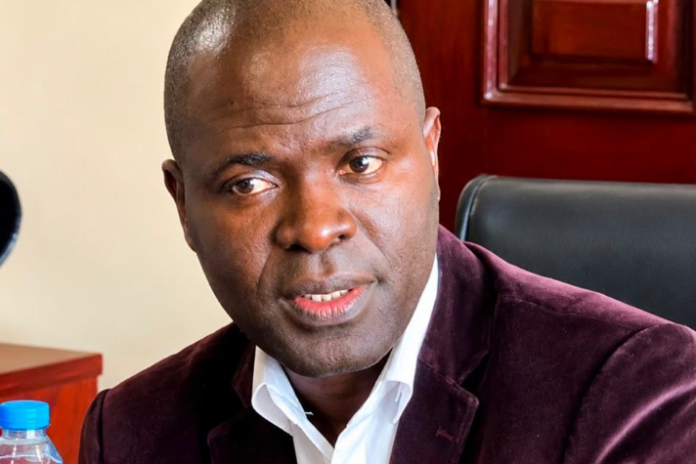
“We must move from commitment to implementation, from intention to measurable results,” said Emmanuel Urey Yarkpawolo, the Agency executive director, in his opening remarks. Liberia’s climate progress, “will not only be measured by our commitment written on paper. It will be measured by our ability to translate those commitments into practical actions that improve the lives of our people.”
But behind those ambitious targets lies a sobering reality: Liberia can afford to finance only ten percent of what it has pledged and will rely on international partners for the rest.
Liberia has been here before. The Sirleaf administration submitted its first NDC in 2015, pledging to reduce emissions by 15 percent. The Weah administration submitted its second in 2021, setting a 64 percent emissions-reduction target by 2030.
But an analysis conducted on the Weah administration’s NDC, led by the Environmental Protection Agency, with support from UNDP, found that Liberia had achieved only 20 percent of its targets by 2024.
That failure has had serious implications for international funding. By 2020 the country had secured $US570 million in international climate-finance commitments from global funders, but less than half of that amount was disbursed in large part because of corruption, a lack of capacity and mismanagement on the part of Liberian bureaucrats. In many cases the EPA was trying to appoint Liberians into position for which they did not have the required skills.
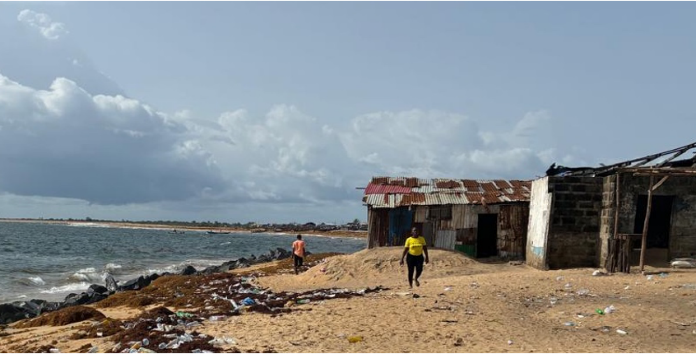
FrontPage Africa/New Narratives has documented suspected corruption and lack of capacity under the Weah administration that led to four-year delays in the US$10 million Climate Information System project which would warn communities about hazardous weather, and the US$27 million Monrovia Metropolitan Climate Resilience Project which is intended to protect West Point’s coastline from sea-level rise– just two of the many projects that had been approved.
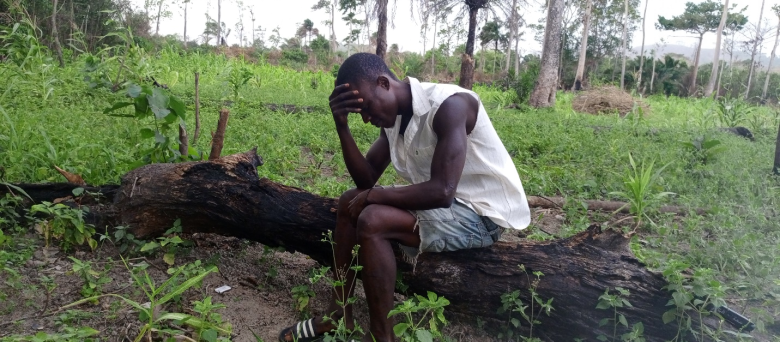
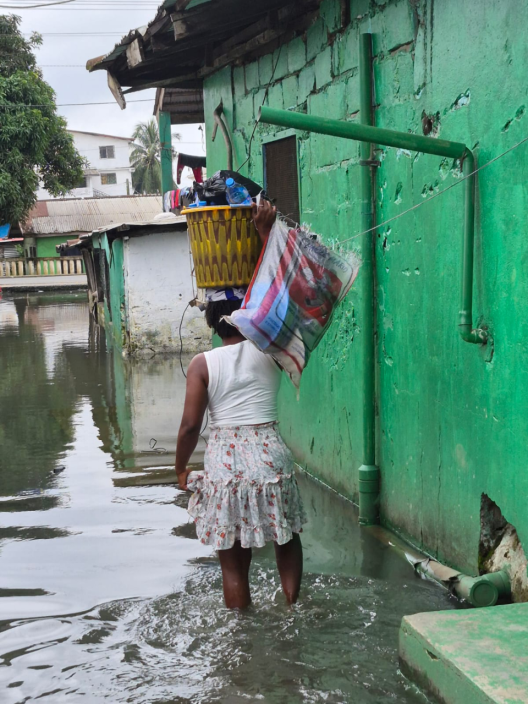
Hundreds of thousands of Liberians were left without rainfall and temperature warnings over four years that may have saved them from crop failure and flooding. On the coast many homes were swept away that would have been saved had the project proceeded as expected.
But there was some progress documented in the report. Between 2021 and 2024, Liberia reported 105 megawatts of hydropower capacity and 5.6 megawatts of solar-energy production. It also recorded 175 electric vehicles contributing to the NDC’s goal of cutting transport emissions Nearly 46,000 hectares of forest were restored through natural regeneration on pace to meet its goal of reforesting an average of 12,285 hectares annually through 2030.
A Plan Liberia Cannot Fund Alone
The gap between ambition and capacity runs through nearly every part of NDC 3.0. Implementing the plan will cost as much as US$3 billion by 2035, according to experts. Of the 64 percent emissions reduction Liberia has pledged, only 10 percent are classified as “unconditional,” meaning they can be achieved using the country’s own resources.
In an interview Benjamin S. Karmorh, the EPA’s chief technical adviser and Liberia’s national focal point to the United Nations Framework Convention on Climate Change,
said the EPA had not completed its assessment to determine the full cost of its commitments, but he warned it would be big.
“For the next nine to 12 months, we will be able to come up with the real cost of our NDC,” he said, adding that implementing the second NDC alone required more than US$400 million.
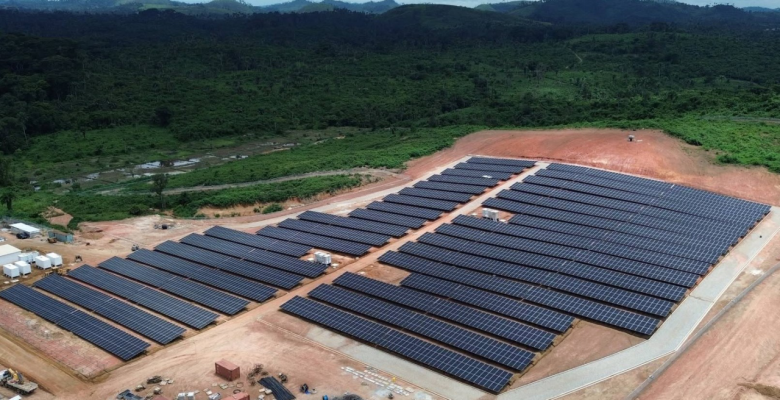
Karmorh said the Boakai administration had moved quickly to catch up ground lost under the Weah administration where government failure to provide co-financing and meet the project deadlines required of donors blocked the release of global funds. He cited a 20-megawatt solar facility at the Mount Coffee Hydropower Plant, recently inaugurated to complement the plant’s 88-megawatt hydropower capacity.
He cited President Joseph Boakai’s visit to the Environmental Protection Agency to inaugurate its new headquarters and laboratory as evidence of “the strongest political will on the part of the government in ensuring that the EPA fulfills its mandate.”
The 2026 national budget allocated US$2.9 million to the EPA. It includes US$900,000 that the government is required to provide as co-financing for two initiatives backed by the Green Climate Fund. Louis Kuukpen, Deputy Liberia Representative for the United Nations Development Program, which is implementing the coastal defense project, confirmed to FrontPage Africa/New Narratives that the government had disbursed $800,000 co-financing required for the coastal defense project and progress should be seen soon.
Karmorh said the real evidence of the government’s commitment will come in next year’s budget. “We expect that there will be an increase for the EPA,” Karmorh said. “And with that increment, we expect that we’ll be able to do a lot.”
Lack of Data Collection Capacity Also a Handbrake on Global Funding
If money is the headline problem, data is the quieter crisis—and Yarkpawolo devoted much of his address to it.
“We cannot properly manage what we do not measure,” he told the meeting. “We cannot convincingly report progress without credible and consistent data.”
Without reliable data, he said, Liberia cannot determine where resources are most needed, meet its transparency obligations to the United Nations or make a credible case to international climate funders demanding proof of results.
Yarkpawolo said the sectoral officers responsible for gathering data across ministries—from transport and agriculture to energy—are being asked to work without adequate funding, transportation, equipment or reliable internet access.
“This is not sustainable,” he said.
He appealed directly to Liberia’s international donors to establish a dedicated fund for data collection and reporting, separate from project financing. He said such a fund would support field travel, data systems, training and verification—the less visible infrastructure that makes accountability possible and would allow them to employ Liberians to meet the requirements that would unlock funding.“Our partners should not only finance climate projects,” Yarkpawolo said. “They should also invest in institutions and people responsible for measuring and reporting their results.”

Mobilizing Government Ministries to Meet Climate Targets
Yarkpawolo outlined the EPA’s priorities for the year: finalize a 2026–2027 work plan, validate new coordination tools and reporting templates, and clearly identify which ministry is responsible for providing particular data and when. He said climate reporting is broader than the responsibility of the EPA alone.
“It is not solely an environmental issue,” Yarkpawolo said. “It is a development, economic, social, health, security, and government issue.” Addressing it, he said, will require “a whole-of-government and a whole-of-society approach.”
This story was a collaboration with New Narratives as part of the Investigating Liberia Project. Funding was provided by the American Jewish World Service and Swedish International Development Cooperation Agency. The funders had no say in the story’s content.
Support Independent Journalism
Your support helps FrontPage Africa continue delivering independent, credible, and impactful journalism. Every contribution strengthens our ability to investigate, inform, and hold power accountable while keeping quality journalism accessible to our readers.
Support our journalism or subscribe to receive the latest FrontPage Africa stories and updates.