Sorlumba may be quiet, but the dispute is far from over. Months after an armed confrontation displaced communities, wounded a Liberian and triggered a presidential summit, Guinean and Liberian officials are still relying on ad hoc talks to prevent fresh clashes at the Makona River. Without a clear demarcation of the border and a permanent joint security mechanism, each new troop rotation, construction project or dispute at the crossing risks reopening a crisis that diplomacy has so far managed only to contain — not resolve.
By Rodney D. Sieh, [email protected]
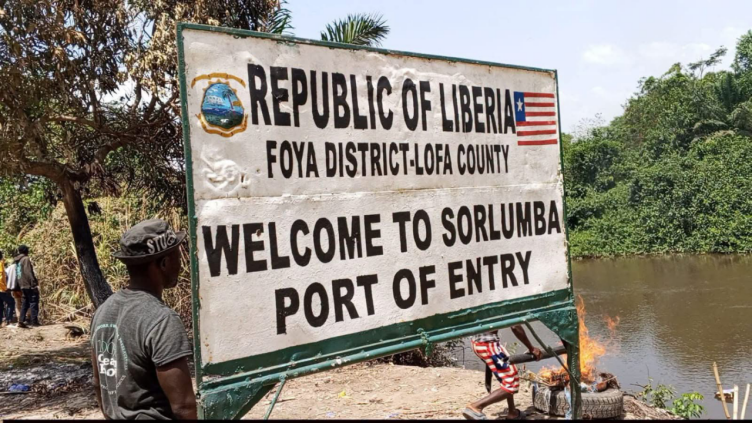
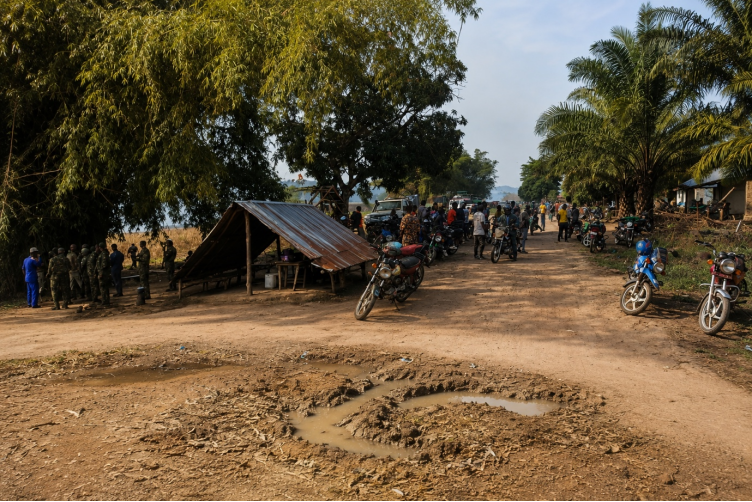
FOYA DISTRICT, Lofa County — When Sorlumba Township Commissioner Harris Domah stood between Liberian immigration officers and Guinean soldiers on Monday morning, brokering yet another round of talks at the Makona River crossing, it marked at least the fourth time this year that local officials have had to step in to keep a simmering border dispute from boiling over.
The immediate trigger was small by the standards of what this stretch of border has already witnessed: Guinean troops told Liberia Immigration Service (LIS) officers on Sunday to abandon their post at Sorlumba. The Liberians refused. The Guineans withdrew. By Monday, both sides were sitting down again, this time with a newly rotated Guinean command team hearing, for what officials hope is the last time, the case for peaceful coexistence at the crossing.
But the ease with which this particular episode was resolved should not obscure how far the underlying dispute remains from settled — nor how quickly a routine disagreement over a guard post can escalate at this frontier.
How a Road Project Became a Sovereignty Crisis
The current phase of the crisis traces to March 2, when workers contracted to pave the Foya–Vahun road were confronted by armed Guinean soldiers at Sorlumba. What began as a dispute over sand-mining equipment on the Makona River escalated within a week into something far graver: by March 9–10, Guinean troops had reportedly pushed roughly eight kilometers into land Liberians consider unambiguously theirs, tore down a Liberian flag that had flown at the riverbank for decades, and raised Guinea’s own flag in its place.
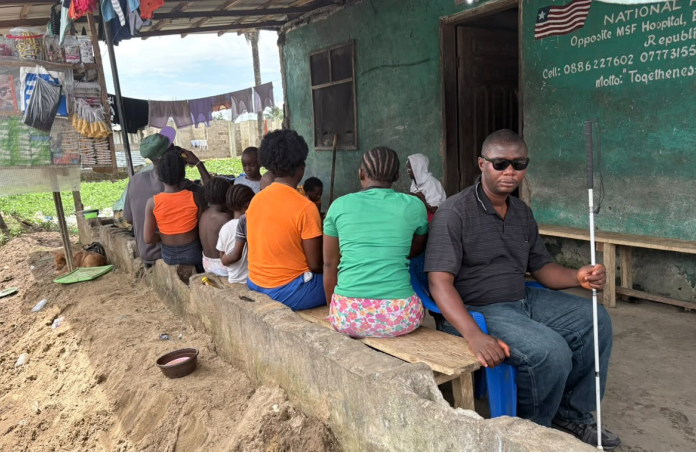
Residents describe Guinean reinforcements arriving by helicopter and being ordered off their own posts by foreign troops standing on Liberian soil. When Liberian youths responded by planting a new flag and briefly seizing control of the crossing, the confrontation turned violent — a Liberian civilian, Edward T. Lebbie, was shot in the leg near the river, an injury serious enough that doctors in Foya were unable to fully treat it and referred him for further care in Voinjama.
The human toll extended well beyond one gunshot wound. Schools across Foya District shut their doors. A fact-finding mission by Liberia’s human rights commission later found that at least 26 towns and villages had been affected, with families displaced, livelihoods disrupted, and food insecurity spreading in communities already among the country’s most remote.
Diplomacy Without Demarcation
The response from national governments has, on paper, been swift. On March 17, Guinean President Mamadi Doumbouya convened an emergency summit in Conakry with Liberian President Joseph Nyuma Boakai and Sierra Leonean President Julius Maada Bio, with Côte d’Ivoire sitting in as a witness nation. The three Mano River Union governments agreed to route future border incidents through dialogue and pledged joint technical commissions to finally tackle the question that underlies almost every flare-up here: where, exactly, does the border run.
That question is older than any of the current governments. Regional analysts who track conflict along the Mano River basin note that the Guinea–Liberia–Sierra Leone frontier has long suffered from unclear demarcation, thin joint monitoring, and limited state presence — conditions inherited from decades of instability, including Guinea’s 2021 coup, that leave the area vulnerable to exactly the kind of sudden escalation Sorlumba experienced in March. Seen in that light, the summit’s promised technical commissions are less a solution than an acknowledgment of how much work remains undone.
Nearly five months later, that work does not appear finished. Guinean troops have continued to maintain a presence in parts of the contested zone, and residents in some Sorlumba-area communities say they still cannot return home. The commander rotation revealed during Monday’s talks — a changeover local officials only learned about when they arrived to mediate — is itself a reminder of how little continuity or coordination governs day-to-day operations at a crossing that has already produced a shooting, a mass displacement, and a diplomatic summit this year.
A Pattern, Not an Anomaly
What happened at Sorlumba this week fits a broader regional pattern. Border tensions have also flared this year between Guinea and Sierra Leone, prompting comparisons to other unresolved West African boundary disputes, including the long-running maritime dispute between Ghana and Togo. Analysts argue that without durable joint monitoring mechanisms and an agreed demarcation of the Makona River line, the Mano River basin will keep producing these flashpoints — manageable individually, but corrosive cumulatively to the fragile trust between neighbors who all emerged from their own civil conflicts within the past few decades.
For now, Sorlumba is calm. LIS officers remain at their post; Guinean soldiers have returned to theirs. Commissioner Domah’s peaceful dialogue held. But as residents of Foya District have learned since March, calm at this border has a way of being provisional — lasting only until the next command rotation, the next construction crew, or the next unilateral order to stand down.
FrontPageAfrica will continue monitoring developments at the Liberia–Guinea border.
Support Independent Journalism
Your support helps FrontPage Africa continue delivering independent, credible, and impactful journalism. Every contribution strengthens our ability to investigate, inform, and hold power accountable while keeping quality journalism accessible to our readers.
Support our journalism or subscribe to receive the latest FrontPage Africa stories and updates.