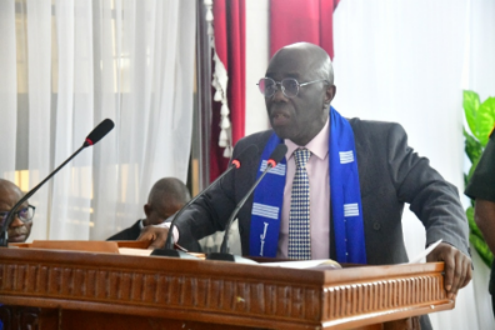
Monrovia – All 64 graduates of the fifth cycle of Liberia’s Professional Magistrate Training Program, PMTP will be immediately placed on the Government of Liberia’s payroll, Chief Justice Yamie Quiqui Gbeisay Sr. announced Friday, July 17, describing the move as another step toward strengthening the country’s justice system.
“Before I take my seat, I will be remiss if I don’t thank the Minister of Finance, as arrangements have been made to place these graduates on the payroll immediately,” Chief Justice Gbeisay declared to applause during the graduation ceremony at the Temple of Justice in Monrovia.
The graduates, who completed a year-long professional judicial training at the James A. A. Pierre Judicial Institute, are expected to be deployed to magisterial courts across Liberia, particularly in underserved counties where shortages of qualified judicial officers have long affected access to justice.
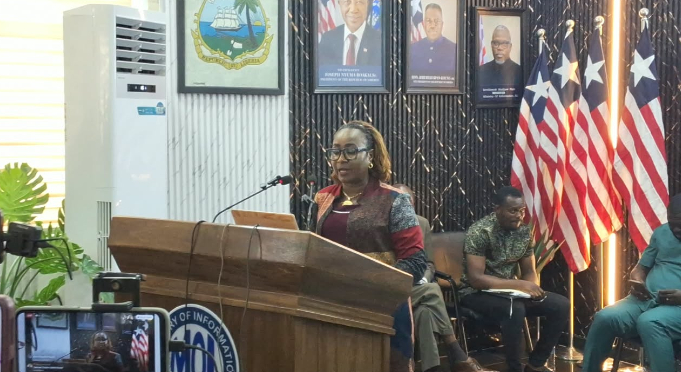
Delivering the keynote address, Finance and Development Planning Minister Augustine Kpehe Ngafuan announced that the Government of Liberia had, for the first time, fully funded the Professional Magistrate Training Program, ending more than 16 years of heavy dependence on donor support.
“Cycle Five stands as a monumental milestone of sovereign ownership,” Minister Ngafuan said.
“This cycle is being fully and independently funded by the Government of Liberia through the Judiciary’s budget. This is clear evidence that Liberia is ready to pay for its own institutional progress, secure its own peace, and invest directly in the intellect of its public servants.”
Minister Ngafuan also disclosed that the Judiciary’s budget has increased from US$18.5 million in 2023 to US$33.3 million in 2026, representing an 80 percent increase over three years.
According to him, the increased allocation is financing the completion and construction of court facilities, digitization of court records and proceedings, implementation of electronic case management systems, and other reforms intended to improve access to justice.
“We are funding these projects because an exposed, under-equipped court cannot fearlessly defend the public interest,” Ngafuan said.
“We are modernizing the Judiciary’s infrastructure to accelerate the adjudication of cases and bring dignity to the courts.”
Addressing the newly commissioned magistrates, Ngafuan urged them to remain steadfast in upholding integrity, warning that professional competence without ethical character could become dangerous.
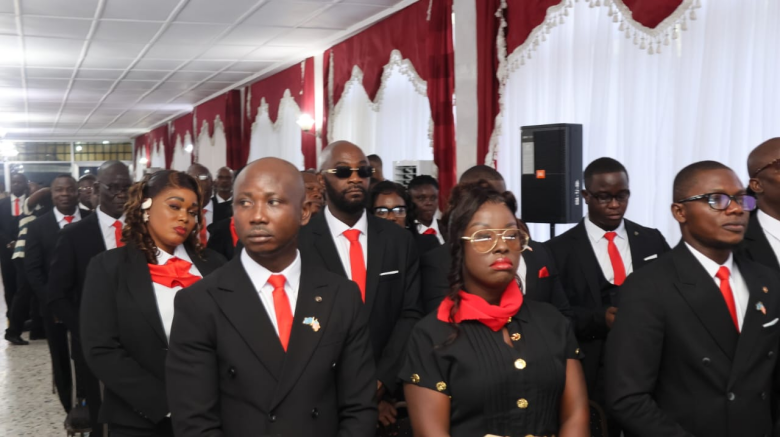
“A sharp lawyer or judge with integrity is a blessing to society,” he said. “A sharp lawyer or judge with no integrity is a menace to society.”
He further cautioned the graduates against yielding to pressure from politicians, business people, family members or other influential individuals.
“You will be heavily tempted.
You will be offered financial inducements to look away, and you will face immense pressure from individuals who appear more powerful than you,” Ngafuan warned.
“The magisterial authority you wield is not your personal property; it is a sacred trust belonging to the Liberian people.”
Chief Justice Gbeisay also challenged the graduates to faithfully uphold the law and maintain the dignity of the courts.
“The law is your only master,” he said. “Once you sell one judgment, you sell the whole Judiciary. Protect your name and protect this institution.”
He reminded the graduates that justice delayed often amounts to justice denied, urging them to treat litigants with respect and ensure the timely disposition of cases.
Speaking on behalf of the graduating class, Valedictorian Josiah S. Wiah described the Professional Magistrate Training Program as “a strategic investment in the Rule of Law and national development,” while appealing for continued government support to expand judicial services across Liberia.
“Every magistrate properly trained represents hope for communities that have long been deprived of access to justice,” Wiah said.
“An investment in this program is an investment in peace, public confidence, national security, and equal access to justice.”
He also appealed to the Louis Arthur Grimes School of Law and the Liberia School of Law to create a special admission pathway for graduates of the Judicial Institute, arguing that the rigorous legal and practical training received during the one-year program should be recognized.
Reflecting on his personal journey from humble beginnings during Liberia’s civil conflict, Wiah credited his mother for laying the educational foundation that enabled him to become the class valedictorian.
“I come to this platform not as a person born into prestige or prominence, but as a man of humble beginnings,” he said, recounting how his mother taught him to read and write during the war years despite having never completed high school herself.
Closing his address, Wiah urged his fellow graduates to make integrity the hallmark of their judicial careers.
“History will not remember us merely because we graduated from this program,” he said.
“It will remember us for the lives we touch, the justice we uphold, and the legacy we leave behind.”
The graduation marked the completion of PMTP Cycle Five, with all 64 graduates expected to assume judicial assignments in magisterial courts across Liberia in the coming weeks.
Support Independent Journalism
Your support helps FrontPage Africa continue delivering independent, credible, and impactful journalism. Every contribution strengthens our ability to investigate, inform, and hold power accountable while keeping quality journalism accessible to our readers.
Support our journalism or subscribe to receive the latest FrontPage Africa stories and updates.