
Liberia has historically experienced a well-defined tropical climate characterized by two distinct seasons: a long rainy season, typically from May to October, and a dry season, spanning roughly November to April. The dry season has traditionally been marked by reduced rainfall, dusty Harmattan winds, and relatively stable weather conditions. In recent years, however, a noticeable and troubling shift has emerged—rainfall increasingly occurs during the supposed dry season. This dramatic alteration in Liberia’s weather pattern raises important questions about its causes and the broader environmental, social, and economic implications.
By: Arthur R.M. Becker, Liberian Environment, Climate Change and International Development Expert
Overview of Liberia’s Traditional Climate System
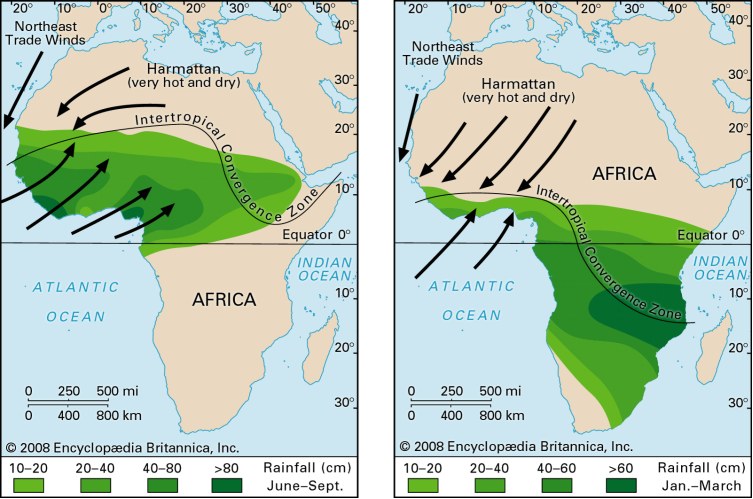
Liberia lies along the Upper Guinean coast of West Africa and has long been influenced by moist south-westerly winds from the Atlantic Ocean. These winds historically delivered consistent rainfall during the rainy season, while the dry season was governed by northeasterly trade winds carrying dry, dusty air from the Sahara. This seasonal predictability supported agricultural planning, road maintenance, fishing cycles, and public health preparedness.
The increasing occurrence of rainfall during the dry season disrupts this long-standing balance, suggesting that the atmospheric mechanisms controlling rainfall timing are changing.
Causal Factors Behind Dry-Season Rainfall
- Climate Change and Global Warming
The most significant driver of dry-season rainfall in Liberia is global climate change. Rising global temperatures have increased ocean surface temperatures, particularly in the Atlantic. Warmer oceans lead to greater evaporation, adding more moisture to the atmosphere. As a result, even during months traditionally considered dry, sufficient atmospheric moisture exists to trigger rainfall. Climate change has also made weather systems more unstable, increasing the likelihood of irregular and unseasonal precipitation.
- Shifts in Regional Atmospheric Circulation
Changes in wind patterns across West Africa have altered the timing and strength of seasonal air masses. The boundary between dry and moist air masses now fluctuates more frequently, allowing rain-bearing systems to penetrate Liberia during the dry season. This results in sporadic but sometimes intense rainfall events that were previously uncommon.
- Deforestation and Land-Use Change
Liberia has experienced extensive deforestation due to logging, mining, agriculture, and urban expansion. Forests play a critical role in regulating local climate by recycling moisture through evapotranspiration. The loss of forest cover reduces the land’s ability to moderate temperature and moisture, contributing to localized rainfall anomalies and intensifying climate variability.
- Urbanization and Heat Effects
Rapid urban growth, especially around Monrovia and other coastal cities, has created urban heat islands. These areas heat up faster than surrounding rural zones, causing air to rise and potentially triggering convectional rainfall—even during the dry season. Poor drainage systems then exacerbate the impacts of unexpected rains.
Environmental and Socioeconomic Effects
The occurrence of rainfall in the dry season carries significant consequences. Agriculturally, farmers who rely on predictable seasons face crop losses due to mistimed planting or harvesting. Dry-season rains can rot stored crops, delay land preparation, and increase pest infestations. Environmentally, unseasonal rains accelerate soil erosion and degrade already fragile road networks, particularly in rural areas.
From a public health perspective, stagnant water created by unexpected rainfall increases the risk of malaria, cholera, and other waterborne diseases during a time when communities are typically less prepared. Economically, infrastructure damage, disrupted transportation, and reduced agricultural productivity place additional strain on an already vulnerable economy.
Conclusion
The dramatic shift toward rainfall during Liberia’s dry season is a clear indicator of broader climatic disruption driven primarily by global climate change, compounded by deforestation, urbanization, and altered atmospheric circulation. This phenomenon undermines traditional climate knowledge and poses serious challenges to agriculture, public health, and national development. Addressing its impacts will require improved climate monitoring, sustainable land-use practices, reforestation efforts, and climate-resilient planning. Recognizing and responding to these changes is essential if Liberia is to adapt effectively to an increasingly unpredictable climate future.
Support Independent Journalism
Your support helps FrontPage Africa continue delivering independent, credible, and impactful journalism. Every contribution strengthens our ability to investigate, inform, and hold power accountable while keeping quality journalism accessible to our readers.
Support our journalism or subscribe to receive the latest FrontPage Africa stories and updates.