The Boakai Government Must Rethink What It Pays Its Officials
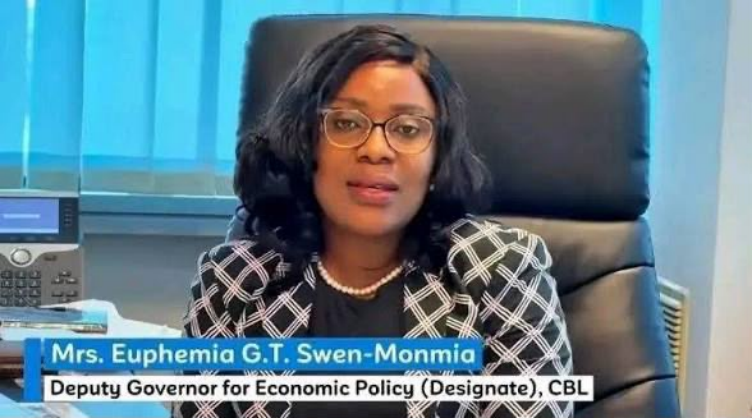
WHEN MRS. EUPHEMIA G.T. Swen-Monmia sat before the Liberian Senate for her confirmation hearing as Deputy Governor for Economic Policy at the Central Bank of Liberia, she did something few public officials in this country ever do: she told the public what she earns. Acting in the post since August 12, 2026, she testified that her monthly salary is US$9,000, that she receives cash benefits of around US$5,000 on top of that, and that her housing allowance should be around US$15,000.
WE COMMEND HER candor. We cannot commend the numbers.
AT US$14,000 A month in salary and cash benefits alone, the deputy governor takes home roughly US$168,000 a year before a single dollar of housing is counted. A Liberian civil servant on the government’s US$150 monthly floor would need more than seven and a half years of uninterrupted work to earn what she receives in a single month. And many do not even reach that floor. As this newspaper has reported, civil servants across the country still survive on US$70, US$90 and US$120 a month, below the minimum wage set by the Decent Work Act of 2015.
This is not about one woman
LET US BE clear: this editorial is not an attack on Mrs. Swen-Monmia. By every account, she is a career professional who rose through the Central Bank on merit, served as director of its Financial Markets Department and was selected by the International Monetary Fund for its Special Appointee Program. Liberia needs competent technocrats, and the Central Bank must be able to attract and keep them.
BUT COMPETENCE DOES not require extravagance, and the problem is the system that sets these packages, not the individual who accepts one. A pay structure that delivers US$14,000 a month plus housing to a deputy governor of a central bank, in a country where tens of thousands of public workers cannot pay rent, is a structure that has lost touch with the people it is meant to serve.
Two sets of rules
WHAT MAKES THIS disclosure so troubling is the contrast with what ordinary public workers have been told. Last November, Finance Minister Augustine Ngafuan explained that the government was still using the previous administration’s pay scale and would move away from it only when conditions allowed, so as to keep Liberia on track with its IMF program. Civil servants were asked to wait. Nurses, after the government celebrated crossing US$1 billion in domestic revenue for the first time, asked for a US$500 minimum. They too are waiting.
THE MESSAGE TO the nurse, the teacher and the clerk is patience and fiscal discipline. The message at the top appears to be something else entirely. A government cannot preach austerity to the bottom of the payroll while the top enjoys packages that would be generous in far wealthier economies.
The Senate’s own house
THIS DISCLOSURE COMES on the heels of FrontPageAfrica’s reporting on a plan within the Liberian Senate to raise salaries for its staffers. The Senate has disputed that reporting and demanded a retraction. We stand by our story. And we note the irony that the same Senate now sitting in judgment of Mrs. Swen-Monmia’s nomination is itself accused of quietly expanding its own payroll.
THE SENATE’S COMMITTEE on Banking and Currency has a duty here. Confirmation is not merely about whether a nominee is qualified; it is also the moment for lawmakers to ask whether the terms of the job are defensible. Senators heard these figures under oath. They should not let them pass without question, and they should apply the same scrutiny to their own budget lines.
A volatile moment
THIS IS NOT an abstract debate. Liberia is a country where youth unemployment is high, where students in Monrovia’s public schools have taken to the streets over conditions in their classrooms, and where the gap between those who govern and those who are governed grows more visible by the day. Disclosures like this one are precisely the kind of spark that turns quiet frustration into public anger.
PRESIDENT JOSEPH BOAKAI came to power promising to rescue this country and to bring discipline to public spending. Every month that these disparities go unaddressed, that promise loses credibility. Silence from the Executive Mansion will be read, fairly or not, as approval.
What must be done
WE THEREFORE CALL on the Boakai government and the Central Bank of Liberia to:
* Immediately review and reevaluate the compensation package of the Deputy Governor for Economic Policy, and of all senior CBL officials, against the country’s fiscal realities.
* Publish the Central Bank’s full salary and benefits scale for its governors and senior management, so the public can judge for itself.
* Commission an independent review of pay across autonomous agencies and state-owned enterprises, where the widest gaps between top and bottom are often hidden.
* Direct the Senate, through its leadership, to make public its own staff salary plans and justify any increases before they take effect.
* Lay out a clear, dated timeline for lifting every civil servant to at least the legal minimum wage.
LIBERIANS ARE NOT asking their officials to live in poverty. They are asking for fairness, and for leaders who share the burden they impose on everyone else. Until those at the top accept the same discipline demanded of those at the bottom, every call for sacrifice from this government will ring hollow.
Support Independent Journalism
Your support helps FrontPage Africa continue delivering independent, credible, and impactful journalism. Every contribution strengthens our ability to investigate, inform, and hold power accountable while keeping quality journalism accessible to our readers.
Support our journalism or subscribe to receive the latest FrontPage Africa stories and updates.