Monrovia – Barely a week after the arrival of the first batch of 20 persons of the expected 1,200 deportees from third-country, the political leader of the opposition New Liberia Party (NLP) has advised the government to rescind its decision.
By Emmanuel Weedee-Conway
The Agreement
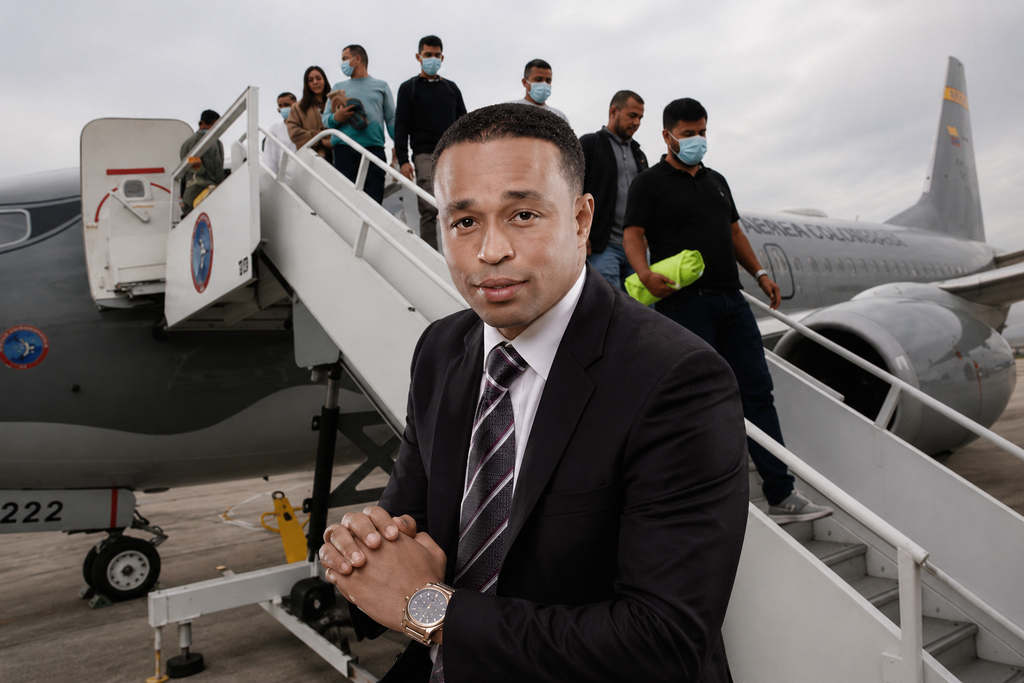
Liberia sealed an agreement with the US Government on August 18 to accept up to 1,200 third-country deportees from the U.S. over 12 months; hence, the first 20 touched down at the Roberts International Airport (RIA) last Thursday, even though five of them refused to remain here. Those five were reportedly flown to Equatorial Guinea instead
The deportees are mostly from Latin American countries including Venezuela, Cuba, Colombia, plus nationals from Africa, North America, South America and the Caribbean. Many have U.S. legal protection against return to their home countries due to risk of torture/abuse.
‘Deeply Troubling’
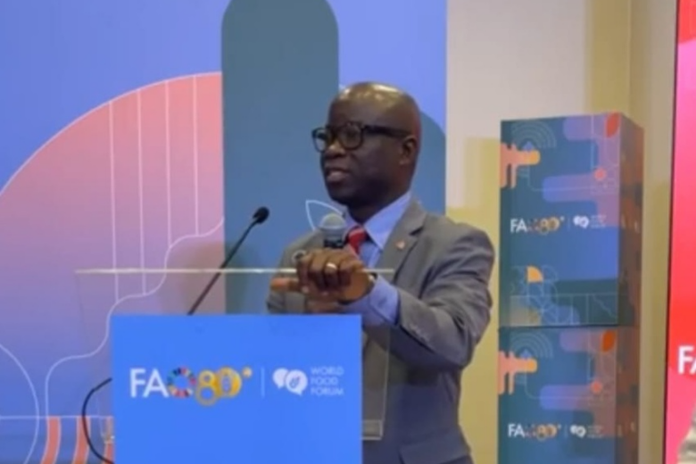
Rev. Dr. Joshua Tom Turner, standard bearer of the NLP contends that the decision to accept 1,200 deportees from the United States is deeply troubling and should be reversed immediately.
Dr. Turner sees the agreement as a gamble and heavy burden placed on Liberians without a clear national benefit and protecting of public interest. But the government has overly clarified that the deal has no financial burdens on the Government and People of Liberia.
“This policy deserves condemnation because it appears to prioritize external pressure over domestic stability. Liberia should not be turned into a convenient destination for people other countries do not want to keep. If the state cannot clearly explain the benefit to ordinary Liberians, then the decision fails the most basic test of governance,” read a statement released by the NLP leader days after the arrival of the first batch of deportees.
According to him is a serious risk and as such, the government must also be honest about these risks involved.
“Bringing in such a large number of deportees at once, without strong public communication and transparent safeguards, can easily deepen fear, mistrust, and social tension. People will ask whether proper screening has been done, whether communities are prepared, and whether the state has the capacity to monitor and support the arrivals.”
Likely Social Impact
A sudden influx of deportees, he believes, can strain the already fragile local systems and create anxiety in communities that feel and ignored, noting that this has the propensity to weaken public trust in the government.
Dr. Turner fears that deportees may be unfairly labelled and resulting to resentment from them (deportees) rumor, and division between host communities and arrivals.
Instead of strengthening social cohesion, he intoned that the policy could intensify suspicion and social fragmentation.
“Family systems may also come under pressure. If the state has no clear integration plan, deportees may struggle to find housing, work, or support, increasing the burden on relatives and communities already under economic stress. That creates a cycle in which social hardship spreads rather than eases.”
Likely Economic Impact
At the same time, the NLP leader is of the conviction that the economic consequences could be severe in the face of the already major development challenges.
He pointed out that absorbing 1,200 more people without a corresponding financial package could place additional pressure on housing, health care, transportation, and local services, indicating that those costs do not disappear simply because the government calls the deal humanitarian.
“The labor market may also become more strained. If deportees need jobs and the economy is not creating enough employment for current citizens, competition for scarce opportunities will increase. That can deepen frustration, especially among young people already facing unemployment and underemployment.”
“Public spending may rise as well. Even if the deportees arrive with no immediate criminal background, they will still need administrative processing, basic support, and oversight. Without foreign funding attached to the arrangement, the cost will likely fall on an already limited national budget.”
Security And Governance Risks
Security concerns cannot be brushed aside in the mind of the NLP standard bearer who believes that any large deportation program requires strict screening, careful monitoring, and transparent coordination with law enforcement and local authorities.
“If the government is vague about the background of those being admitted, it creates a legitimacy problem from the start. The larger governance issue is accountability. Citizens are entitled to know who negotiated the deal, what terms were accepted, and whether Liberia gave away leverage for nothing in return. A sovereign nation should not accept an arrangement that creates obligations without visible national gain.”
Dr. says the deal also poses a reputational risk to the country, if it becomes known as a destination for people rejected elsewhere, adding that the country may be seen as politically vulnerable and diplomatically disposable.
“That is a dangerous image for any government that claims to defend national dignity.”
What Should Happen – The Way To Go
The NLP is meanwhile, urging the government to reverse the decision or suspend it, pending full public disclosure.
“At minimum, it must publish the terms of the arrangement, explain the screening process, and state clearly what Liberia receives in return. Without that transparency, the policy cannot be defended as sound national interest.”
“If the state insists on proceeding, it should first secure measurable benefits such as funding, housing support, training programs, health infrastructure, or other concrete development gains. Anything less is an unfair burden on the Liberian people. Liberia’s leaders must remember that public office is not a vehicle for quiet concessions. It is a duty to protect the nation, its stability, and its future. On this matter, reversal is not weakness; it is responsible statecraft,” added Dr. Turner in the statement.
Several human rights groups have criticized the U.S. third-country deportees deal with Liberia.
Human Rights Watch cited documenting cases of “arbitrary detention, denial of legal counsel and risk of refoulement” across several third-country arrangements including Liberia.
Amnesty International also cited alongside HRW for documenting risks of arbitrary detention and refoulement in existing third-country deals.
Support Independent Journalism
Your support helps FrontPage Africa continue delivering independent, credible, and impactful journalism. Every contribution strengthens our ability to investigate, inform, and hold power accountable while keeping quality journalism accessible to our readers.
Support our journalism or subscribe to receive the latest FrontPage Africa stories and updates.