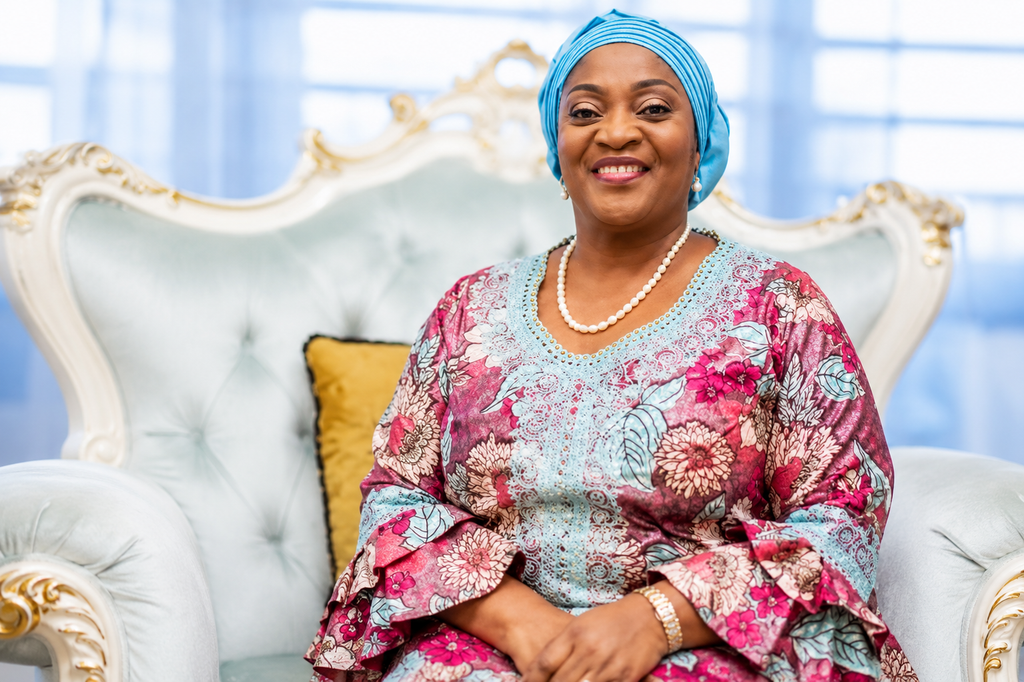
GBARNGA, Bong County– Coalition of Bong Eminent Citizens (CBEC) has called for the immediate release of former Vice President Jewel Howard-Taylor, accusing the Boakai-Koung Administration of subjecting her to unequal treatment and using the country’s high-profile drug investigation for political purposes.
By Jaheim T. [email protected]
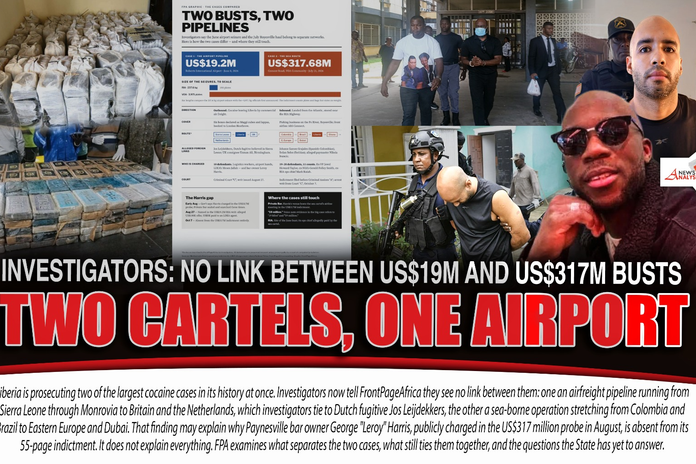
In a statement, Bong County District #5 Representative Eugine Kollie, who read the communication on behalf of the Coalition, criticized the arrest, detention and public treatment of Howard-Taylor in connection with an ongoing investigation that authorities have linked to a reported $319 million drug case.
Kollie said its concern was not with efforts to combat drug trafficking but with what it described as uneven enforcement of the law.
Explaining its position, the Coalition said it fully supports legitimate attempts to fight narcotics trafficking in Liberia.
However, it argued that the manner in which Howard-Taylor has been treated raises serious questions about fairness and equal justice.
Kollie said, “Our concern is the selective, politically motivated, and discriminatory manner in which justice is being administered in this particular matter.”
The statement reflects growing political debate surrounding one of Liberia’s most sensitive criminal investigations in recent years, with supporters of the former vice president questioning the evidence linking her to the case and government officials maintaining that investigations must proceed without interference.
The Coalition said Howard-Taylor’s constitutional protections should not be suspended simply because she has been named in a criminal investigation.
Seeking to highlight what it believes are violations of her rights, the group pointed to constitutional guarantees related to due process, personal liberty and human dignity. It said these safeguards remain in force until a court reaches a final determination on any allegations.
“These protections do not disappear because politically motivated allegations are made against an individual. They remain fundamental until a court of competent jurisdiction determines guilt,” the Coalition noted
CBEC described the former vice president’s arrest as excessive and damaging, arguing that the government’s actions undermined democratic principles and the rule of law.
The Coalition said public officials have a responsibility to demonstrate a clear legal basis before taking actions that could damage an individual’s reputation.
Underscoring its criticism of the government’s conduct, the group stated,
“The Coalition, therefore, considers the arrest and treatment of former Vice President Howard-Taylor to be unlawful, excessive, humiliating, and fundamentally inconsistent with the rule of law.”
A major part of the coalition’s argument focused on what it called unequal treatment between Howard-Taylor and other individuals mentioned in the broader drug investigation.
The group specifically referenced Deputy Police Commissioner Johnny Bolar Dean, who was publicly identified by Police Inspector General Gregory Coleman as having admitted receiving money from a drug cartel.
According to CBEC, despite those allegations, Dean was not subjected to the same public arrest procedures that Howard-Taylor faced.
Using the comparison to support its claim of unequal enforcement, the Coalition said, “This glaring disparity demonstrates a dangerous pattern of selective enforcement, in which a prominent citizen who is falsely accused is subjected to public degradation, while others directly connected to the same investigation are afforded preferential treatment, dignity, privacy and freedom.”
The organization argued that if Liberia’s anti-drug campaign is to retain public confidence, all individuals linked to the investigation should be treated according to the same legal standards.
The statement also carried a strong political dimension, with the coalition asserting that Howard-Taylor has been targeted because of her continued influence in Liberian politics.
The group said the former vice president remains an important public figure and suggested that her political relevance may have contributed to the government’s approach toward her case.
Expressing concern about what it views as attempts to marginalize a major political voice, the coalition stated, “We reject every attempt to weaponized state institutions for political purposes or to use the criminal justice system as an instrument of intimidation against political opponents.”
CBEC further argued that the matter has implications for Bong County and the Kpelleh ethnic community, of which Howard-Taylor is a member.
The Coalition claimed many residents view the treatment of the former vice president as an attack on the dignity of one of the county’s most prominent political figures.
Linking the issue to ethnic and regional concerns, the group said, “The targeting of Howard-Taylor because of her political relevance, her identity as a Kpelleh from Bong County, or her potential future role in Liberia’s political affairs is unacceptable.”
CBHC also warned that Liberia’s democratic institutions could be weakened if justice is perceived as being applied differently to political allies and opponents.
Highlighting what it believes is a dangerous trend, the coalition said, “Liberia’s democracy cannot survive where justice is selective and prosecution becomes political theater.”
CBEC issued several demands to the government, including the immediate withdrawal of what it described as politically motivated charges,
Howard-Taylor’s release from detention, and the restoration of her constitutional rights.
The Coalition also called for authorities to publicly repair what it described as damage to the former vice president’s reputation resulting from her arrest and detention.
In addition, the group urged the government to ensure equal treatment for all individuals allegedly connected to what it referred to as the $319 million and $19 million drug investigations.
The Coalition maintained that available information does not support claims linking Howard-Taylor to the case.
Making its position clear, the organization said, “Based on the information available to us, we do not believe that former Vice President Jewel Howard-Taylor is connected in any manner to these allegations.”
The statement went further, arguing that political considerations rather than evidence have driven the investigation’s focus on the former vice president.
Summarizing its assessment of the case, the coalition stated, “We further believe that the manner in which this matter has been pursued reflects selective justice and political motivation rather than a fair and impartial search for the truth.”
CBEC called on the Liberia National Bar Association, human rights organizations, civil society groups, religious leaders, youth groups and members of the international community to condemn the government’s actions.
The Coalition called on President Joseph Nyuma Boakai to establish an independent investigative committee composed of local and international experts to review the broader drug investigation.
Explaining why such a step is necessary, the group argued that public trust can only be restored through a process seen as impartial and transparent.
The Coalition added, “The Liberian people deserve the truth. They deserve an investigation that follows the evidence wherever it leads, not an investigation designed to protect some individuals while destroying the reputation of others.”
Ending its statement with a broader appeal for equal treatment under the law, CBEC said it remains committed to constitutional governance, human dignity and justice for all Liberians, declaring that “Justice must be equal or it is not justice.”
Support Independent Journalism
Your support helps FrontPage Africa continue delivering independent, credible, and impactful journalism. Every contribution strengthens our ability to investigate, inform, and hold power accountable while keeping quality journalism accessible to our readers.
Support our journalism or subscribe to receive the latest FrontPage Africa stories and updates.