Summary
- Farmers say changing rainfall patterns and prolonged dry spells are making it harder to plan planting seasons and protect their crops.
- At COP31, an EPA official announced plans to establish about 10 hydrometeorological stations in agriculture-producing counties within the next 12 months.
- The announcement comes as Liberia works to advance its delayed national Climate Information System, while a separate coastal resilience project in Monrovia faces outstanding construction and implementation challenges.
By Aria Deemie | Climate and Environment Reporter
At Wungko Farm in Salala, Bong County, farmer Paul Wungko says unpredictable rainfall is making it increasingly difficult for farmers to know when to plant and how to protect their crops.
In some years, he said, the rains start later than expected. In others, heavy rainfall comes in short bursts, followed by dry spells during the planting season. Rising daytime temperatures add further pressure on crops and livestock, making traditional planting calendars less reliable.
“Most smallholders depend entirely on rainfall. They have no irrigation, no storage and no backup source. A prolonged dry period will hit them first and hardest,” Wungko told FrontPage Africa in a WhatsApp interview from Liberia.
His concerns reflect a wider challenge facing Liberia’s agriculture sector. At the 31st United Nations Climate Change Conference in Antalya, Türkiye, an Environmental Protection Agency official announced plans to establish about 10 hydrometeorological stations in agriculture-producing counties within the next 12 months. The announcement comes as Liberia works to complete its broader Climate Information System, a national project that has faced years of delays but is now back under implementation.
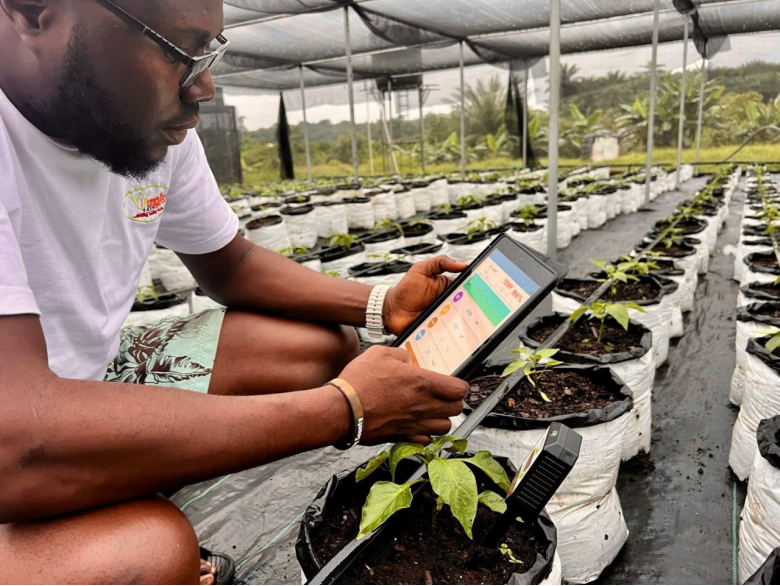
Wungko knows what some of the solutions can look like. His farm has invested in shade-net greenhouses and drip-irrigation systems that allow vegetables to grow under more controlled conditions, even when rainfall becomes unpredictable. But such investments remain beyond the reach of many smallholder farmers who depend on traditional rain-fed agriculture.
During an earlier in-person visit to Wungko Farm in Salala, Bong County, FrontPage Africa and New Narratives documented how the greenhouse operation uses shade nets and drip irrigation to protect crops from changing weather conditions. The farm also provides young people with training in drip irrigation, soil monitoring and pest control.
But the model comes at a cost. Wungko estimated that establishing one greenhouse could cost about US$10,000, an amount beyond the reach of many subsistence farmers.
For farmers without access to such facilities or other forms of irrigation, the consequences of changing weather patterns can be severe.
In Varney Gowah Town, Montserrado County, farmer Kulah Tokpah has struggled to keep her crops alive as rainfall becomes less predictable. In an earlier interview with FrontPage Africa and New Narratives, she described how her bitter balls, peppers and corn dried up before they could mature.“Rain supposed to be falling, but now no rain falling,” she said. “The things dem just dying in our hands.”
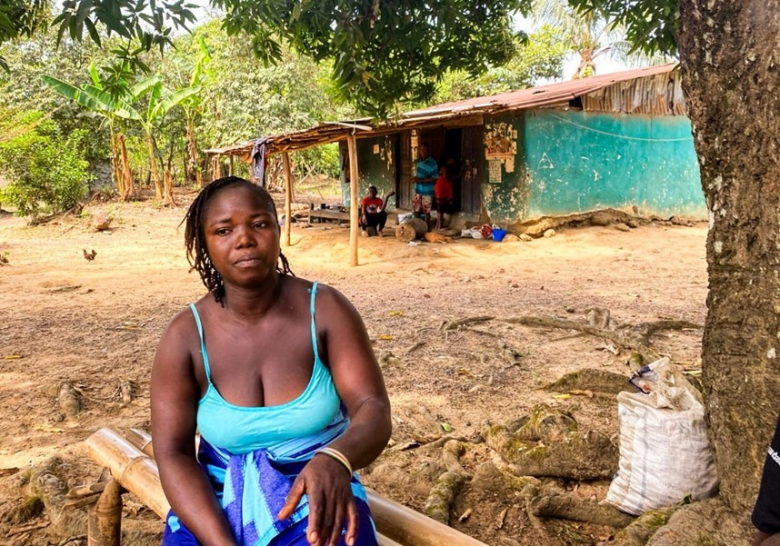
Tokpah and her family were left trying to clear a new, swampy plot of land in the hope that it would retain more moisture. Unlike Wungko, she does not have a greenhouse or an irrigation system to protect her crops from prolonged dry spells.
The contrast illustrates the gap between farmers who can invest in climate-smart agriculture and those who have few options when weather conditions change.
Wungko said the uncertainty has made traditional planting calendars less reliable. Plant too early, and seedlings risk dying. Wait too long, and farmers may miss the growing season or lose their harvest before it reaches the market.
He also cautioned against assuming that every difficult farming season is caused by El Niño, a natural climate pattern linked to warmer-than-usual waters in the Pacific Ocean that can affect rainfall in different parts of the world. Its effects vary across regions, he said, but prolonged dry conditions increase water demand and production costs, particularly for farmers with little access to irrigation.
Agriculture contributes about 38 percent of Liberia’s gross domestic product and employs nearly 70 percent of its population, according to the country’s Third Nationally Determined Contribution. Unpredictable rainfall therefore threatens not only farmers’ livelihoods but also food production and household incomes.
Wungko said the government should invest in small-scale water infrastructure, including farm ponds, rainwater harvesting systems, shallow wells and solar-powered pumps. He also called for localized weather and planting information through radio, mobile services and agricultural extension workers.
Other support, he said, should include drought-tolerant and early-maturing seeds, soil-moisture management, better storage, affordable credit and insurance.
“The technology exists. What most farmers lack is access, support and the confidence to adopt it,” he said.
Beyond the challenges individual farmers face, addressing the problem will require broader investment in water management and climate-resilient farming, according to Salimatu Lamin Gilayeneh, Director of the Climate Action Division under the Inclusive Green Growth programme at the United Nations Development Programme in Liberia.
Speaking at a Liberian side event at COP31, Gilayeneh called for investment in small-scale solar-powered irrigation, drip-irrigation systems and ways to capture and store water during the rainy season.
She said Liberia receives substantial rainfall, but much of it runs off instead of being stored for use during dry periods. Community reservoirs, farm ponds and rainwater harvesting could help farmers retain water.
“Every drop matters,” she said.
But water storage and irrigation are only part of the challenge. Farmers also need reliable information about when rain is likely to fall so they can make decisions about planting and preparing for changing conditions.Z. Elijah Whapoe, the EPA’s Manager for Planning and Policy, said the government plans to establish about 10 automated weather stations in counties with significant agricultural activity over the next 12 months. The stations are intended to improve access to timely weather information and early warnings, including for farming communities.
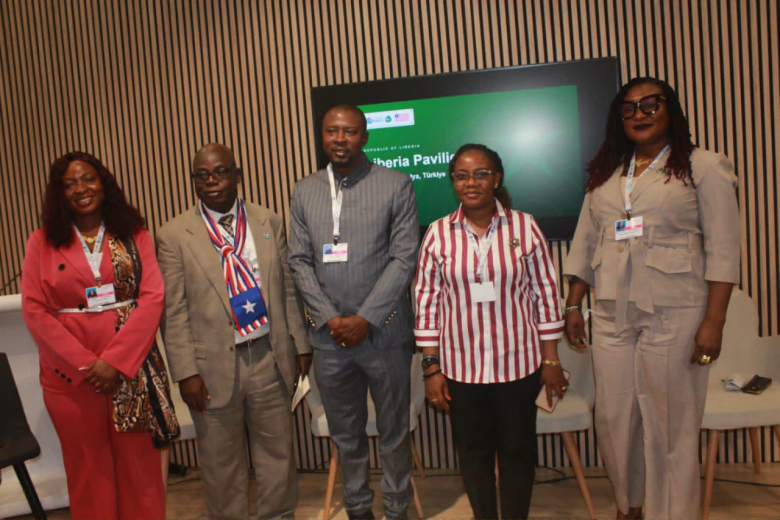
Whapoe said the stations would initially be established in agriculture-producing counties before the effort is expanded to other parts of the country, including southeastern and coastal areas. He described the broader Climate Information System as the larger initiative.
The exact programme or funding source for the proposed 10 stations was not established in his remarks. A separate initiative supported by the International Fund for Agricultural Development has also been identifying locations for rainfall and agrometeorological stations in northern Liberia. In April 2026, the Central Agricultural Research Institute reported that a technical team involving the EPA and Ministry of Transport had assessed potential sites for that initiative. It is not clear whether the work is connected to the 10 stations Whapoe announced. This reporter has sought clarification from the relevant authorities.
The broader Climate Information System, supported by a US$10 million Green Climate Fund grant and implemented with the African Development Bank, is intended to strengthen Liberia’s ability to collect and process weather data, produce forecasts and deliver early warnings to communities exposed to climate-related hazards.
The project was approved in November 2020, but its implementation was delayed by problems involving recruitment, procurement and disagreements over staffing and donor procedures. An African Development Bank performance report for 2023 cited concerns about the EPA’s recruitment processes, staff qualifications, salary claims and the appointment of a politically exposed person to a key project position.
The former EPA leadership disputed the bank’s criticisms, with then-Executive Director Wilson Tarpeh saying the recruitment process was proper and that delays were largely caused by the bank.
Under the current administration, the project has resumed implementation following the appointment of a new project manager with the bank’s approval. EPA Executive Director Emmanuel King Urey Yarkpawolo has said the meteorological centre is being implemented in conjunction with the airport, while existing monitoring facilities need modernization. He also said training is required before the system can become fully operational.
“The project is underway, but it’s not done yet,” Yarkpawolo said in an earlier interview.
The project’s scheduled completion date is October 3, 2027. But completing the infrastructure alone will not guarantee that farmers receive useful forecasts. The system will also need trained personnel, functioning equipment and a reliable process for delivering information to communities.
A separate climate-resilience project in Monrovia shows the challenges of turning climate funding into completed infrastructure.The Monrovia Metropolitan Climate Resilience Project, supported by the Green Climate Fund and implemented with the United Nations Development Programme, is intended to protect vulnerable coastal communities, particularly West Point, from erosion. Its plans include a 1,050-metre rock revetment, improved coastal management, mangrove protection and livelihood support.
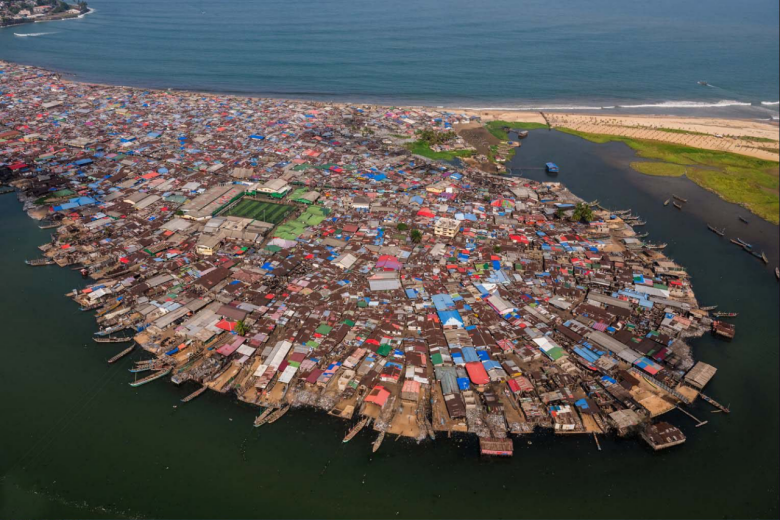
In an implementation update issued on November 8, the EPA said construction of the West Point coastal defence had not started by the end of October. Contract negotiations were still ongoing after the prospective contractor requested a 20 percent increase in its proposed price, citing higher fuel and material costs. The EPA and UNDP were assessing the request, and no increase had been approved.
The EPA reported that approximately US$2.07 million had been spent by the end of October, representing 9.68 percent of the project’s US$21.37 million in cash commitments. The project’s overall financing framework is about US$25.64 million, including a government contribution of rocks valued at approximately US$4.27 million.
The agency attributed delays to several factors, including early recruitment and work-planning problems, COVID-19 restrictions, staffing gaps, procurement processes, technical reviews and delays in government co-financing. It said an extension request had been submitted to the Green Climate Fund and was awaiting approval. The update did not provide a revised overall completion date.
The project has nevertheless advanced in some areas. The EPA reported that engineering studies and detailed designs for the West Point coastal defence had been completed, while environmental and social safeguards, community engagement and procurement activities had also progressed. Renovation of the West Point Education and Innovation Center has begun, with completion anticipated around the beginning of 2027. However, the main coastal defence construction remains outstanding.
The Metropolitan project is separate from the Climate Information System and does not fund the proposed agricultural weather stations. But both illustrate the challenge of turning climate-finance commitments into completed infrastructure and services.
For farmers, delays in climate information systems have practical consequences. Forecasts can help them decide when to plant, what crops to grow and how to prepare for dry spells or heavy rainfall. Without reliable information, farmers such as Tokpah are left making decisions with little warning of changing conditions.
Wungko said government support must connect climate information with practical assistance, particularly for smallholder farmers who cannot afford irrigation systems and other adaptation technologies.
Gilayeneh similarly stressed that water infrastructure must be supported by financing, technical training and community involvement if it is to remain useful after installation.
COP31 opened on November 9 with a focus on food, agriculture and health. Conference President Murat Kurum called for the summit to become an “Implementation COP,” urging governments to turn climate commitments into practical results.
For Liberia’s farmers, that implementation will be measured not only by the number of weather stations announced or projects approved, but by whether reliable forecasts reach their communities and whether they have the resources to protect their crops when the rains fail or arrive in excess.
This story was produced as part of the COP31 Climate Change Media Partnership,a journalism fellowship organized by Internews’ Earth Journalism Network, Informed Earth and the Stanley Center for Peace and Security.
Support Independent Journalism
Your support helps FrontPage Africa continue delivering independent, credible, and impactful journalism. Every contribution strengthens our ability to investigate, inform, and hold power accountable while keeping quality journalism accessible to our readers.
Support our journalism or subscribe to receive the latest FrontPage Africa stories and updates.