Remarks of former President Ellen Johnson Sirleaf on citizenship ignite national debate. Few issues ignite debate in Liberia more quickly than the interpretation of the country’s constitutional provisions on citizenship and land ownership. Critics increasingly describe these provisions as relics of exclusion or even as expressions of constitutional racism. Yet such characterizations risk misreading both the historical context and the legal intent of Liberia’s founding constitutional framework.
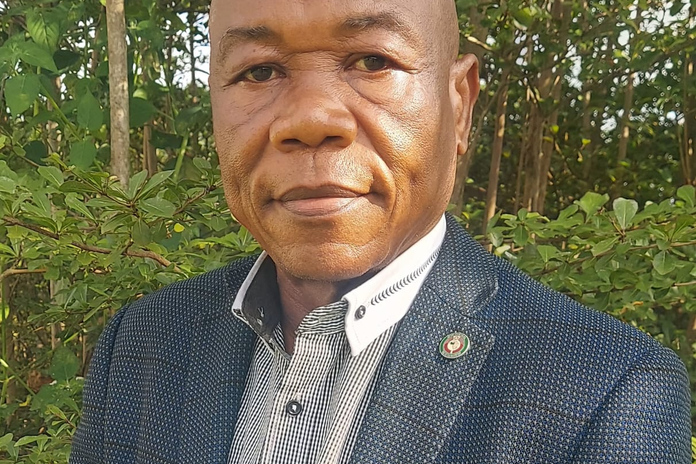
By Clarence R. Pearson, Sr., PhD, contributing writer
The framers of Liberia’s modern constitutional system were not engaged in an exercise of racial hostility. They were confronting a fragile nation struggling to preserve sovereignty, identity, and territorial integrity in a turbulent geopolitical environment. When examined through that lens, the land provisions found in the Constitution of Liberia, particularly Article 27(b) and Article 22(a), reflect a longstanding tradition of national protectionism rather than racial discrimination.
Understanding this distinction is essential, especially in a country where land remains both the foundation of livelihood and the source of some of the most persistent conflicts in society.
Historical Context and Constitutional Intent
Liberia occupies a unique position in African political history. Established in the nineteenth century and later formalized under the Constitution of Liberia, the republic emerged during an era when colonial expansion threatened much of the continent. The framers of Liberia’s constitutional order were acutely aware of this environment. Their overriding concern was not merely governance but survival.
Land represented sovereignty in its most tangible form. Across Africa and elsewhere, colonial powers often used land concessions and economic penetration as instruments of political control. Liberia’s constitutional architects therefore adopted provisions designed to prevent external domination of the nation’s most fundamental resource. Restricting land ownership to citizens was intended as a safeguard against the gradual erosion of national autonomy.
That intention is clearly reflected in Article 22(a) of the Constitution of Liberia, which states that “every person shall have the right to own property alone as well as in association with others; provided that only Liberian citizens shall have the right to own real property within the Republic.”
Complementing this provision is Article 27(b), which provides that “in order to preserve, foster and maintain the positive Liberian culture, values and character, only persons who are Negroes or of Negro descent shall qualify by birth or by naturalization to be citizens of Liberia.”
These provisions must be read together to understand the constitutional architecture. Citizenship defines the national community, while land ownership remains reserved to that community as a matter of sovereign protection.
Protectionism in Comparative Perspective
Protectionist policies are not unique to Liberia. Many states employ similar mechanisms to safeguard sovereignty or strategic assets. The historical foreign policy framework known as the Monroe Doctrine, articulated in the nineteenth century, asserted the Western Hemisphere as a sphere where external powers should not extend political control. Though controversial in its application, the doctrine represented a form of geopolitical protectionism aimed at preserving regional autonomy.
Across the world, governments adopt legal frameworks that restrict foreign control over land, natural resources, or key industries. Such measures reflect a widely recognized principle of international political economy: that strategic national assets require protection from excessive external dominance.
Liberia’s constitutional clause should therefore be understood within this broader global tradition. The restriction does not prohibit foreigners from investing in Liberia or participating in economic activity. Instead, it preserves ultimate ownership of land—the country’s most critical resource—for citizens of the republic.
The Real Drivers of Underdevelopment
To attribute Liberia’s development challenges to constitutional racism is to overlook far more powerful forces shaping the nation’s trajectory. Scholars examining Liberia’s political economy consistently identify governance failures, corruption, and weak institutional capacity as the principal obstacles to national progress.
Liberia’s modern history includes prolonged political instability culminating in a devastating civil conflict that profoundly disrupted the state and the economy. The consequences of that conflict remain visible in fragile infrastructure, uneven public services, and limited economic opportunities for large segments of the population.
Blaming constitutional provisions for these systemic problems risks creating a convenient scapegoat. It shifts attention away from the accountability required to address corruption, strengthen institutions, and implement effective development policies.
The debate over land ownership also intersects with Liberia’s longstanding land tenure challenges. Even among citizens, land disputes are widespread. Overlapping claims, historical grievances, and weak administrative systems have generated conflicts that affect rural communities and urban settlements alike. The establishment of the Liberia Land Authority and the passage of the Land Rights Act represent efforts to modernize land governance and reduce disputes.
These realities demonstrate that Liberia’s land question is fundamentally about governance and management rather than racial exclusion.
Poverty and the Land Question
For many Liberians, land is not merely a legal concept but the foundation of survival. In rural areas it sustains agriculture and community life. In urban areas it determines access to housing and economic opportunity. When land governance systems malfunction, the consequences are immediate and severe.
Large segments of Liberia’s population continue to live in conditions of profound economic hardship. Poverty intensifies land disputes as families compete for limited resources and security of tenure. Addressing these realities requires reforms that improve land administration, strengthen dispute resolution mechanisms, and promote equitable economic opportunities.
None of these challenges originate from constitutional racism. They arise from structural economic constraints and governance deficits that demand sustained policy attention.
Lessons from Southern Africa
A useful comparative perspective emerges from developments in Southern Africa, where land ownership remains one of the most sensitive political issues. In South Africa, debates over land redistribution reflect the enduring legacy of apartheid-era dispossession. Policies aimed at correcting historical injustice have sparked complex national conversations about property rights, economic equity, and constitutional protection.
Similarly, in Zimbabwe, controversial land reforms transformed ownership patterns but also triggered profound economic and political consequences. These experiences illustrate how land policy inevitably intersects with questions of sovereignty, justice, and national identity.
Liberia’s situation differs historically, yet the principle remains parallel. Nations often adopt protective legal frameworks to safeguard land and resources while simultaneously seeking policies that promote fairness and development.
The Southern African experience demonstrates that politicizing land ownership without addressing deeper governance and economic challenges can produce instability rather than progress.
Reframing the National Conversation
Liberia stands at an important crossroads. As debates about constitutional reform and national development intensify, public discourse must remain grounded in historical understanding and constitutional clarity.
The framers of Liberia’s constitutional order sought to protect a young and vulnerable republic from external domination. Their decision to restrict land ownership to citizens under Article 22(a) and to define citizenship in Article 27(b) reflected a strategy of national preservation, not racial hostility.
Recognizing this historical intent does not mean ignoring the socioeconomic challenges facing many Liberians today. Poverty, land disputes, and uneven development remain urgent national concerns that require serious policy responses.
Liberia’s future will not be secured by mischaracterizing constitutional provisions but by confronting the deeper issues that have hindered national progress for decades. Strengthening governance, combating corruption, modernizing land administration, and expanding economic opportunity offer far more meaningful pathways to development.
The distinction between racism and protectionism matters because it clarifies where responsibility truly lies. If Liberia is to move forward, it must do so with honesty about its constitutional foundations and determination to address the real challenges confronting its people.
Support Independent Journalism
Your support helps FrontPage Africa continue delivering independent, credible, and impactful journalism. Every contribution strengthens our ability to investigate, inform, and hold power accountable while keeping quality journalism accessible to our readers.
Support our journalism or subscribe to receive the latest FrontPage Africa stories and updates.