Liberia’s transition from civil conflict to four consecutive competitive elections and two peaceful transfers of presidential power was highlighted as a significant success story in Africa’s democratic journey during the second quarterly convening of the FixPolitics Africa Conference.
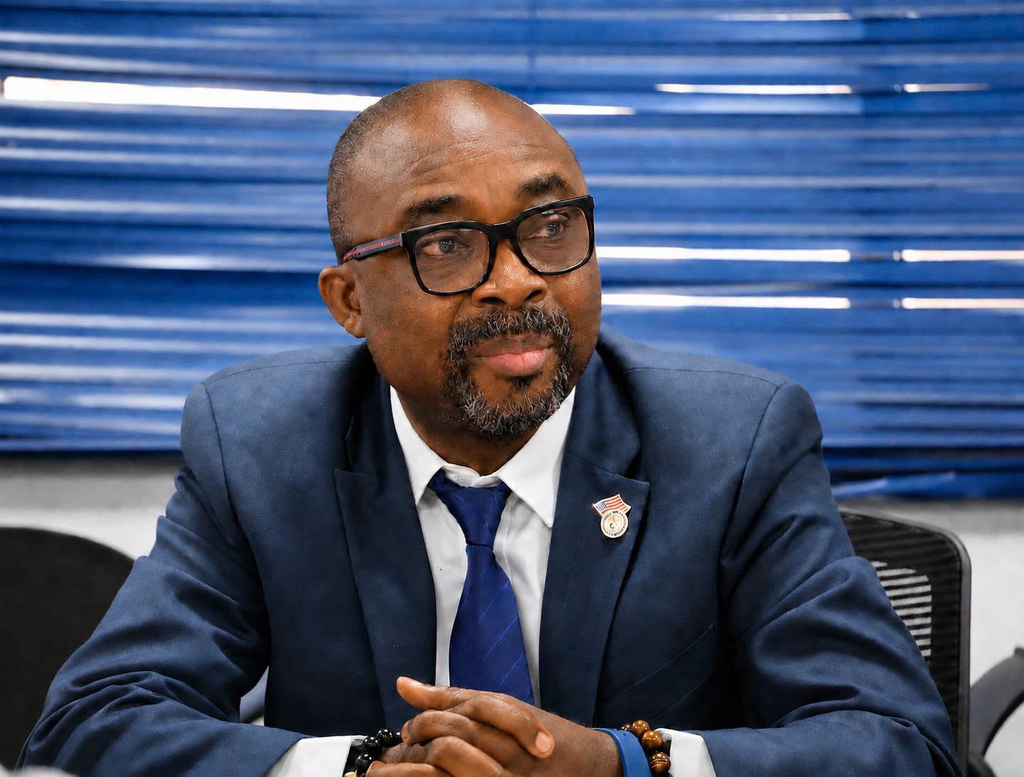
Speaking under the theme “Credible Elections in Africa: Lessons from Cape Verde and Liberia,” Eddie D. Jarwolo, Executive Director of Naymote Partners for Democratic Development, presented Liberia’s electoral experience as an example of how repeated democratic practice can gradually strengthen constitutional governance and public confidence. Since the end of its civil conflict, Liberia has held four post-conflict general elections in 2005, 2011, 2017, and 2023. These elections have helped normalize the ballot as the legitimate route to political authority and demonstrated that political power can change through constitutional processes rather than violence.
Liberia’s democratic journey has produced important milestones. Ellen Johnson Sirleaf was elected in 2005 as Africa’s first elected woman president and re-elected in 2011. In 2017, George M. Weah was elected in a process that resulted in Liberia’s first transfer between elected presidents in more than 70 years. In 2023, Joseph N. Boakai defeated the incumbent president, producing a second consecutive peaceful democratic transfer.
Jarwolo emphasized that these repeated elections have strengthened democratic consolidation by creating a pattern in which citizens vote, institutions administer political competition, disputes are addressed through legal mechanisms, electoral outcomes are respected, and power changes hands peacefully. “Liberia’s greatest democratic success is not simply that elections have been held, but that repeated elections have increasingly established peaceful political competition and constitutional transfer of power as the accepted democratic norm,” Jarwolo said.
The 2023 elections offered one of the strongest demonstrations of Liberia’s democratic resilience and consolidation. The elections involved 2,471,617 registered voters across 2,080 voting precincts and 5,890 polling places, within a competitive political environment of 46 registered political parties. Women constituted 50.06 percent of registered voters, underscoring their significant role in Liberia’s electoral democracy.
First-round voter turnout reached an impressive 78.86 percent, reflecting strong citizen participation and commitment to democratic choice.
These indicators, combined with competitive elections and the peaceful transfer of power, demonstrate how sustained citizen participation and respect for electoral outcomes continue to strengthen Liberia’s democratic culture and constitutional governance.
The presidential runoff was decided by only 20,567 valid votes. Amb. Joseph N. Boakai received 814,481 votes, or 50.64 percent, while incumbent President George M. Weah received 793,914 votes, or 49.36 percent. Despite the extremely close result, President Weah conceded after progressive results covering 99.8 percent of polling places, before the final official declaration by Liberia’s National Elections Commission (NEC).
His timely concession reduced uncertainty, eased political tension, and reinforced Liberia’s constitutional transfer of power.
This peaceful outcome was particularly significant because the same two political leaders had competed against each other in the 2017 runoff. In 2017, Weah won decisively. In 2023, voters reversed the result and elected Boakai. Both outcomes were accepted.
This demonstrated that Liberia’s electoral system could produce genuine alternative in power through the ballot.
“The real strength of democracy is revealed when elections are close, political power is at stake, and leaders and institutions still respect the rules. Liberia passed an important democratic test in 2023,” Jarwolo emphasized.
Jarwolo stressed that Liberia’s electoral progress is a product of shared democratic ownership, built through the collective actions of citizens, institutions, political actors, civil society, and the media. Citizens demonstrated strong commitment to peaceful political participation, while election administrators managed nationwide polling and strengthened transparency through electoral safeguards and tallying processes. Political actors largely relied on constitutional and legal mechanisms, and civil society provided independent scrutiny through domestic election observation and public reporting.
The media and fact-checking initiatives further strengthened access to credible electoral information. Together, these efforts reinforced public confidence, strengthened the legitimacy of electoral outcomes, and demonstrated that credible elections are a shared national responsibility rather than the achievement of any single institution.
Jarwolo also recognized the contributions of the National Elections Commission, civil society, domestic observer groups, the media, political parties, ECOWAS, the African Union, the European Union, UNDP, and other international partners that have supported Liberia’s democratic progress over successive electoral cycles.
Another important success story highlighted during the presentation was the contribution of political education and youth leadership development to Liberia’s democratic consolidation.
Through the Young Political Leadership School Africa, political-party youth training, civic education, public-interest media, citizen engagement, and democratic oversight, Naymote has supported young people to move beyond being campaign mobilizers to becoming informed leaders, observers, advocates, and democratic decision-makers.
Jarwolo noted that strengthening democracy requires more than effective electoral institutions. It also requires citizens who understand democratic values, demand accountability, engage in public institutions, and contribute constructively to political processes. “Institutions alone cannot sustain democracy. Political education and civic participation help build the democratic culture that allows institutions to work and enables citizens to protect democratic gains,” he said. While Liberia’s achievements demonstrate important progress, Jarwolo cautioned that democratic consolidation remains unfinished.
Challenges include delayed electoral reforms, outdated constituency boundaries, late financing for the National Elections Commission, weak campaign-finance enforcement, misuse of state resources, barriers affecting rural voters and persons with disabilities, misinformation, and limited political representation for women and young people.
He, therefore called for early action ahead of the 2029 elections, including completing legal reforms, updating constituency boundaries, ensuring predictable financing for the NEC, strengthening political-finance oversight, promoting inclusion, and investing continuously in civic education and information integrity.
Jarwolo concluded that Liberia’s experience offers an important lesson for Africa: credible elections are built over time, not only on election day. “Liberia’s democratic progress shows that repeated credible elections, peaceful transfers of power, responsible political leadership, informed citizens, and strong institutions can gradually transform a post-conflict society into a more resilient democracy. But the 2029 test begins now.”
Eddie D. Jarwolo is a governance, leadership, and electoral expert with over 20 years of professional experience. He holds a master’s degree in public Sector Management and several international professional certifications. He is a trained ECOWAS Long-Term Election Observer and a certified BRIDGE facilitator, with extensive experience in democratic governance, elections, civic engagement, and leadership development.
Support Independent Journalism
Your support helps FrontPage Africa continue delivering independent, credible, and impactful journalism. Every contribution strengthens our ability to investigate, inform, and hold power accountable while keeping quality journalism accessible to our readers.
Support our journalism or subscribe to receive the latest FrontPage Africa stories and updates.