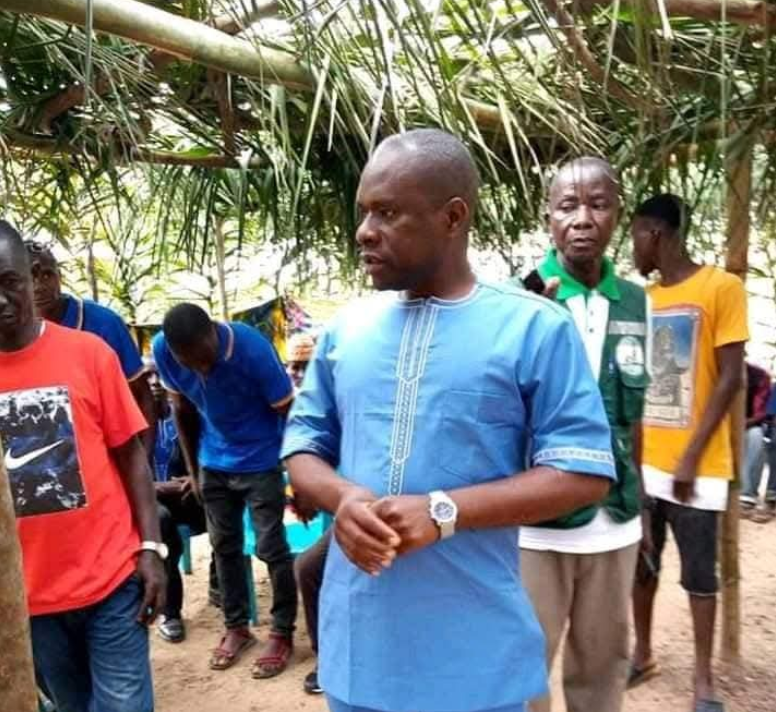
WOLOTA CLAN — Every political dynasty has its sin — its original sin. In Bong County’s Electoral District One, that sin was committed in 2023, when a Wolota Clan son named William Kotee looked past his own kinsman, then-Representative Albert Junior Hills, and threw his weight behind an outsider named Prince Koinah.
It worked. Koinah won. Hills lost. And Wolota, a clan that had held the representative’s seat and prized that possession as a marker of collective standing, watched it slip away — pushed out, many believe, by one of its own.
Six years is a long time in most contexts. In District One politics, it has proven barely enough time for the wound to scar over. As 2029 approaches, that old betrayal is resurfacing with a vengeance, threatening to complicate not one but three political careers simultaneously, and raising a question that has come to define the district’s coming election cycle whether can a man who helped dethrone his own clan’s representative now credibly ask that same clan to make him representative instead?
District One is not governed by conventional party politics alone. It runs, as it has for generations, on clan mathematics — eight distinct clans, each jockeying for the representative’s seat, each expecting its moment of ascendancy to be honored by the others when it comes.
Wolota’s moment came through Hills. When he lost it in 2023, the loss stung in a particular way, because it wasn’t simply that Wolota lost to a stronger opponent. It was that one of Wolota’s rising political figures, Kotee, chose to campaign for the opponent — going into his own clan’s communities and urging people to abandon their sitting representative in favor of Koinah.
FrontPage Africa interviews with residents suggest this fact has never fully settled. It sits, instead, as an open account — a debt that many in Wolota believe Kotee has yet to repay, and one that has only grown more relevant now that Kotee has declared his own ambitions for the same seat he helped hand away.
The Uncomfortable Arithmetic of Ambition
Here is the paradox at the center of Kotee’s political rise. The very skills that make him a credible candidate — organizational reach, Unity Party standing, experience managing Boakai’s 2023 presidential campaign in Bong County — are inseparable from the history that now dogs him. He built his political capital, in part, by spending Wolota’s seat on someone else’s behalf.
Residents are not shy about naming the contradiction. Voices from within the clan describe a sense of whiplash that the man who once told them to abandon their representative for Koinah is now the same man asking them to abandon Koinah for him. If Koinah was the right choice then, they ask, what has changed to make Kotee the right choice now? And if Kotee was wrong to campaign against his own clan’s interest in 2023, why should Wolota trust his judgment in 2029?
These aren’t rhetorical questions being asked in the abstract. They are, according to residents, the actual terms on which Kotee’s candidacy is being evaluated — a test of consistency and loyalty that he did not have to face as an outsider might, precisely because he is being measured against his own clan’s memory of him.
Hills’ Return as an Act of Reckoning
Into this unresolved tension steps Albert Junior Hills — not merely as a nostalgic name from the district’s political past, but as a man whose potential return appears driven substantially by unfinished business with Kotee specifically.
Those close to Hills describe his position in stark terms that he holds Kotee responsible for his 2023 defeat, and he has not moved past it. Should he return to the ballot, his priority is reportedly less about reclaiming the office for its own sake and more about ensuring Kotee does not obtain it — to the point where he would apparently accept the seat passing to an entirely different clan rather than see it land in Kotee’s hands.
This is a notable departure from ordinary political comebacks. Most former officeholders seeking to return frame their campaigns around restoration — a chance to finish unfinished work, to reclaim lost ground. Hills’ framing, as described by those familiar with his thinking, centers instead on prevention – stopping a specific rival, even at the cost of his own clan’s chances.
It is a posture that transforms the 2029 race from a conventional electoral contest into something closer to a settling of scores — one where Wolota’s own internal politics may end up mattering more than its competition with the district’s other clans.
A Clan at War with Itself
The practical consequence of Hills’ potential entry is straightforward and troubling for Wolota’s collective interests that a divided clan is a weakened clan. Should both Hills and Kotee mobilize meaningful support within Wolota, the clan’s vote — historically a source of leverage in districtwide politics — would fragment. Neither man would hold a clear mandate. Instead, Wolota’s political energy would be spent on an internal contest, leaving whatever remains to be split further once the districtwide field is considered.
This matters enormously in a district where no single clan has ever won an election alone. Wolota’s strength, historically, has come from its ability to consolidate behind a single standard-bearer and then negotiate or compete for votes beyond its borders. A split Wolota is a diminished Wolota — not just within the clan, but in the wider contest for the seat itself.
Some political observers argue this dynamic serves nobody’s interest except, perhaps, the current incumbent’s.
Koinah’s Quiet Advantage
Koinah, the man at the center of the original 2023 upset, occupies an unusual position as this drama unfolds around him. He is, technically, the target of Kotee’s ambition — the incumbent Kotee now seeks to unseat, the very man Kotee helped install. And yet Koinah may stand to benefit most from the Hills-Kotee rivalry, simply by being an outside observer to a fight consuming his two most obvious challengers.
Koinah’s own coalition is not without complexity. As an affiliate — rather than full card-carrying member — of the ruling Unity Party, he occupies a slightly different position within the same party structure as Kotee, a full party member. That shared affiliation, uneasily, means the Unity Party could find two of its own associated figures competing head-to-head for the same seat, a scenario that may eventually force the party to referee a fight it would rather avoid.
Koinah’s support base, meanwhile, is not solely a legacy of Kotee’s 2023 campaigning on his behalf. He had reportedly built relationships in Wolota independent of that endorsement, and has since reinforced his standing in Waytuah — the district’s largest clan — through tuition assistance programs that supporters credit with deepening his local goodwill.
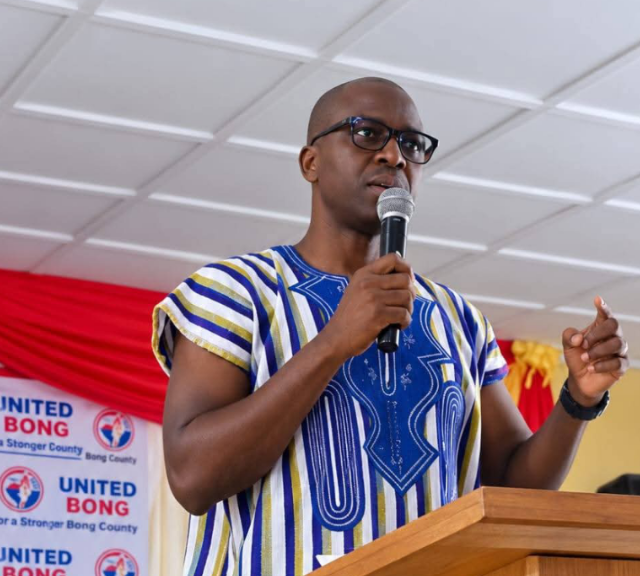
The result is a Koinah who does not need Wolota’s united backing to survive — and who may, in fact, be best served by watching Wolota split between Hills and Kotee while he consolidates support elsewhere.
The Clans Watching From the Sidelines
While Wolota’s internal drama dominates the current conversation, District One’s other clans are not standing still, and their weight in any final outcome cannot be overstated.
Waytuah, the district’s most populous clan, has its own perennial contender in Wamah Kuteh, a figure who has won his home clan in three consecutive elections and finished as runner-up districtwide in both 2017 and 2023. His consistency — winning locally but falling short districtwide — illustrates precisely the challenge every District One candidate faces that home-clan dominance does not automatically translate into a district-wide mandate.
Boisein, the second most populous clan and home to the David Dean’s Town area where the MNG Gold concession operates, represents another substantial bloc whose alignment could prove decisive. Since former Representative Tokpah Mulbah’s departure after 2017, the contest among Wolota, Waytuah, Boisein, and the district’s remaining communities has only grown more competitive.
Names like Dennis Garsinii of Tokpahblee continue to circulate in wider conversations about the field, underscoring that the race, whatever drama currently surrounds Wolota, remains far from settled or fully populated.
What 2029 Will Really Test
Strip away the personalities, and the 2029 District One race becomes a test of a single proposition of whether political loyalty, once broken, can be repaired by ambition alone — and whether grievance, however justified, can be converted into durable electoral power.
Kotee must find a way to answer for 2023 without simply asking Wolota to forget it. Hills must decide whether his return is genuinely about restoring his own political standing or primarily about denying it to someone else — and whether voters will reward a campaign built substantially around opposition to a rival. Koinah must determine whether his layered, cross-clan coalition can hold together while his two most prominent challengers are busy fighting each other.
And Wolota itself faces perhaps the most consequential choice of all: whether to allow an old wound to determine its political future, or to find a way past it before the clan’s fractured loyalties cost it influence it can ill afford to lose.
Whatever the outcome, one thing seems certain — the road to 2029 in District One runs directly through the unresolved business of 2023, and no candidate, however capable, can simply outrun the past.
Support Independent Journalism
Your support helps FrontPage Africa continue delivering independent, credible, and impactful journalism. Every contribution strengthens our ability to investigate, inform, and hold power accountable while keeping quality journalism accessible to our readers.
Support our journalism or subscribe to receive the latest FrontPage Africa stories and updates.