Summary:
- The family of Ophelia Melway, a trafficking victim whose death helped expose Liberia’s largest human trafficking case, wants the investigation into her death fast-tracked.
- Prosecutors are investigating whether her death warrants homicide charges.
- Melway’s family, survivors and anti-trafficking advocates are demanding a swift and transparent investigation.
By Anthony Stephens, senior justice correspondent with New Narratives
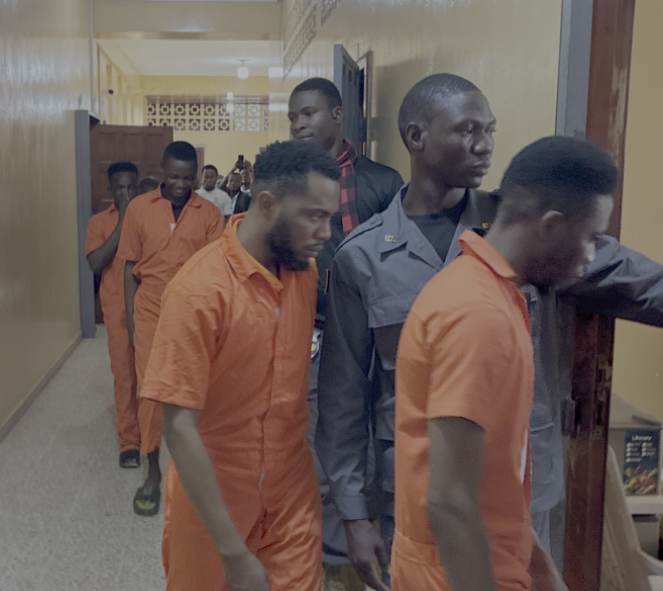
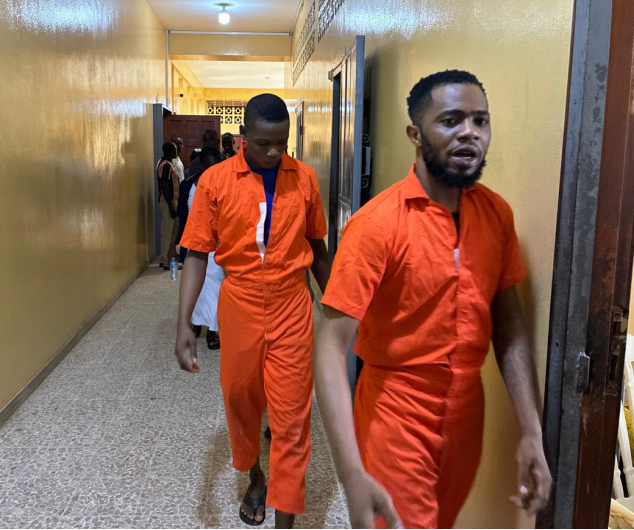
It was Liberia’s biggest human trafficking trial to date. At the end of 22 days of hearings in June and July, a jury took just 23 minutes to decide eleven defendants were guilty of a range of crimes against 57 victims who were trafficked, starved, forced to work and deceived into handing over more than US$100,000 in total in the belief they would travel to jobs in Canada.
Eleven traffickers are now serving sentences as long as 50 years and have been ordered to pay US$131,500 in restitution and fines. (15 defendants have yet to face trial because they have not been apprehended.)
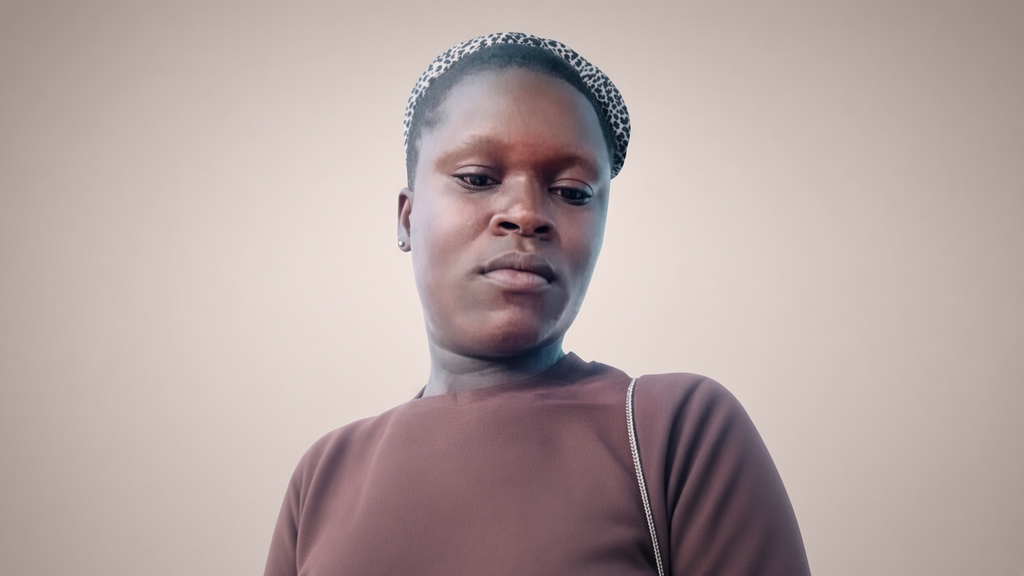
But victims say there is one major crime for which no one has faced justice: the death of Ophelia Melway, one of the victims, who fell seriously ill and was finally released by the traffickers only to die soon after.
Melway’s family has been joined by survivors of the trafficking ring who say determining whether anyone bears criminal responsibility for Melway’s death is essential to delivering full justice.
“I just want transparency,” said Melway’s younger brother, who FrontPage Africa/New Narratives is identifying only as M. to protect him from retaliation.
Anti-trafficking advocates have also called on the government to act.
“With that kind of gravity where somebody died, I don’t think the case can die, because if it dies, it puts the government in a very bad situation because that means they are compromising justice,” said Adolphus Satiah, head of the anti-human trafficking secretariat at the Ministry of Labor during the Weah administration. “When somebody dies, it’s not an easy case for anybody to play with, not even the government people.”
Melway’s death did not appear on the charge sheet against the 12 original defendants in the case drawn up by Enoch Dunbar, the head of the Anti-Human Trafficking Unit at the Liberia National Police, in October 2025.
That charge sheet – which had substantially downgraded most of the charges and dropped them against three of the defendants – was revised in April by Sumo C. Kutu Akoi, the senior human trafficking prosecutor. This came after FrontPage Africa/New Narratives revealed allegations by numerous victims that Bestman Juah, now head of public defenders, had offered a bribe on behalf of the traffickers to a prosecutor to downgrade the charges.
Victims allege Dunbar accepted a bribe to downgrade the charges. The case drew international attention and became a national test of Liberia’s willingness to prosecute organized trafficking networks. Previously the state had secured just six human trafficking convictions since 2020 and was on the US State Department’s Trafficking in Persons watchlist, risking aid cuts. When the charges were reinstated and the case went to trial there was still no charge related to Melway’s death even though numerous victims had detailed it in their statements to police.
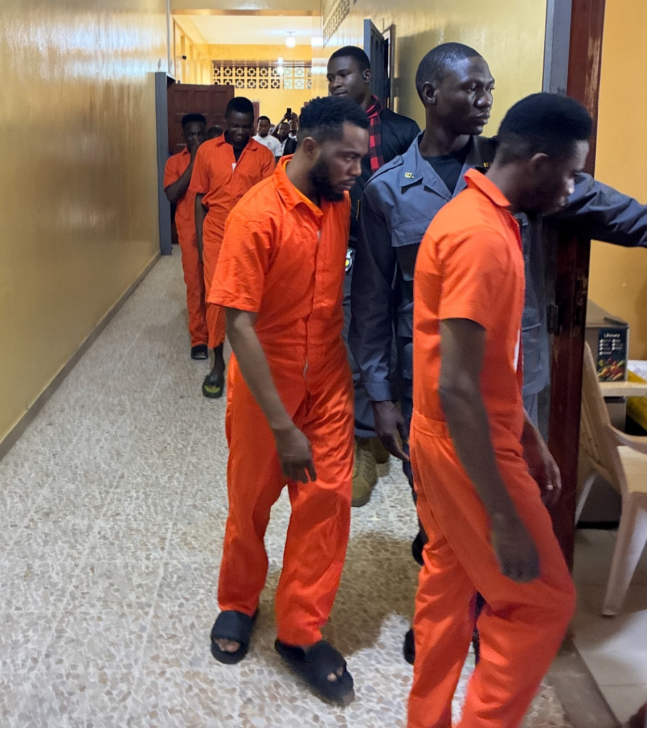
At the start of the trial, Akoi told FrontPage Africa/New Narratives that the prosecution had opened an investigation into Melway’s death. He has not responded to questions about the investigation since.
Two family members of Melway—her younger brother and nephew who were also recruited from Nimba by the trafficking ring – said Melway was healthy when she was recruited in early 2025.
“She was not sick. She was well moving,” said M. speaking in Liberian English. “She was hustling on own her. She had her home.”
The jury found the traffickers forced victims to make repeated recruitment calls to family and friends lying that they were in Canada. M. said traffickers forced Melway to recruit him, and he in turn was pressured to recruit their younger sister. Melway resisted. Victims who failed to recruit new members were routinely punished. M. said food was withheld from his sister because she would not recruit more people.
“When I get there, she was not eating,” said M. “From morning all the way up to the evening, you will not eat because they will still press her to call somebody.”
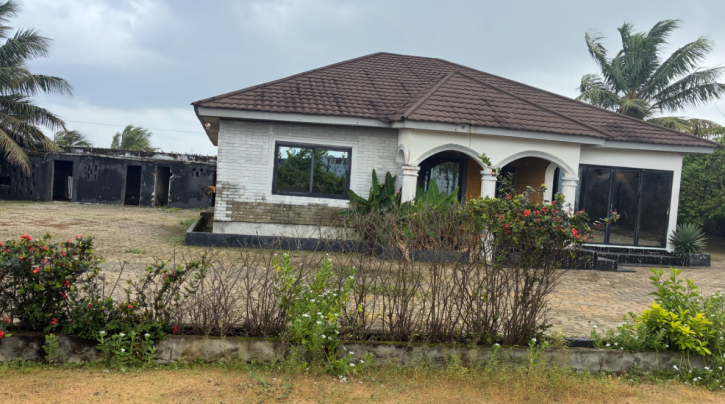
Melway’s deteriorating condition and death came up repeatedly during the trial, with nearly every victim mentioning it in their testimony. But still it was not proposed as a charge. Akoi did not answer questions as to why.
Another survivor, L., testified that Melway became progressively weaker, and traffickers ignored repeated warnings that Melway’s condition was worsening.
“She was sitting down the whole day, tired,” said L. “In the night when the people finished packing their chairs, we used to [sit] on the cool ground. She used to tell them she not well, but they never believe her.”
L. said that as Melway’s appearance changed dramatically, she was subjected to the same punishments as the other victims, including being forced to hold rocks in her outstretched hands, do squats until she collapsed and drink dirty water.
Although he did not testify during the trial, Melway’s nephew, identified as A., said in an interview that he watched helplessly as traffickers tried to force his aunt to continue recruiting others despite her deteriorating condition.
“I was feeling discouraged because seeing your family member in that kind of condition, I felt bad,” A. said. After learning of her death, he said he begged to leave.
“The people said, ‘No way. When they put me out, I was going to expose their secret.’”
Another relative of Melway, who testified during the trial and whom FrontPage Africa/New Narratives is identifying only as J., said Daniel Davis, one of the convicted traffickers, told victims he had given Melway US$20 to travel home to Nimba County for treatment. J. said Davis’ girlfriend, Shelly Suah, another convicted trafficker, later told them, “Oh, Ophelia na make it.”
A male victim identified only as M. testified that “she was killed.” He said Melway became seriously ill before traffickers removed her from the compound for medical treatment.
Z. said Melway was sent to the family who later took her to Ganta United Methodist Hospital.
There doctors diagnosed her with dangerously high blood pressure M. said. After three days she died.
Her death, on top of the thousands the family gave to the traffickers, had dealt a devastating blow to the family. M. said Melway was the primary provider for the family, selling rice to support her parents and paying his school fees. Melway also left behind her partner, and their 17-year-old daughter.
“I was going to school. But since she passed away, I don’t have different sponsor,” said M. “That thing, it’s paining me. Because when I think about the things that we did to do together, when I am jammed, the things she was doing, the sad moment will come over me. I am feeling discouraged.”
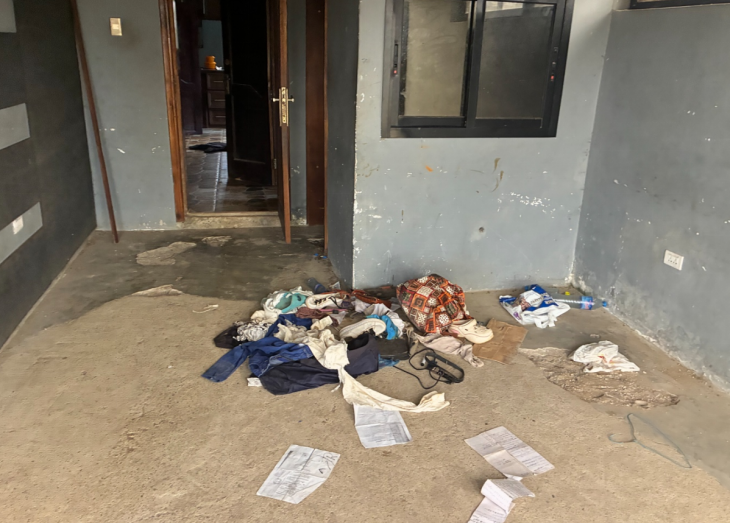
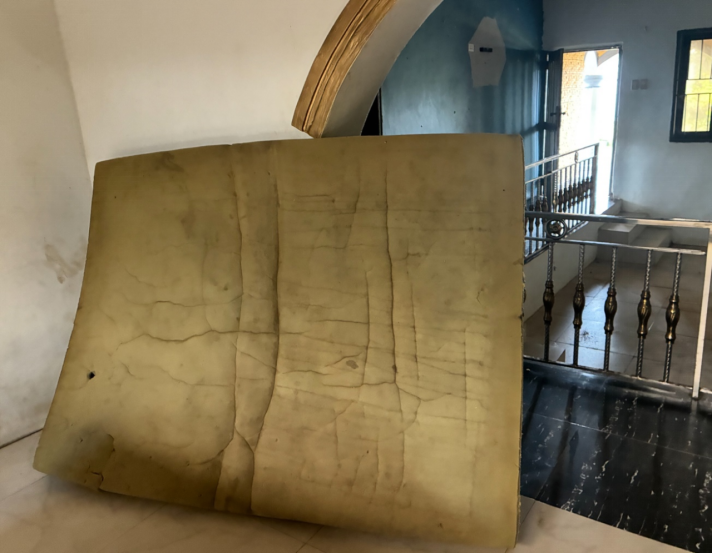
When news of Melway’s death reached the compound, victims testified, it sparked desperation and fear. Victims believed she had been killed and feared that the traffickers planned to kill them one by one. The victims made loud banging and screaming noises and drew the attention of security guards at the neighboring home of Vice President Jeremiah Koung who freed them. From there the victims made their way to the Paynesville magistrates’ court where they reported the crimes.
Under Liberian law, the Ministry of Justice, which supervises the police, has the authority to initiate criminal investigations without the police. Police and prosecutors will determine whether the evidence supports charges of murder, negligent homicide or manslaughter.
Experts said the Melway case was another test of the government’s willingness to hold traffickers to account. Liberia has remained on the U.S. State Department’s trafficking watch list for two consecutive years and risks cuts to aid if it remains there again on this year’s report which is due to be released any day.
Zokerseh B. Saye, executive director of the Liberia Anti-Trafficking Scam and Victim Support Initiative, which helps expose human trafficking and scam operations and reports perpetrators to the government, said investigators should build on the evidence already presented during the trial.
“It’s clear and it’s because of the act that caused that woman to die,” he said. “We want the government to be fast with the result that the people can see the impact of human trafficking.”
This story was a collaboration with New Narratives as part of the Investigating Liberia project. Funding was provided by the Swedish International Cooperation Development Agency. The funder had no say in the story’s content.
Support Independent Journalism
Your support helps FrontPage Africa continue delivering independent, credible, and impactful journalism. Every contribution strengthens our ability to investigate, inform, and hold power accountable while keeping quality journalism accessible to our readers.
Support our journalism or subscribe to receive the latest FrontPage Africa stories and updates.