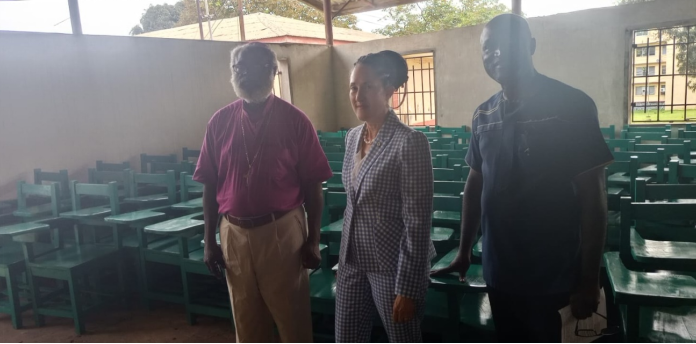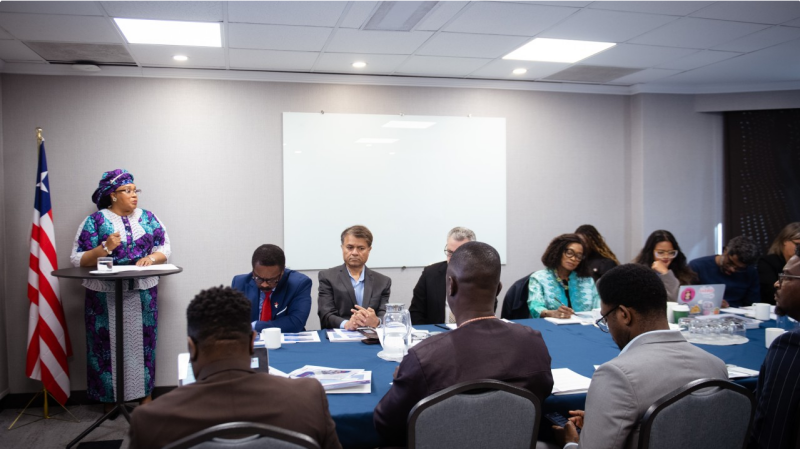
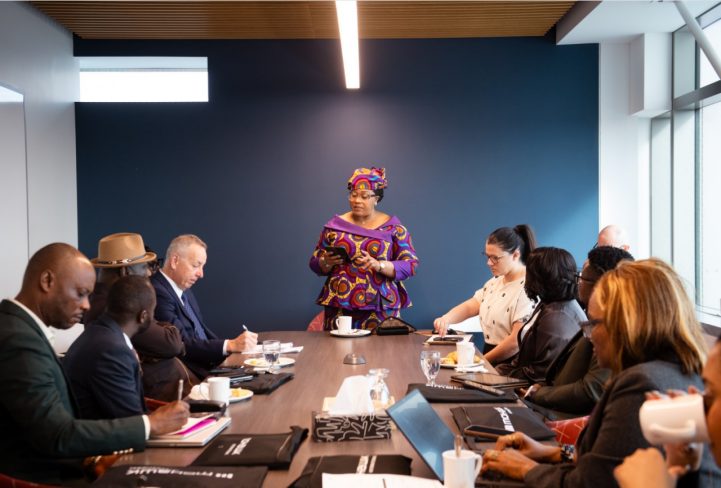
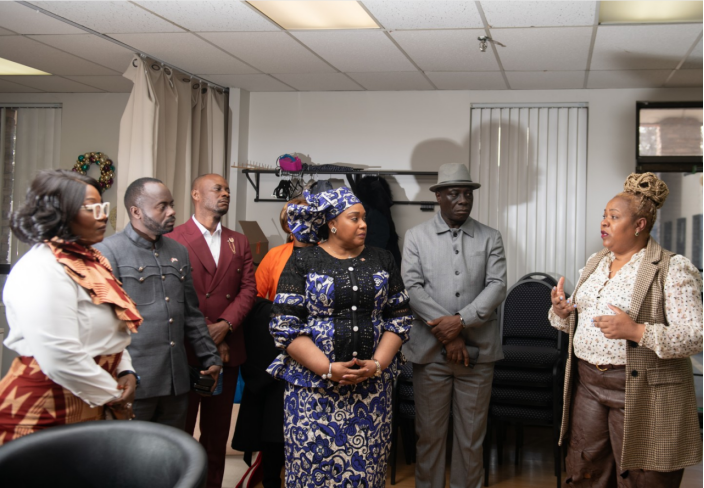
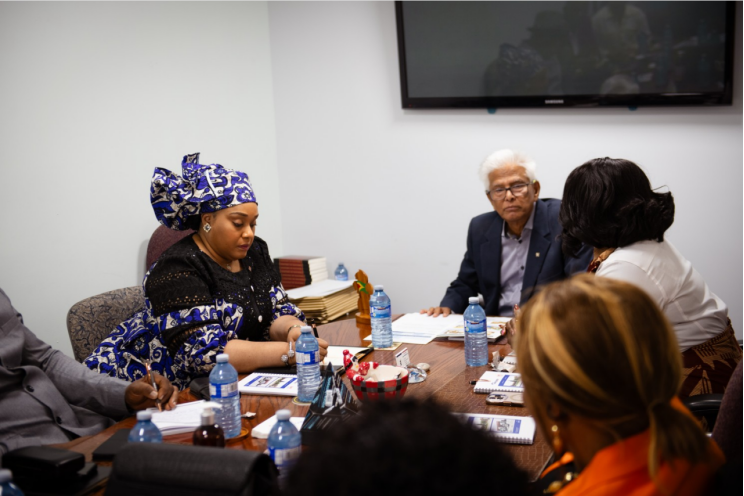
At the Liberia–Canada Education Investment and Partnership Roundtable in Toronto organised by the OFFICE-Liberia Trade and Investment Office in Canada, I invited the institutions and individuals gathered in the room to find themselves in Liberiaʼs education story.
Dr. Jarso Maley Jallah, contributing writer
It was a deliberate invitation.
We had come to discuss the future of an education system serving more than 1.3 million learners, the reforms already underway, and the contributions that universities, colleges, foundations, businesses, and members of the diaspora could make.
Yet as I reflected on our engagements in Canada, I found myself returning to a question that extends far beyond Liberia:
When African countries seek international investment and partnerships, how do we ensure that the relationships we build strengthen our capacity to determine and sustain our own development?
The question is important to me because resources, however necessary, do not settle the deeper issues of ownership, institutional capability, and accountability. A country may attract considerable investment without fundamentally changing the conditions that made that investment necessary. Similarly, a partnership may deliver everything it promised while leaving the receiving institution unable to sustain or build upon those achievements.
I believe we must take these possibilities seriously. They reveal three closely connected questions that should guide our engagement with prospective partners:
- Who defines the problem or need,
- Who assumes responsibility for addressing it, and
- What remains when the partnership has fulfilled its immediate purpose?
The first question is particularly important in the African context, where the way our challenges are represented often influences the solutions that are proposed.
Chimamanda Ngozi Adichieʼs reflections on The Danger of a Single Story offer a critical way of thinking about this. Her argument shows us that the stories told about people and places are inseparable from questions of power.
A narrative becomes particularly consequential when it is treated as the definitive account of another personʼs reality.
I see a parallel in how African education systems are frequently presented within international development conversations. The statistics are all too familiar: children out of school, inadequate classrooms, teachers without sufficient professional preparation, and low learning outcomes.
These are serious challenges, and governments have a responsibility to acknowledge them. In Liberia, our emphasis on foundational learning and adult literacy reflects our recognition of persistent learning gaps and our commitment to addressing them through deliberate policy choices and targeted investments.
But the statistics do not tell the whole story.
They reveal educational gaps without necessarily explaining the institutional conditions that produced them. They tell us where learners are struggling but may say little about the teachers working under difficult circumstances, the communities sustaining education despite limited resources, or the public investments already being made.
If we present only the deficits, we risk constructing a narrative in which Africa appears primarily as a place of need and the external partner becomes the principal agent of change. If we present only our achievements, however, we risk obscuring the very inequalities and institutional weaknesses that demand our attention.
Neither approach provides a sufficient basis for effective investment. Our responsibility is to present a more complete account: one that is honest about our challenges, clear about our national ambitions, and equally transparent about the capabilities and resources we bring to the partnership.
This is why the investment case we presented in Canada began with Liberiaʼs development agenda, our education priorities, existing commitments, and the evidence guiding our reforms. We wanted prospective partners to understand the direction Liberia has already established and identify where their contributions could strengthen it.But the power to define the problem is only meaningful if it is accompanied by the capacity and responsibility to shape the response.
Here, I find the work of Zambian economist Dambisa Moyo particularly relevant. In Dead Aid, Moyo challenges the assumption that sustained external assistance necessarily produces sustained development. Her critique raises difficult questions about dependency, political accountability, and the incentives created when governments rely heavily on resources controlled by others.
Her conclusions have generated considerable debate, and rightly so. African countries have benefited from development partnerships that have expanded access to education, strengthened health systems, and supported critical infrastructure. Liberiaʼs own experience demonstrates the
importance of international cooperation, particularly given the scale of our educational needs and the constraints on public resources. I would therefore resist treating the debate as a simple choice between accepting external support and rejecting it.
The more consequential question is what our financing relationships enable governments to become.
Do they strengthen our ability to plan, coordinate, finance, and deliver public services? Do they develop professional and institutional capabilities within the country? Do they reinforce accountability to the citizens whose education and futures are at stake? Or do they create arrangements in which essential functions remain dependent on external expertise, parallel systems, and financing that may not be available indefinitely?
These are uncomfortable questions because they place responsibility on both sides of a partnership. Development partners must examine whether their funding arrangements strengthen the institutions they intend to support. Governments must confront weaknesses in their own planning, coordination, public financing, and implementation.
We cannot meaningfully demand ownership while avoiding the obligations that ownership entails. In Liberia, this means taking responsibility for the education system long after individual projects conclude. It means understanding what is already financed before inviting new investment, ensuring that different programs reinforce one another, and making difficult decisions about the recurrent costs of the reforms we introduce.
It also means accepting that a signed agreement, a completed project, or an impressive financing announcement cannot substitute for institutional progress.
This brings me to a further question:
What kinds of capabilities should education investment and partnership ultimately develop?
More than half a century ago, Julius Nyerere, in Education for Self-Reliance, challenged African societies to examine the purposes their education systems were designed to serve. He was concerned with the relationship between education, national development, social responsibility, and the realities of the societies in which learners would live and work. His thinking emerged in a particular historical and political context, and no countryʼs educational model should be adopted without examining its limitations. But the underlying question remains important for contemporary Africa: are we developing education systems that equip our people to participate meaningfully in transforming their societies?
For Liberia, this question has immediate relevance. Our national development ambitions include investment in agriculture, infrastructure, energy, health, industry, and economic transformation. These ambitions require engineers, technicians, educators, researchers, entrepreneurs, and skilled workers.
Yet expanding access to education alone will not guarantee that those capabilities emerge. During our visit to Mohawk College College, I was particularly interested in how technical training connects with industry, practical experience, and employment. It demonstrated the importance of relationships between educational institutions and the environments in which their graduates will apply their knowledge.
For Liberia, the lesson is to examine how such relationships can be developed within our own economic and institutional realities.
A technical training center needs qualified instructors, functioning equipment, relevant curricula, and credible pathways into work. A university partnership should strengthen teaching, research, and institutional competence. Teacher development should result in better professional practice and improved learning.
The value of these investments lies in how the different elements reinforce one another. This is especially important because African countries cannot afford to reproduce systems whose operating costs and technical requirements they are unable to sustain.
A technology partnership, for example, should prompt questions about maintenance, connectivity, accessibility, content, and the capacity of local institutions to manage what is introduced. An infrastructure investment should account for staffing, operations, and the conditions required for the facility to serve its intended purpose. These considerations are sometimes treated as implementation details. I regard them as central questions ofdevelopment.
A partnership that increases a countryʼs dependence on external support may meet an immediate need while creating another long-term vulnerability. Conversely, a partnership that develops local expertise, strengthens public institutions, and improves their ability to solve problems can generate value well beyond its original financing period.
There is also a broader purpose to education that must remain visible within these discussions.
We need education systems that prepare people for productive employment and economic opportunity. But education must also expand peopleʼs ability to think critically, participate in public life, challenge inequality, and exercise meaningful choices about their futures.
The value of a girl completing school, an adult acquiring literacy, or a learner with a disability gaining access to education cannot be fully understood through earnings or labor-market participation alone. These outcomes concern the kind of society we are creating.For this reason, I believe the definition of an effective education partnership must be sufficiently broad to recognize both economic and social value, while remaining sufficiently rigorous to demand evidence of actual results.
That balance is important because if everything is described as impact, accountability becomes difficult. If only immediately measurable outputs are valued, some of the most important purposes of education risk being neglected.
We must learn to hold both considerations together.
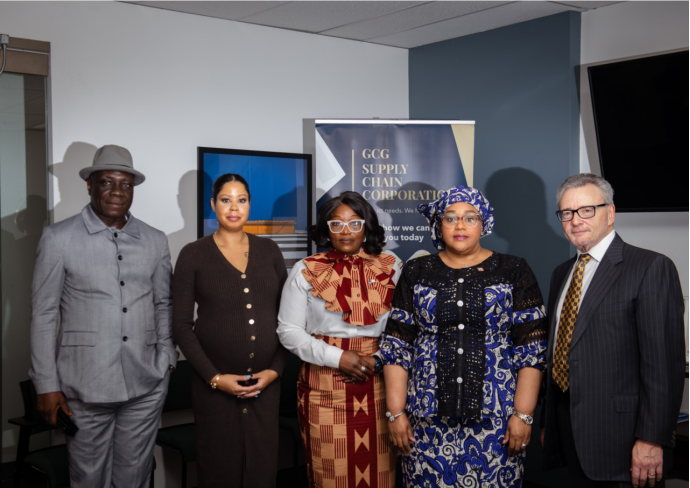
As I return to the discussions in Canada, these reflections have practical implications. At our Toronto Roundtable, participants requested 90 days to engage additional institutions, mobilize resources, and consider a coordinated response to Liberiaʼs education priorities. I welcomed that expression of interest and the willingness to undertake further work.
But the true significance of that engagement will depend on what follows. We must ask whether proposed contributions respond to demonstrated needs, whether the institutions involved possess the appropriate capabilities, and whether the arrangements we establish will strengthen Liberiaʼs ability to deliver education.
We must also be honest about the responsibilities we are prepared to assume ourselves. Some partnerships may involve financing classrooms or learning materials. Others may focus on institutional development, applied research, teacher education, workforce training, or technical cooperation. Their structures will differ because the problems they address differ.
What should unite them is a clear contribution to national priorities, shared responsibility for implementation, and a credible understanding of what will remain after the initial engagement.
For me, this is where the perspectives of Adichie, Moyo, and Nyerere converge in a useful way. They approach different questions, but each invites us to examine a dimension of African agency: the ability to represent our realities, take responsibility for our development, and shape institutions that serve the needs and aspirations of our societies.
Their perspectives also challenge African governments to look inward.
We must not allow the legitimate criticism of externally driven development to become an excuse for weak governance, inadequate domestic investment, or poor implementation. National ownership carries little meaning unless it is demonstrated through decisions, institutions, and accountability.
The responsibility is ours to exercise.
I left Canada encouraged by the possibilities for collaboration, but also conscious of the standard to which those collaborations must be held. The question I now carry into our next phase of engagement is the same one that shaped my invitation in Toronto, although I would frame it more precisely.
We have asked prospective partners where they fit in Liberiaʼs education story. We must now determine what we can build together, who will be responsible for sustaining it, and whether that collaboration leaves our institutions more capable of serving our people.
If education investment and partnership are to contribute meaningfully to Africaʼs development, they must expand our capacity to shape our own futures.
That is the measure of partnership I believe Liberia should pursue, and the responsibility we must be prepared to uphold.
Dr. Jarso Maley Jallah serves as Minister of Education, Republic of Liberia.
Originally published on LinkedIn, October 31, 2026 linkedin.com/pulse/who–owns-change-dr-jarso–maley-jallah–xukwe
Support Independent Journalism
Your support helps FrontPage Africa continue delivering independent, credible, and impactful journalism. Every contribution strengthens our ability to investigate, inform, and hold power accountable while keeping quality journalism accessible to our readers.
Support our journalism or subscribe to receive the latest FrontPage Africa stories and updates.