About 31 years ago, Liberia found itself at a cross-road as a result of the deep Civil crisis and how drug was used as energizing and enhancement of the combatants of the gun totters and users.
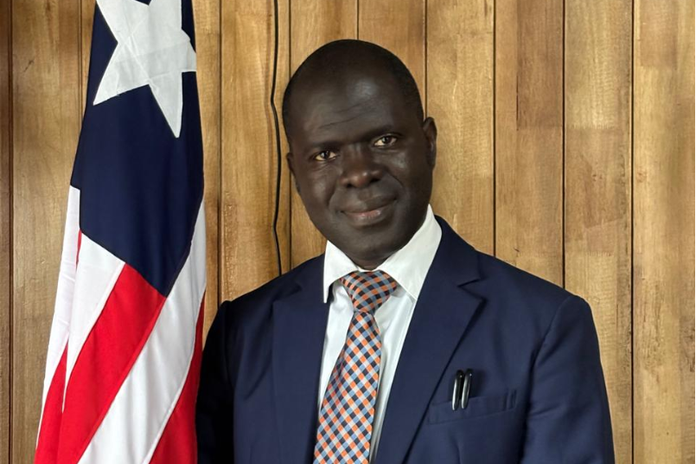
By: Cllr. Joseph K. Jallah, Senator of Lofa County and first director of the Drug Enforcement Agency under former President Charles Taylor between 1997-2000
Today, the war came and gone, but the country and its people remain. Now there comes again the drug problem. Some 31 years ago the whole of ECOWAS States were under fire for solution; our traditional partners-UNDCP, USA, and well-meaning people got up and stood their ground against the menace of Narcotic drugs and psychotropic substances. Given the present day reality, we are again compared to find solution by first understanding the history of how all these sequential events came about, what happened and who are some of the characters in this episode.
1. The NIDC was not simply an informal committee
The strongest new evidence of the history and progress of Liberia efforts in fighting drugs and crimes is the actual then Liberian legislation.
The 1998 Act creating the Drug Enforcement Agency contains a historical preamble stating that, because illicit drug trafficking and related crimes threatened Liberia’s economy, stability and security, the then Council of State, acting as the Transitional Executive Authority, created and established the National Inter-Ministerial Drug Committee and its Secretariat on June 2, 1995 “to deal with all drug control matters on behalf of the Government of Liberia.”
That is extremely important.
It means that the NIDC should not be portrayed merely as an ad hoc donor-supported project. By 1995 it had a formal governmental policy mandate.
The same Act subsequently states:
the NIDC “is hereby dissolved”
and transfers the specialized narcotics functions of the Liberia National Police and National Security Agency to the new Drug Enforcement Agency.
Thus, the legal institutional sequence became much clearer:
The then Liberia Council of State → NIDC → Secretariat → legislative establishment of DEA → the dissolution of NIDC → the transfer of specialized narcotics personnel/functions to DEA.
2. 1995 — CREATION OF THE NIDC
Domestic institutional development
The then Liberia Council of State headed by our law school professor, His Excellency David Kpomakpor created the NIDC under the then minister of Justice, Cllr. J. Laveli Supuwood and its Secretariat under the auspices of Attorney-At-Law now Senator of Lofa County, Cllr. Joseph K. Jallah on June 2, 1995. Its mandate was unusually broad: it was established to deal with “all drug control matters” for the Government of Liberia.
That language is significant because it suggests that the NIDC was intended to be the national coordinating mechanism for drug policy, not simply another police unit.
Historical classification
DOCUMENTED BY PRIMARY LIBERIAN LEGAL TEXT.
This is considerably stronger than relying solely on the current or the then LDEA website.
3. 1996 — THE NIDC BECOMES VISIBLE INTERNATIONALLY
The 1996 record is especially valuable because we have a contemporary newspaper account from Monrovia.
On January 29, 1996, The Christian Science Monitor reported directly on Liberia’s drug situation and identified Joseph K. Jallah as head of Liberia’s National Inter-ministerial Drug Committee. The report states that the then NIDC was sponsored by the United Nations Drug Control Program(UNDCP). It further says that the program:
- trained 10 officers for Liberia;
- supplied computers;
- supplied other materials; and
- provided one vehicle.
This is the strongest contemporary evidence we have so far for the UNDCP–NIDC relationship.
It also tells us something about the practical condition of the NIDC: Liberia had the institutional structure, but resources were extremely limited.
Joseph K. Jallah was quoted as saying that Liberia’s capacity to respond depended heavily upon available resources.
Significance
The NIDC therefore appears to have operated as:
Liberian governmental institution + UNDCP technical/resource support.
That is an important historical distinction.
The NIDC was nationally established, but its capacity was being built with substantial international assistance.
4. THE NIDC AND NIGERIA
The same January 1996 contemporary report gives us another important international relationship.
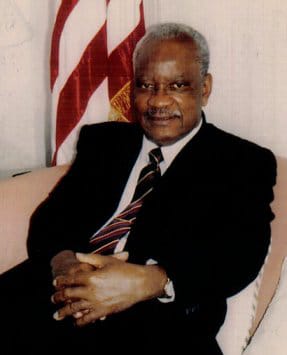
Colonel Abraham Kromah, then deputy director of the Liberia National Police and head of INTERPOL in Monrovia, said that his office was working with Nigeria’s National Drug Law Enforcement Agency (NDLEA) to stem the movement of narcotics into Liberia.
This is important because the NIDC years were not isolated from regional law enforcement.
Liberia’s drug-control system was already connected to:
Liberia → Nigeria → West African trafficking routes into international markets.
The article also reported that nearly all of Liberia’s major heroin and cocaine seizures the previous year had allegedly come from Nigeria.
Historical implication
The NIDC’s challenge was already transnational.
That makes the later ECOWAS involvement much easier to understand.
5. NIDC AND ECOWAS — 1996
The ECOWAS institutional record shows that the regional organization was becoming increasingly concerned about drugs at exactly the time the NIDC was operating.
At the July 26–27, 1996 ECOWAS Summit in Abuja, the Heads of State and Government expressed grave concern over:
- increasing drug trafficking;
- rising drug-related crime;
- increased use of psychotropic substances; and
- negative effects on youth.
ECOWAS decided that a ministerial meeting would be held in Praia (Carbo Verde) during the first quarter of 1997 to address the issue comprehensively.
This is important because it shows that the NIDC was developing within a broader regional policy response, not in isolation.
6. ECOWAS AND THE LIBERIAN ENVIRONMENT
The ECOWAS 1996 record also shows how deeply the Liberia conflict affected regional institutions.
ECOWAS was simultaneously:
- managing the Liberian peace process;
- maintaining ECOMOG;
- dealing with cross-border insecurity;
- confronting drug trafficking; and
- seeking international support.
The ECOWAS Summit specifically noted the establishment of the U.S.-initiated Contact Group on Liberia and the contributions of Western governments to the regional peace effort.
Therefore, during the NIDC period, drug control was occurring inside a much larger regional security environment.
This matters for our final institutional history.
7. 1997 — ECOWAS PRAIA (Carbo Verde) PLAN OF ACTION
The 1997 ECOWAS record is even more important.
At the August 1997 Abuja summit, ECOWAS expressed concern over:
the rapid spread of drug abuse in West Africa and the increasing role of the region as a transit centre for international drug trafficking.
The Authority approved the Praia Political Declaration and Plan of Action, intended to provide a more rigorous and coordinated regional campaign against drugs.
Critically, ECOWAS appealed to the United Nations Drug Control Program and other relevant agencies to increase their support for drug control in West Africa.
Thus, by 1997 we have had a clear triangular relationship:
LIBERIA
NIDC
ECOWAS
Regional drug-control policy and coordination
UNDCP
Technical and institutional support
That is precisely the historical connection we were looking for.
8. ECOWAS FINANCING FOR NATIONAL INTER MINISTERIAL DRUG COMMITTEES
There is an especially important ECOWAS legal instrument from August 26, 1997.
ECOWAS adopted Regulation C/REG.4/8/97 on the Financing of Drug Control Activities.
It:
- recognized the increase in drug trafficking and related crime;
- welcomed the five-year regional plan of action;
- allocated 150,000 units of account to the regional drug-control fund; and
- directed Member States to support implementation of the plan through their inter-ministerial committees on drug abuse control.
This is very significant for the NIDC history.
It shows that the Liberian NIDC was part of a regional governance model built around national inter ministerial drug-control committees.
Therefore, we should not describe the NIDC as an institution created solely for Liberia’s domestic crisis.
It belonged to a broader ECOWAS model of national drug-control coordination.
9. 1997 — UNDCP AND THE ECOWAS SYSTEM
Later UNODC documentation confirms the importance of the system established in this period.
The UN evaluation of the ECOWAS regional plan describes the development of inter-ministerial committees in Member States, the Praia Regional Plan of Action adopted on May 9, 1997, and an UNDCP assistance program for West Africa under Project AD/RAF/94/893.

This gives us a much stronger international framework for the NIDC story:
NIDC was not merely a Liberian committee with some UN assistance; it operated within a wider ECOWAS–UNDCP regional drug-control architecture.
That is a much more historically meaningful finding.
10. 1998 — ECOWAS CREATES A REGIONAL DRUG-CONTROL FUND
The ECOWAS system was strengthened again in 1998.
On October 30–31, 1998, ECOWAS adopted Decision A/DEC.9/10/98 establishing a regional fund for financing drug-control activities in West Africa.
The decision expressly recognized:
- rapid expansion of the drug problem;
- increasing drug-related crime;
- the need for coordinated prevention, repression, treatment and rehabilitation; and
- inadequate financial resources available to the inter-ministerial Drug Control Committees.
It therefore established the ECODRUG Fund to finance regional drug-control activities.
This is perhaps the clearest regional evidence that the NIDC-type institution was regarded by ECOWAS as a legitimate part of the national implementation structure.
11. WHERE DOES THE UNITED STATES FIT?
This requires careful treatment.
What we can document now
The United States was deeply involved in the broader Liberian security environment during the NIDC years.
For example, a 1997 contemporary report states that Liberian police were receiving security training through the U.S. Department of Justice’s International Criminal Investigative Training Assistance Program (ICITAP) together with ECOMOG personnel.
The U.S. also regarded narcotics trafficking as an important transnational security concern in Africa. Secretary of State Madeleine Albright’s administration described narcotics flows and international organized crime as threats to U.S. interests, and U.S. policy emphasized working with African law-enforcement authorities.
But we should NOT yet say:
“The United States funded or directly operated the NIDC.”
We have not yet found sufficiently strong contemporary evidence to make that claim.
What we can responsibly say is:
The United States was an important security and law-enforcement partner in Liberia and West Africa during the NIDC period, while the documentary evidence presently located directly identifies UNDCP as the principal external supporter of the NIDC itself.
12. A VERY IMPORTANT DISCOVERY: THE 1998 LIBERIAN ACT
We now have the actual legal instrument.
The Act’s preamble states that Liberia was already a party to the 1961, 1971 and 1988 UN drug conventions. It says the Government was concerned about rising narcotics demand and trafficking and recognized that trafficking threatened the economy and national security.
Then the operative provisions provide:
Section 22.1000
Creates the Drug Enforcement Agency as an autonomous agency within the Ministry of Justice.
Section 22.102
Makes it the Director’s duty to formulate anti-drug policy and coordinate enforcement of domestic laws and the relevant UN conventions.
Section 22.103
Authorizes the Agency to seek international financial and technical assistance.
Section 22.104
Dissolves the NIDC.
Section 22.105
Transfers all functions and specialized personnel of the narcotics divisions of:
- the Liberia National Police Force; and
- the National Security Agency
to the new Drug Enforcement Agency.
Section 22.106
Provides that the Act takes effect immediately upon publication in handbills.
And the Act is expressly marked:
Approved December 23, 1998.
Support Independent Journalism
Your support helps FrontPage Africa continue delivering independent, credible, and impactful journalism. Every contribution strengthens our ability to investigate, inform, and hold power accountable while keeping quality journalism accessible to our readers.
Support our journalism or subscribe to receive the latest FrontPage Africa stories and updates.