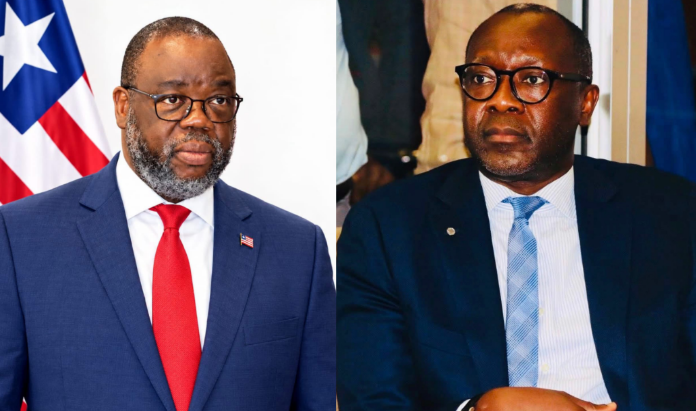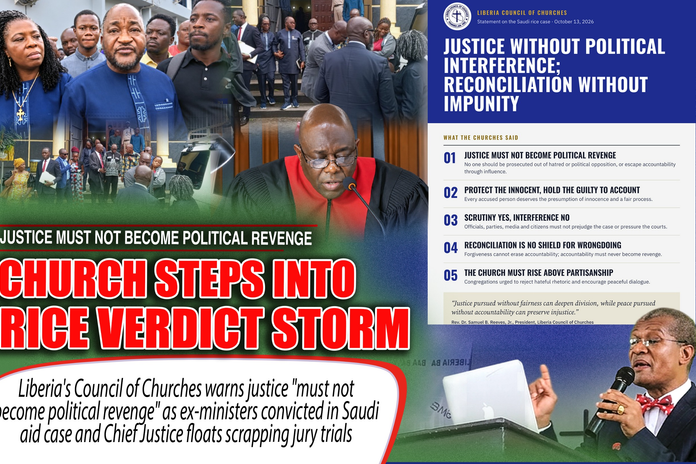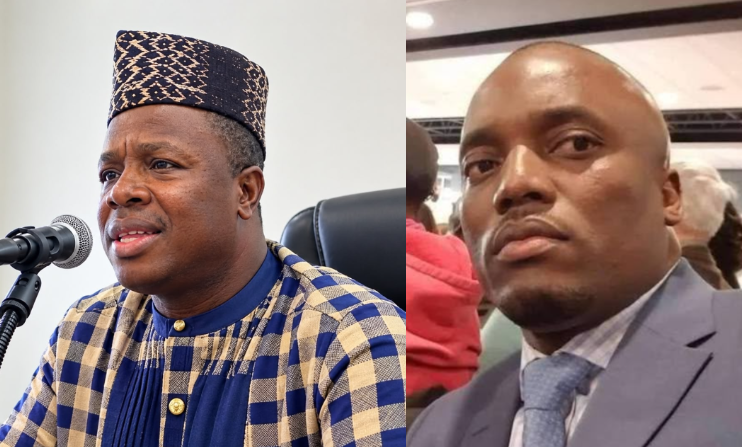
Monrovia – The guilty verdict involving former Foreign Affairs Minister Dee-Maxwell Saah Kemayah in Liberia’s high-profile Saudi-donated rice case has sparked fresh political debate, with opposition figure Jefferson T. Koijee accusing the Boakai administration of political persecution and Spoon Talk host Stanton Witherspoon questioning aspects of the case.
By Willie N. Tokpah
The reactions come as questions continue to surround the handling of a US$500,000 humanitarian rice donation, the responsibilities of government officials and the fairness of the trial, which concluded with a series of guilty, not-guilty and inconclusive verdicts at Criminal Court “C” in Monrovia on October 9, 2026.
Koijee and political commentator Witherspoon, separately criticized the guilty verdict against former Foreign Affairs Minister Dee-Maxwell Saah Kemayah, raising questions about the case and the broader administration of justice in Liberia.
Koijee, a prominent opposition figure, described Kemayah’s conviction as an example of what he called political persecution under President Joseph Nyuma Boakai’s administration.
In a statement issued on his social media page, he accused the government of using the justice system against perceived political opponents, although he did not present independent evidence in the statement to establish that the verdict was politically motivated.
Koijee cited cases involving former Vice President Jewel Howard-Taylor and former Finance Minister Samuel D. Tweah to support his argument that the justice system was being used unfairly.
He also referenced testimony by former Monrovia City Mayor Mary Broh, who reportedly said Kemayah acted to “rescue the rice” during the controversy surrounding the distribution of Saudi-donated rice.
“Law without justice is just power wearing a robe,” Koijee said, arguing that every Liberian is entitled to due process and a fair and impartial trial.
Similarly, Witherspoon, speaking on his Spoon Talk platform, also questioned Kemayah’s guilt during a discussion with Al-Hassan Fadiga.
When asked whether he believed the former minister was guilty, Witherspoon responded emphatically: “Hell no, I don’t believe that he’s guilty. Hell no, I don’t believe that he’s guilty.”
Witherspoon subsequently defended the government’s handling of the rice controversy as a precedent that could help the country, while questioning whether Kemayah’s actions amounted to the misapplication of entrusted property.
He pointed to the need to identify the person who requested the rice during the transitional period, arguing that the circumstances surrounding the request deserved closer examination.
Despite his criticism of the conviction, Witherspoon said President Boakai had established what he considered a precedent that could benefit Liberia.
He also expressed the view that Kemayah should appeal the verdict to the Supreme Court.
The comments come amid public debate over the Saudi-donated rice case and the responsibilities of public officials in handling humanitarian commodities.
Any determination of the legal merits of the conviction, however, rests with the courts, including the Supreme Court if an appeal is pursued.
Neither Koijee’s allegations of political persecution nor Witherspoon’s doubts about Kemayah’s guilt, on their own, establish that the trial was politically motivated or that the verdict was legally unsound.
From Saudi Donation to Criminal Trial
The case dates back to April 2023, when Saudi Arabia donated 29,412 bags of 25-kilogram rice, valued at approximately US$500,000, to Liberia for disaster victims and vulnerable communities.
The rice was received through the Ministry of Foreign Affairs, then headed by Kemayah, before being handed over to the National Disaster Management Agency, NDMA, for distribution.
The government’s Asset Recovery and Property Retrieval Task Force (AREPT) later alleged that 25,054 bags, valued at approximately US$425,918, were diverted, misapplied or distributed without proper authorization.
Prosecutors alleged that several former government officials exceeded their authority in handling the rice, including through the transfer of 13,895 bags from NDMA facilities to the General Services Agency, GSA.
The defendants, however, challenged aspects of the prosecution’s account, arguing that some transfers were administrative decisions intended to address storage problems and protect the remaining rice.
The case involved 13 former government officials and other individuals who faced charges including theft of property, economic sabotage, misapplication of entrusted property, abuse of office and criminal conspiracy.
All 13 defendants pleaded not guilty when the case proceeded to trial in August 2026.
During the proceedings, prosecution witnesses raised concerns about missing rice and inadequate distribution records, although the defense provided evidence to rebut prosecution claims.
Defense witnesses, meanwhile, disputed claims that the movement of the rice amounted to theft and offered explanations involving inter-agency decisions, warehouse conditions and efforts to protect the donation.
Former Monrovia City Mayor Mary T. Broh, who was initially charged, was removed from the case after the court granted the prosecution’s request to drop the charges against her.
She later testified about the rice controversy, with her evidence cited by critics of the prosecution as support for Kemayah’s defense.
Mixed Verdicts, Conflicting Reports
On October 9, the jury returned verdicts against several defendants, including Kemayah and former Internal Affairs Minister Varney A. Sirleaf, according to FrontPage Africa’s courtroom report.
Other defendants were acquitted, while some charges ended without a conclusive verdict.
However, the jury failed to reach a verdict on theft of property against Kemayah and had a not-guilty verdict on criminal conspiracy. The jury decision found him guilty on the remaining three charges.
The discrepancy makes confirmation of the formal verdict sheet and the court’s subsequent rulings important in establishing the exact legal outcome of each charge.
A hung verdict is not the same as a conviction or an acquittal.
The competing reactions have placed the Saudi rice case at the center of a wider debate over accountability, political influence and public confidence in Liberia’s justice system.
The next stage will depend on the formal court record, any unresolved charges and possible appeals. Until those issues are clarified, allegations of political persecution should be distinguished from established legal findings.
At its core, the case remains a test of whether Liberia can ensure that justice is administered fairly, regardless of political affiliation.
Support Independent Journalism
Your support helps FrontPage Africa continue delivering independent, credible, and impactful journalism. Every contribution strengthens our ability to investigate, inform, and hold power accountable while keeping quality journalism accessible to our readers.
Support our journalism or subscribe to receive the latest FrontPage Africa stories and updates.