Monrovia — Suspended Executive Director of the Independent National Commission on Human Rights (INCHR), Atty. Urias Teh-Pour, and the Commission’s suspended Director for Planning, Internal Monitoring and Evaluation, Bah-Wah Brownell, have rejected their dismissal by the Commission’s Acting Chairperson, describing the decision as unlawful, politically motivated, and part of what they called a campaign of personal vengeance.
By Patience M. Jones
Their response comes a day after the Acting Chairperson announced their dismissal, alleging that both officials committed serious misconduct by continuing to represent the Commission while under suspension and referring the matter to the Ministry of Justice and the Liberia National Police for investigation into alleged impersonation of public officials.
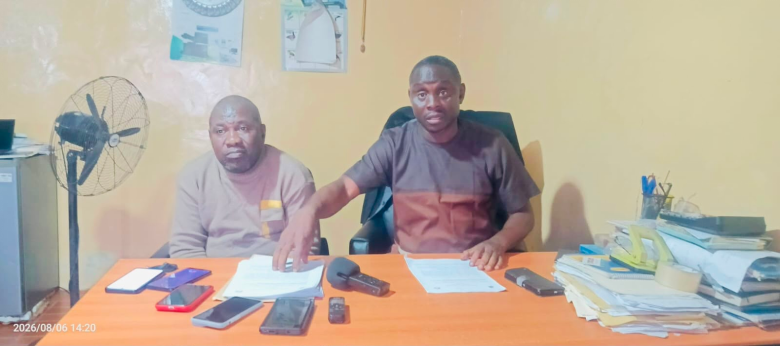
However, during a press conference in Monrovia on Thursday, Teh-Pour and Brownell dismissed the allegations as baseless, insisting that no investigation, audit, or legal process has established any wrongdoing on their part.
Officials Deny Corruption Allegations
The two officials strongly rejected accusations of financial impropriety involving UNICEF-supported funds, arguing that the allegations lack any evidentiary basis.
They maintained that all financial transactions undertaken by the Commission are subjected to multiple layers of verification and approval, including oversight by the Internal Audit Agency and independent external audits conducted by Moore Stephens & Co. and the General Auditing Commission (GAC).
According to them, none of those audits has implicated either official in corruption or financial misconduct.
“Corruption allegations require evidence, forensic audit and legal foundation. In the absence of these, they are merely rhetorical,” Teh-Pour said.
The officials further asserted that no complaint has been filed against them and that no investigative report has found them culpable of any financial wrongdoing.
Challenge Legitimacy of Acting Chair
A major component of their response centered on the authority of Acting Chairperson Mohammed E. Fahnbulleh to suspend and dismiss staff. The officials argued that Fahnbulleh’s tenure as Commissioner expired on July 31, 2026, and therefore he lacks the legal authority to make administrative decisions on behalf of the Commission.
According to Teh-Pour, decisions taken by what he described as an improperly constituted Board are legally defective because the Commission currently lacks the quorum required to exercise such powers.
He further argued that the process to appoint a new Board of Commissioners is already underway and maintained that any major administrative actions should await the lawful constitution of a new board.
Dismissal Described as ‘Political Retaliation’
The suspended officials alleged that the dismissal is driven by personal retaliation rather than legitimate administrative concerns.
They accused Fahnbulleh of abusing his temporary leadership position to settle personal scores, claiming he has dismissed senior staff, threatened employees, and created what they described as “a climate of fear” within the Commission.
Among those they said had been affected were Director Peter Zaizay, the Gender Coordinator, and other staff members whom they claimed were removed after challenging the Acting Chairperson.
“The allegations against us are malicious distractions intended to tarnish reputations, destroy the Commission, jeopardize Liberia’s human rights standing, and undermine the independence of the institution,” the joint statement said.
Reject Allegation of Unauthorized Representation
Responding to allegations that they continued representing the Commission after being suspended, Teh-Pour denied any criminal conduct.
He argued that, by virtue of his responsibilities as Executive Director, he had routinely received correspondence from regional and international human rights partners and maintained that the Acting Chairperson had failed to provide evidence that either official unlawfully represented the Commission while under suspension.
He challenged the Commission to publicly produce documentary proof supporting its accusations.
“The burden is on those making the allegations to present evidence,” he told reporters.
Serious Counter-Allegations
In their statement, the two officials also leveled several allegations against Fahnbulleh, accusing him of using political influence to secure his appointment as Commissioner contrary to provisions of the 2005 INCHR Act.
They further alleged that he intimidated members of the Board during his tenure and attempted to suppress the Commission’s investigative report into the July 26, 2022 student protests.
Additionally, they referenced previous allegations of sexual harassment against Fahnbulleh and criticized his handling of the Prince Wreyou case, claiming both matters reflected a pattern of poor leadership.
Those allegations were presented by the officials during their press conference. And it has not independently verified those claims, and Fahnbulleh has previously denied wrongdoing.
Officials Promise Legal Challenge
Asked whether they would challenge their dismissal, the two officials confirmed that they intend to pursue legal remedies, maintaining that the Commission’s actions are invalid because they were taken by officials whose tenure has expired and by what they described as an improperly constituted Board.
They insisted they remain committed to defending their reputations and preserving the integrity and independence of the country’s national human rights institution.
Background
On August 5, the Independent National Commission on Human Rights announced the dismissal of Atty. Urias Teh-Pour and Bah-Wah Brownell, alleging that while under suspension they continued communicating on behalf of the Commission and improperly engaged with regional human rights bodies.
The Commission said their conduct violated provisions of the National Code of Conduct, the Commission’s Staff Handbook, and Liberia’s Penal Code relating to impersonation of public officials. The matter has since been referred to the Ministry of Justice and the Liberia National Police for investigation.
The dispute has intensified an ongoing leadership crisis at the Commission, with competing claims over the legality of the current leadership and the authority of the Board, raising broader concerns about governance, institutional independence, and accountability within Liberia’s premier human rights body.
Support Independent Journalism
Your support helps FrontPage Africa continue delivering independent, credible, and impactful journalism. Every contribution strengthens our ability to investigate, inform, and hold power accountable while keeping quality journalism accessible to our readers.
Support our journalism or subscribe to receive the latest FrontPage Africa stories and updates.