BEILA, Bong County – For years, Ma Quita Kromah carried a concern that extended beyond her own household. As an elderly resident of Beila, Jorquelleh District Two, Bong County, she watched children in her community struggle to obtain an education in a school whose deteriorating condition had become a source of concern for parents and residents.
By Selma Lomax, [email protected]
The situation troubled her deeply. While education remained one of the most important opportunities available to children, the condition of the learning facility in her community raised questions about the kind of future being prepared for the younger generation.
For Ma Kromah, the problem was not something to be discussed and forgotten. She believed that children in Beila deserved the same opportunity to learn in a decent environment as those in other parts of the country. Yet, without intervention, the community’s children appeared destined to continue their education under conditions that offered little comfort or encouragement.
Rather than accept the situation, the elderly woman decided to speak out. She began appealing to Bong County Senator Prince Kermue Moye Sr., seeking his intervention to construct a new school that would provide children in her community with a better learning environment.
Her request was simple, but its significance was enormous. She wanted a school where children could attend classes without the challenges associated with the dilapidated facility that had served the community.
The appeals continued, driven by her conviction that the absence of a decent educational facility should not determine the future of children simply because they were born in a rural community.
For a woman of her age, taking up such an advocacy role demonstrated a commitment that went beyond personal comfort. She was concerned about children who would inherit the community after her generation and wanted them to have an opportunity to pursue education under better conditions.
After years of carrying that concern and seeking assistance, her appeal eventually translated into a development that has brought renewed hope to Beila.
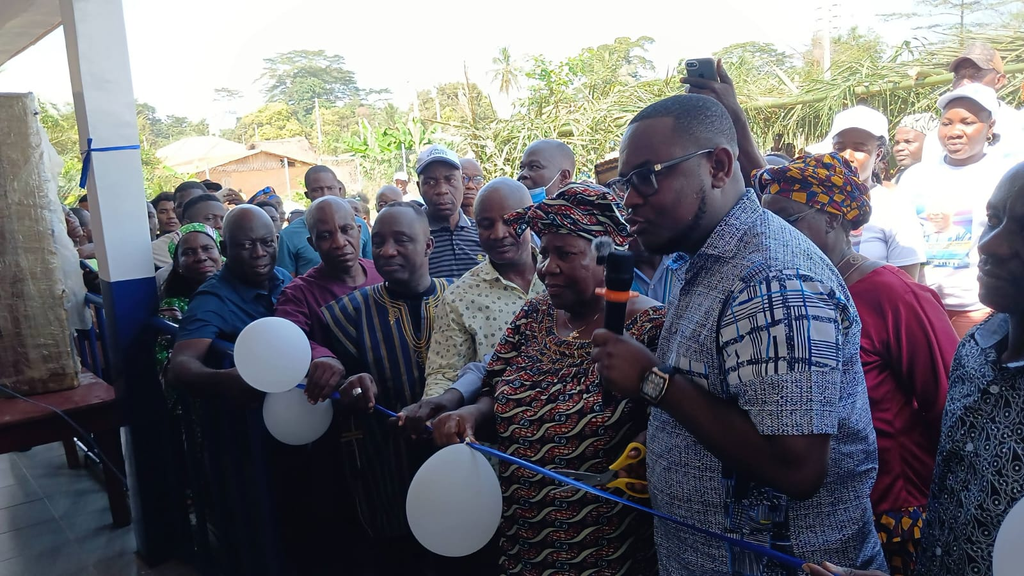
The community now has a newly constructed elementary school, an intervention undertaken by Senator Moye in response to the need for improved educational infrastructure. The institution, named the Quita Kromah Public School in recognition of the elderly woman’s advocacy, was officially dedicated yesterday, marking the fulfillment of a dream she had pursued for years.
For Ma Kromah, the occasion was unlike an ordinary public gathering. It was the moment she finally witnessed the realization of something she had repeatedly asked for on behalf of the children of her community.
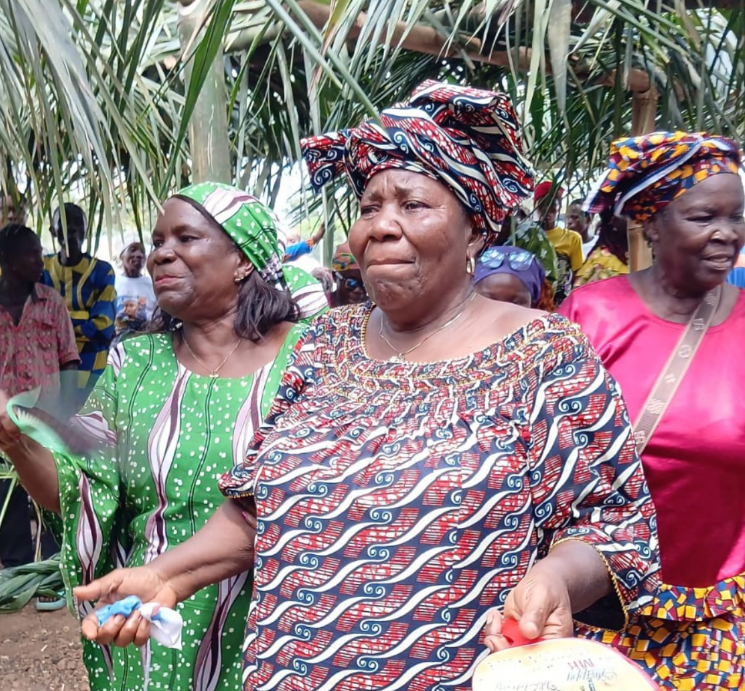
As the dedication ceremony unfolded, emotions overwhelmed her, and tears of joy flowed from her eyes. Standing before a school that once existed only in her hopes and appeals, the elderly woman witnessed a development that had appeared distant for a long time.
Her tears reflected the weight of years of concern, the determination to keep asking for assistance and the satisfaction of finally seeing her request answered.
The significance of the occasion was also reflected in the decision to name the school after her. For someone whose campaign was motivated by the educational needs of children rather than personal recognition, having an institution bear her name added an emotional dimension to the achievement.
The school represents a permanent reminder of her efforts and the importance of listening to community members who understand the challenges affecting their people.
In many rural communities, the absence of adequate educational facilities remains a major obstacle to children’s access to learning. Families often have to contend with deteriorating structures, limited classroom space and other difficulties that can discourage school attendance and undermine the quality of education.
Although the construction of a school building does not automatically resolve every challenge confronting the education sector, the new facility in Beila provides an important foundation for addressing the community’s longstanding concerns.
For parents, the institution offers renewed hope that their children can pursue their education in a more suitable environment. For the younger generation, it creates an opportunity to learn in a facility that reflects the importance of education to the community’s future.
But for Ma Kromah, the accomplishment carries a more personal meaning. She has lived long enough to see the concern she carried for the children transformed into a physical structure that will serve generations beyond her own.
During the dedication, she expressed profound appreciation to Senator Moye for responding to her longstanding appeals and helping turn her dream into reality.
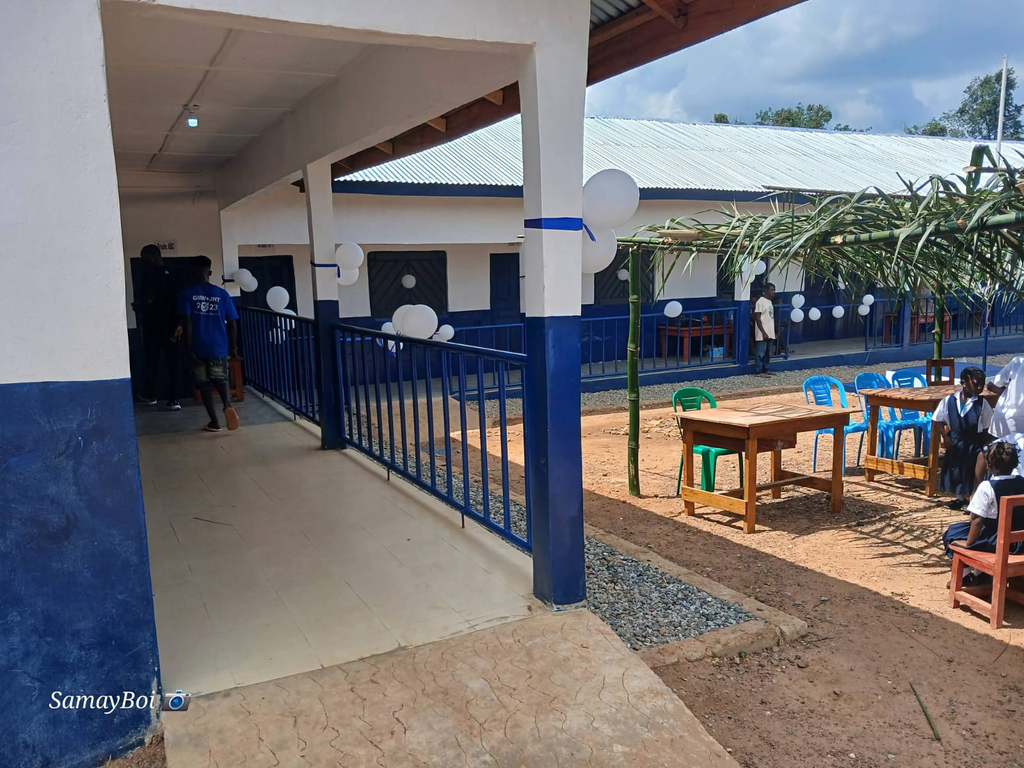
She was particularly grateful that the senator listened to her concerns and recognized the importance of providing children in Beila with a decent place to learn. According to her, the construction of the school has brought relief to a community that had long needed a better educational facility.
Ma Kromah also appreciated the decision to name the institution in her honor, describing the gesture as an extraordinary recognition of her efforts. She said the school would remain a lasting reminder that her appeals on behalf of the children were not ignored. Her appreciation extended to everyone who contributed to making the project possible, while she encouraged residents to protect the facility and ensure that it serves the purpose for which it was established.
For the elderly woman, the greatest satisfaction is not simply that a school has been constructed in her name, but that children in her community now have a better opportunity to pursue their education.
Senator Moye, speaking at the dedication, commended Ma Kromah for her persistence and determination in advocating for the construction of a new school. He acknowledged that her repeated appeals brought attention to an important need in the community and described the decision to name the institution after her as recognition of her commitment to improving educational opportunities for children.
The senator urged residents to take ownership of the facility, protect the building and work together to ensure that it remains useful to present and future generations. He emphasized the importance of community involvement in sustaining development projects, noting that the responsibility for ensuring the school serves its intended purpose should not rest solely with those who facilitated its construction.
Beyond the construction of the school, Senator Moye announced a contribution of L$200,000 toward the compensation of volunteer teachers and the construction of a borehole to improve water access at the institution.
The pledge is expected to provide additional support for the school’s operation, particularly as communities continue to grapple with the challenge of attracting and retaining teachers in underserved areas.
The senator also presented US$800 to Ma Kromah to assist with the renovation of her home, a gesture that brought another moment of appreciation during the dedication.
Deputy Minister of State for Presidential Affairs Bill McGill Jones, who attended the ceremony, also pledged L$100,000 toward staff compensation, adding to the support announced for the institution.
His contribution highlighted the importance of ensuring that the newly constructed school is not only dedicated but also supported with the human resources necessary to provide educational services to children.
Bong County Education Officer David Boakai described the project as a historic contribution to the county’s education sector, recognizing its significance in expanding access to learning facilities in communities where educational infrastructure remains a concern.
His remarks underscored the importance of partnerships between public officials and local communities in addressing challenges within the education system.
For residents of Beila, the dedication was an occasion to celebrate a long-awaited development. Local leaders and community members expressed gratitude to Senator Moye for responding to their concerns and acknowledged Ma Kromah for her determination to advocate for the children.
The project has also placed renewed attention on the role community members can play in influencing development. Ma Kromah’s experience demonstrates that advocacy does not necessarily require an official position, financial influence or political authority. Sometimes, it begins with an individual who refuses to remain silent about a problem affecting the people around them.
Her story is particularly significant because the request she pursued was not for personal advancement. She wanted a school that would benefit children, many of whom would otherwise continue to depend on an inadequate learning facility.
Now, the institution bearing her name stands as a reminder of that commitment.
As children begin to benefit from the new school, the responsibility will shift toward ensuring that the facility is properly maintained, teachers are available and the learning environment remains conducive to education.
The financial pledges announced by Senator Moye and Deputy Minister Jones provide an initial contribution toward meeting some of those needs, but the long-term success of the institution will depend on continued support from education authorities, the community and other stakeholders.
For Ma Kromah, however, one important chapter has already been completed. The years of appealing for a school have given way to a day of celebration, and the facility she spent so much time advocating for is now a reality.
Her name will remain attached to an institution that represents more than bricks and classrooms. It represents the determination of an elderly woman who believed that the children of Beila deserved better and refused to abandon that belief.
As the community looks toward the future, the Quita Kromah Public School will stand as a testament to what sustained advocacy and responsive intervention can achieve.
The tears that flowed during the dedication were therefore not merely expressions of emotion. They marked the end of a long wait and the beginning of a new opportunity for children whose educational future had remained at the center of Ma Kromah’s concern.
Support Independent Journalism
Your support helps FrontPage Africa continue delivering independent, credible, and impactful journalism. Every contribution strengthens our ability to investigate, inform, and hold power accountable while keeping quality journalism accessible to our readers.
Support our journalism or subscribe to receive the latest FrontPage Africa stories and updates.