Summary:
- Civil society leaders said the Boakai government’s decision to “voluntarily” accept Salvadoran immigrant Kilmar Armando Abrego García—a symbol of Trump’s hardline deportation agenda – violated the man’s human rights and were made under threat of retaliation
- Liberia’s acceptance of Garcia came after other African countries refused to take him
- The decision followed Foreign Minister Sara Beysolow Nyanti’s meeting with Secretary of State Marco Rubio
By Anthony Stephens, senior justice correspondent with New Narratives
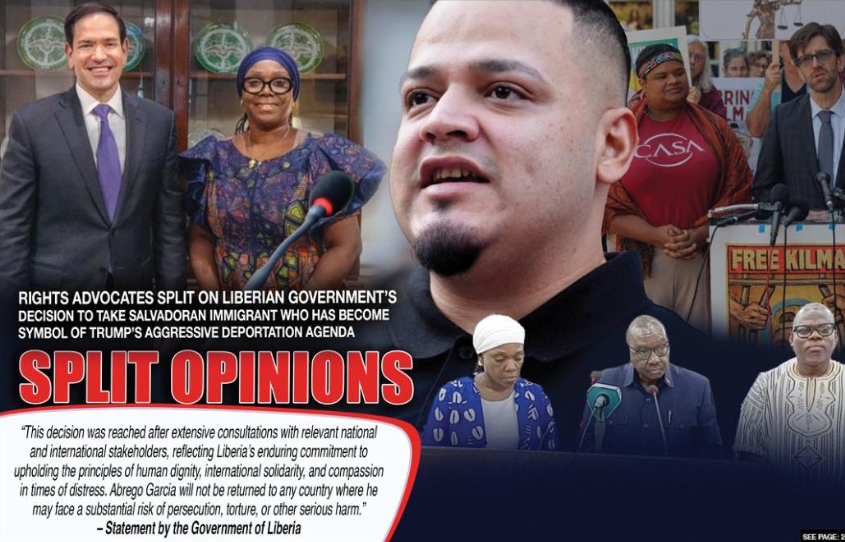
Liberian human rights activists have had mixed reactions to the government’s announcement Friday that it had agreed to accept Kilmar Armando Abrego García, an immigrant to America who has become a face of the Trump administration’s aggressive policy to deport millions of people in the United States illegally.
Garcia shot to global attention in March when the administration sent him to a notorious detention center in El Salvador despite a 2019 U.S. court order that had ruled he could not be returned there because of a credible threat of persecution. He was eventually returned to the U.S., and the government subsequently arrested him on new charges. He has not been found guilty of any crime. The Trump administration has since pressured governments around the world to take third-country nationals despite them having no association with the country in a push that many human rights activists have condemned.
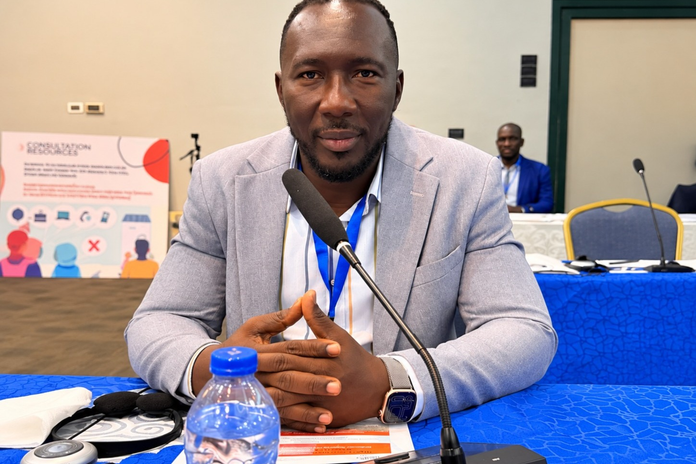
“I think it’s a moral failure,” said John Stewart, a human rights activist and commissioner on the country’s Truth and Reconciliation Commission. “America preaches democracy and human rights. I think that’s a violation of the man’s rights no matter how we are trying to polish it.”
Stewart said Liberia had little choice. “Saying no to the U.S. secretary of state could have adverse implications for the Liberian government, given all we’ve seen from the Trump administration. This comes at a time when Liberia is seeking a loan from the International Monetary Fund and qualification for a new Millennium Challenge Compact. Whether such considerations were factored into the discussions is unclear— however it cannot be dismissed by a wave of the hand.”
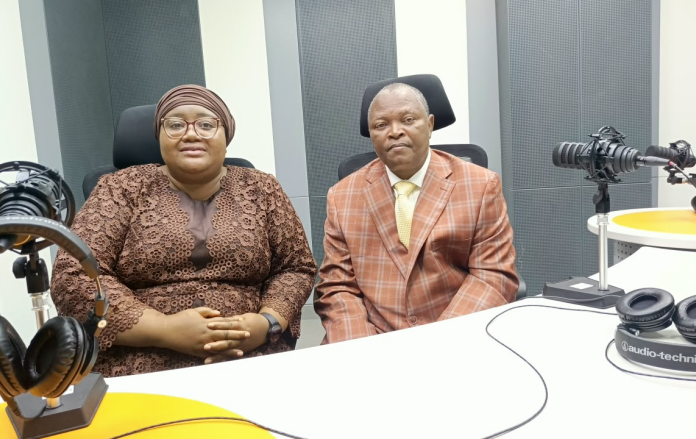
But others, defended the government’s move. Kanio Bai Gbala, an assistant professor of law at the Louis Arthur Grimes School of Law at the University of Liberia, called the decision consistent with the country’s humanitarian values.
“Liberia’s decision reflects our proud tradition as a refuge for those in need and aligns with international humanitarian norms,” Gbala said in WhatsApp messages. He rejected the suggestion the government felt pressured. “There is no credible evidence to suggest that the Liberian government was pressured into accepting Garcia. The relationship between Liberia and the United States has always been anchored in mutual respect and partnership, not coercion.”
Garcia traveled to the United States in around 2011 when he was a teenager, to join a U.S. citizen brother. Both claimed to be fleeing gang violence in El Salvador. Courts have found no evidence of Trump administration’s claims that he was a member of a Latin American gang or transported undocumented immigrants to the United States for money in 2022. In April, U.S. immigration officers admitted to an “administrative error” in deporting him to El Salvado. A federal judge ordered his release in June, after the U.S. Supreme Court had directed the Trump administration to “facilitate” his return to the United States. He was subsequently arrested on new charges. Garcia has repeatedly proclaimed his innocence.
Garcia is married to an American citizen and has three children with profound health challenges. Opponents of the Trump administration’s effort to deport millions of migrants in the country illegally say the government is singling Garcia out in an effort to intimidate other migrants in the country illegally into self-deporting.
“The government disappeared Kilmar to a foreign prison in violation of a court order,” said Simon Sandoval-Moshenberg, an attorney for Abrego Garcia, in a statement to C.B.S. News. “Due process means the chance to defend yourself before you’re punished, not after. This is an abuse of power, not justice.”

According to the New York Times, Costa Rica, a middle-income Central American country, has agreed to take Garcia, and he agreed to go there. But the Trump administration has sought to send him to Liberia – one of the world’s poorest countries, in a continent with which he has no connection.
The Liberian government said Friday that it had “voluntarily” accepted to Garcia as soon as October 31st but it is likely that timeline will be delayed by legal action. At Friday’s press conference, Oswald Tweh, Liberia’s justice minister, said García “is coming to Liberia not as a prisoner” and that he “will move about freely,” without “harassment or intimidation.”
In a statement and at a subsequent press conference, the Liberian government denied coming under any pressure from Washington, saying it had acted “in good faith and solely on humanitarian grounds”. Senior officials said that Garcia was only coming for a temporary stay.
“This decision was reached after extensive consultations with relevant national and
international stakeholders, reflecting Liberia’s enduring commitment to upholding the principles of human dignity, international solidarity, and compassion in times of distress,” said the statement. “Abrego Garcia will not be returned to any country where he may face a substantial risk of persecution, torture, or other serious harm.”

The Liberian government’s announcement came a little over a week after Sara Beysolow Nyanti, its Foreign Minister, met with Marco Rubio, the U.S. secretary of state, in Washington. At a press conference in Monrovia a few days later, Nyanti hinted at the possibility of Liberia accepting a third country national, saying “I wouldn’t be surprised because the U.S. is asking partners,” and adding that “the immigration discussion is a global one with all of the partners working together.”

Lawyers for the U.S. Department of Home Security told the United States District Court in Greenbelt, Maryland — which is hearing García’s case — that Liberia had agreed to accept him. They described Liberia as “a thriving democracy and one of the United States’s closest partners on the African continent.”
Liberia’s acceptance of Garcia comes after the Trump administration failed to reach agreements with Uganda, Eswatini and Ghana to take him, according to the New York Times. It also comes more than four months after the Trump administration included Liberia on a list of 36 countries whose citizens could face potential travel ban to the U.S.
After the U.S.-Africa Summit in July, President Joseph Nyuma Boakai told FrontPage Africa that the question of accepting third-country nationals had come up during his meeting with President Trump.
“I didn’t get the impression that the Americans were putting a gun to anybody’s head to sign anything,” Boakai said. Still, he acknowledged that the issue “is something we have to think about. If and when they decide to ask us, we will know how to respond.”
This story is a collaboration with New Narratives as part of the “Investigating Liberia” project. Funding was provided by the Swedish Embassy in Liberia. The funder had no say in the story’s content.
Support Independent Journalism
Your support helps FrontPage Africa continue delivering independent, credible, and impactful journalism. Every contribution strengthens our ability to investigate, inform, and hold power accountable while keeping quality journalism accessible to our readers.
Support our journalism or subscribe to receive the latest FrontPage Africa stories and updates.